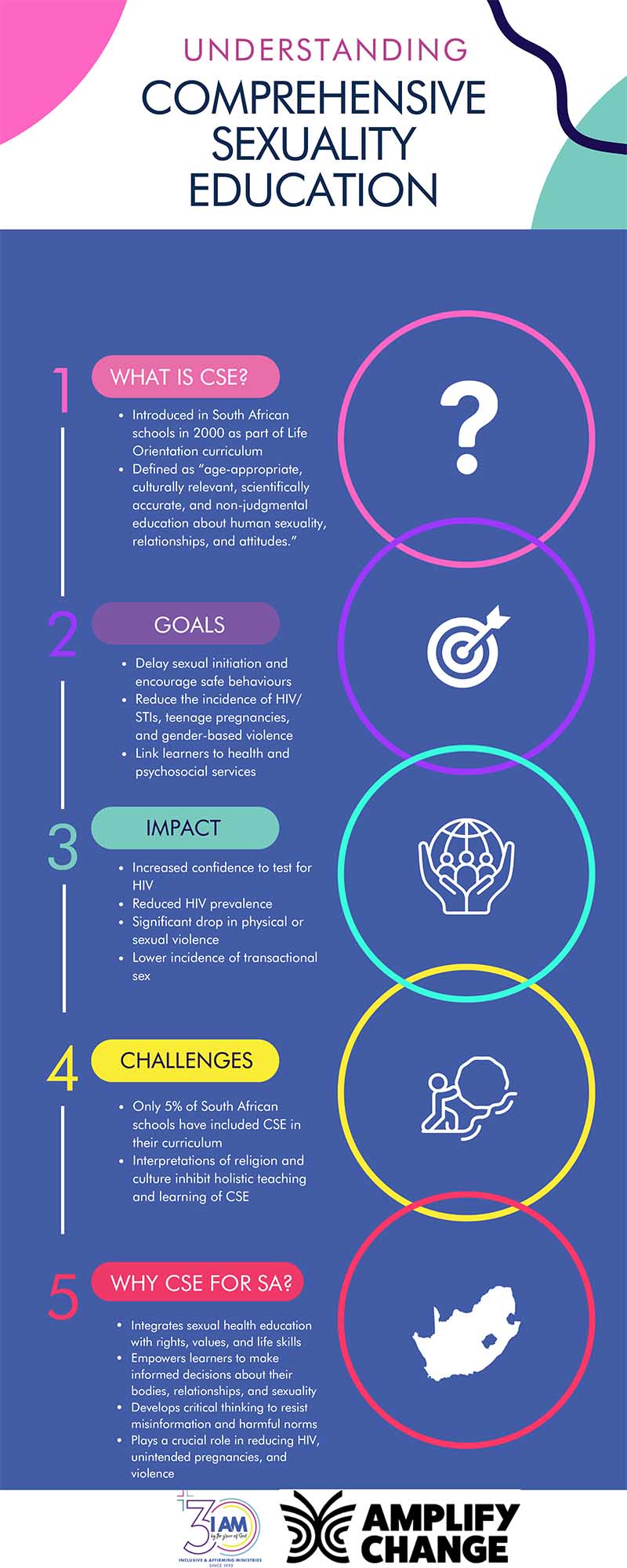
Despite being part of South Africa’s Life Orientation curriculum since 2000, Comprehensive Sexuality Education (CSE) remains absent in most of the country’s classrooms.
According to the World Health Organization, CSE is intended to give young people “accurate, age-appropriate information about sexuality and their sexual and reproductive health, which is critical for their health and survival.”
Some conservative and religious groups in South Africa, however, have campaigned against CSE, seeing it in conflict with their values. Not so, the queer-affirming Inclusive and Affirming Ministries (IAM).
According to Gomo Lesejane, Communications Officer at IAM, “although policy supports CSE, implementation remains weak. Many schools and teachers are not delivering the comprehensive aspects, largely because of lack of capacity, resources, and political or institutional follow-through.”
In 2016, only about 5% of schools offered enhanced CSE. That statistic, Lesejane explains, “shows how far we still need to go to make CSE a meaningful reality for all learners.”
Beyond Biology: Why CSE Matters
CSE goes far beyond teaching about anatomy or reproduction. It’s designed to equip young people with knowledge about relationships, consent, gender equality, and diversity, helping them make informed, healthy decisions about their bodies and lives.
Research shows that learners exposed to CSE are less likely to contract HIV, engage in risky sexual behaviour, or experience gender-based violence.
IAM’s work echoes findings from the DREAMS-district study, which found that girls who attended CSE sessions were less likely to be HIV-positive, more likely to get tested, and less likely to experience early pregnancy.
“CSE is not just about sex,” Lesejane emphasises. “It’s about rights, health, respect, and safety. It empowers learners to understand consent, resist harmful norms, and build positive relationships.”
The Barriers: Silence, Stigma, and Faith
Teachers, often at the frontline, report feeling ill-equipped to discuss topics like sexuality, orientation, and gender identity.
“Many lack training or confidence to handle sensitive subjects,” says Lesejane. “They also face community resistance, conflicting messages from home or faith settings, and even fear of backlash from religious institutions.”
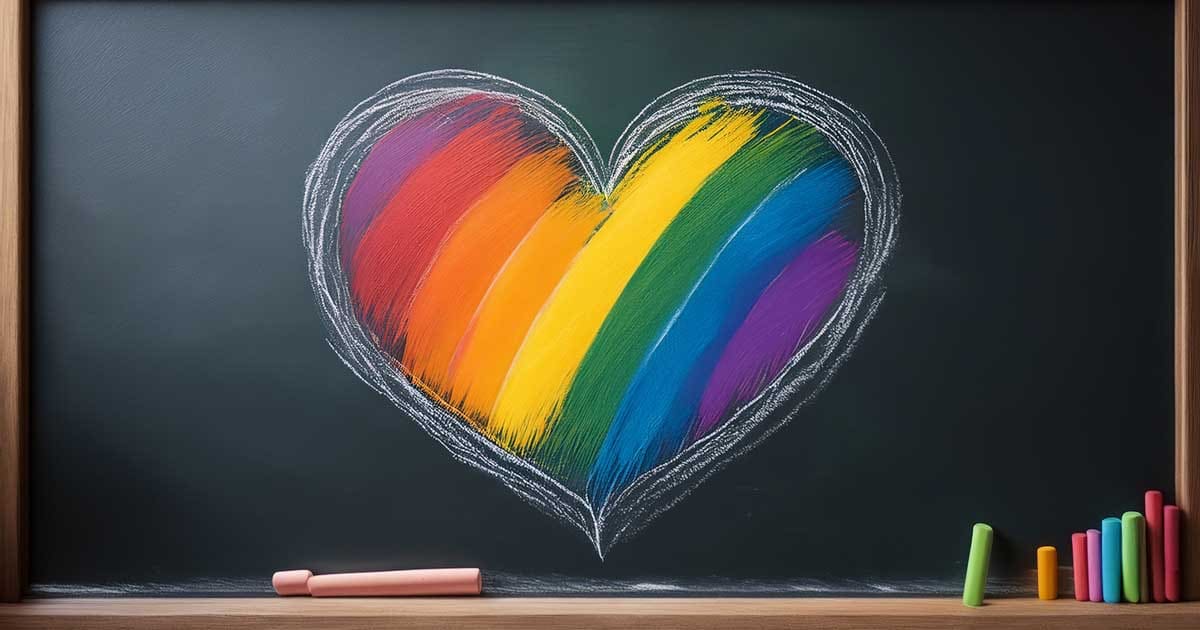
In many faith-based schools, sacred texts are interpreted in ways that discourage open discussions about sexuality or gender diversity. “Some teachings reject anything outside heteronormative frameworks,” Lesejane notes, “making it especially hard to talk about LGBTQI+ inclusion in classrooms.”
The Positive Shift: Faith as an Ally
Still, IAM’s work highlights a growing number of faith communities reinterpreting religious teachings to promote inclusion and wellbeing. “There are positive possibilities,” says Lesejane. “We’re seeing faith leaders and teachers becoming champions of change, reimagining sacred texts, creating inclusive spaces, and developing theologies of diversity.”
IAM’s Bible and Homosexuality Toolkit is one such resource helping religious institutions engage with issues of sexuality and inclusion from a faith-based perspective.
Moving Forward: Collaboration Is Key
For CSE to succeed, Lesejane insists that policy, faith, and community must work together. “We need ongoing, deeper teacher training, and we must engage faith leaders as allies, not adversaries,” he says.
IAM also stresses the importance of involving parents early in the conversation. “When parents see that CSE aligns with values like respect, consent, and love of neighbour, resistance often turns into support.”
As South Africa continues to grapple with HIV, gender-based violence, and discrimination against LGBTQI+ youth, CSE offers a path toward healthier, safer, and more inclusive communities. But that path, as IAM reminds us, depends on honest conversations, in classrooms, congregations, and homes alike.
“CSE is not about destroying values,” Lesejane concludes. “It’s about affirming life, dignity, and inclusion for every learner.”