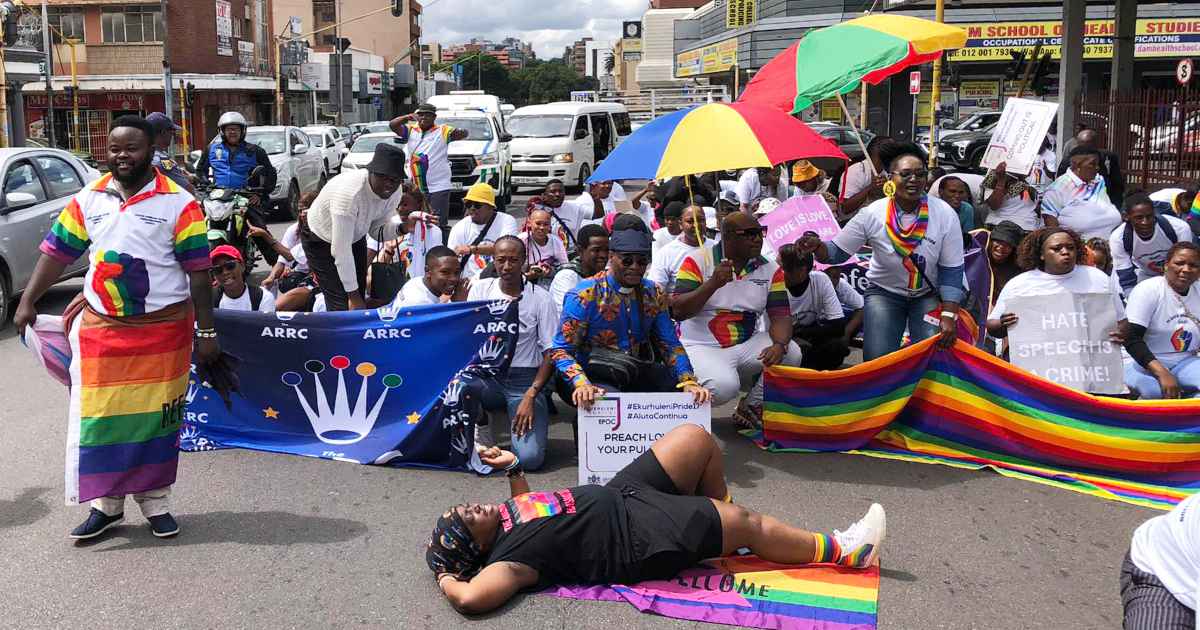
Members of the LGBTQIA+community took to the streets of Pretoria on Human Rights Day on Saturday to highlight that equality and dignity are not yet a lived reality for all in South Africa.
Activists from the SA Queer Movement, alongside allies, marched from Burgers Park to the Department of Justice and Constitutional Development to deliver a memorandum calling for urgent action on LGBTQIA+ rights.
The 1.2km march saw a modest but vibrant turnout, with participants carrying rainbow flags and placards as a show of solidarity, resistance, and hope.
The demonstration formed part of a broader push to ensure that constitutional protections for LGBTQIA+ people translate into tangible change in everyday life.
At the heart of the march was a memorandum outlining key demands, including faster processing of identity documents for transgender individuals, legal recognition of intersex persons, and the expansion of LGBTQIA+-friendly healthcare services, particularly in relation to HIV, STI, and TB prevention and treatment.
Activists also called for the establishment of dedicated, victim-centred services within Victim Empowerment Programme centres, the provision of unisex toilets in public spaces, and the creation of a government Directorate for LGBTIQ+ Affairs with a dedicated budget.
A message of gratitude and continued pressure
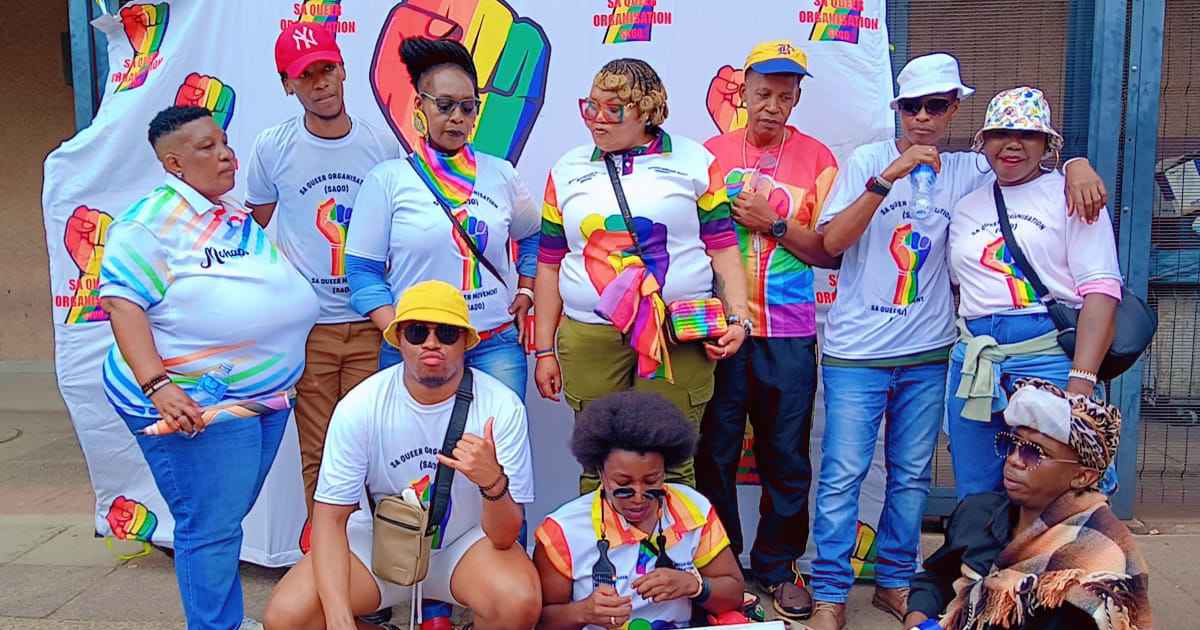
Following the march, SA Queer Movement National Chairperson Ntsupe Mohapi expressed gratitude to those who participated, while emphasising the importance of sustained advocacy.
“To the queer individuals, we want to say thank you for marching, raising your voices and holding the government accountable,” Mohapi told MambaOnline.
“To the broader community, we are grateful for the allies who marched with us. We also need the broader community to keep conversations open on homophobia, hate crime and discrimination. We need their amplified positive voices.”
Waiting for government response
With the memorandum now formally submitted, the movement’s attention turns to government implementation. Mohapi said the organisation expects that the Department of Justice and Constitutional Development will respond to the demands.
“We hope to be called by the Acting Director-General at the Department of Justice offices for further engagements, as outlined in the memorandum,” Mohapi said.
Beyond initial discussions, the movement is also looking for broader government coordination and action.
“We also hope to see the memorandum reaching different government departments to start with implementation as highlighted,” Mohapi added.
Momentum beyond the march
While the march marked a moment of visibility and unity, organisers stress that it is only one step in a longer process of advocacy and accountability.
The focus now shifts from mobilisation to measurable change, with activists watching closely to see whether government will respond with urgency to the demands placed before it.
For many who marched, the message is clear: the fight for dignity, safety, and full inclusion is far from over, and the momentum built on Human Rights Day must carry forward into sustained action.