
There is a dangerous myth circulating freely in our communities: that conversion therapy happens only in clinics, that it requires white coats, consent forms, or psychology degrees. African human rights research tells a far more unsettling truth.
Conversion practices most often happen in churches. They happen in prayer lines. They happen when religious leaders place their hands on children and tell parents that queerness is darkness, that gender nonconformity is possession, that identity is something to be pulled out.
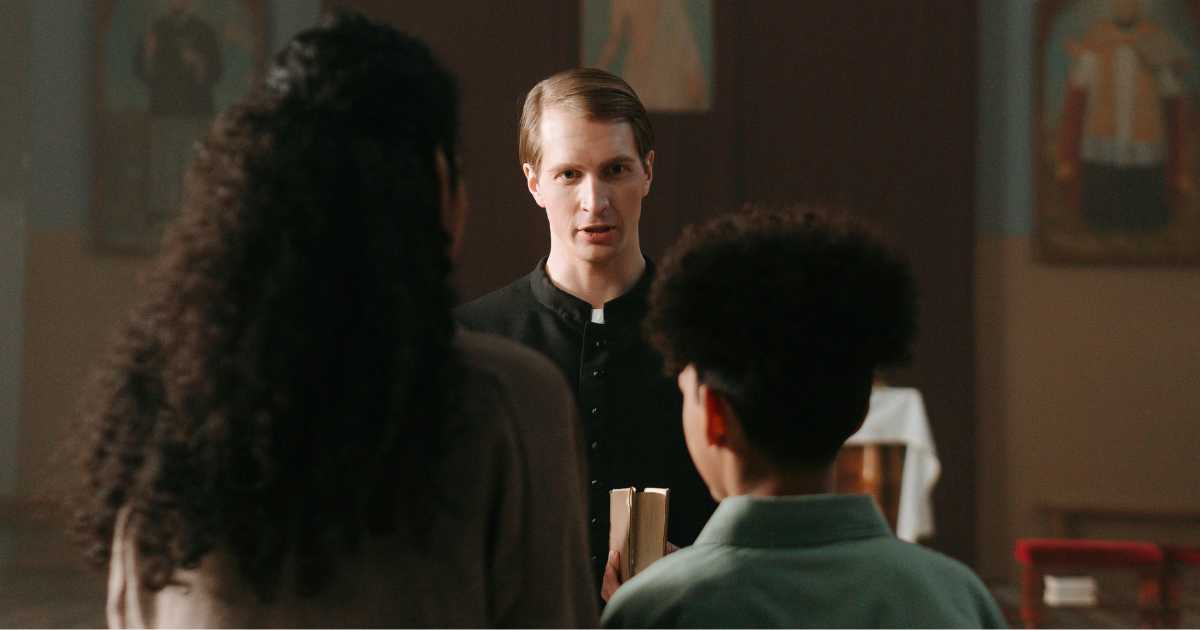
This is the context in which Prophet David Uche appears in a TikTok video, not as a healer, but as an authority figure using faith to legitimise harm. There is a moment in the video that should stop us all cold: a Prophet, an adult man with spiritual authority, openly mocks a child. Not quietly. Not accidentally. He performs it. This is not care, but degradation.
The child is talked about, laughed at, dissected, and spiritually re-engineered. His body, his gender expression, and his imagined future are laid bare for entertainment and spectacle. And the man orchestrating this spectacle is Prophet David Uche from the Righteous and Faithful City in Midrand, South Africa.
When the mother speaks, she speaks from fear, confusion, and a love distorted by social pressure. When the Prophet speaks, he speaks from power. That distinction matters.
What Conversion Practices Actually Mean
According to the African Human Rights Policy Paper 3 titled Conversion therapy: Current practices, emerging technology, and the protection of LGBTQ+ rights in Africa published by the Centre for Human Rights at the University of Pretoria, conversion therapy extends far beyond medical or psychological interventions.
It is defined broadly as any therapeutic technique or other activity that seeks to change or alter sexual orientation, reduce a person’s attraction to those of the same sex, or impose conventional gender roles.
Conversion practices are often imagined only as medical or psychological interventions. That misconception allows religious leaders to claim innocence. But conversion practices are defined by intent, not by setting. They include any activity that attempts to change, suppress, or erase sexual orientation or gender expression: prayer, exorcism, spiritual “correction,” and framing identity as demonic or sinful.
They do not stop being conversion practices because they happen in a church. They do not stop being harmful because they are wrapped in scripture. They do not stop being abusive because a parent consented on behalf of a child. This case reflects every recognised element: A child. An authority figure. A narrative of spiritual defect. An intervention aimed at erasing identity.
A Mother Trying to Make Sense of What She Has Been Taught to Fear
In the TikTok video, the mother speaks first. Her voice is shaped by fear, not cruelty. “He started behaving like a girl.” She describes how he sits, how he screams, and how shouting at her son does not work. She is trying to understand her child through the only framework she has been given. Like so many women, she has been taught that deviation is danger, that difference is disorder, that her child’s safety depends on correction.
She speaks from within a system that tells her that queerness is a threat and that gender nonconformity is a spiritual emergency. She is not running the church. She is not holding the microphone. She is not defining the narrative.
Then the Prophet enters the conversation, and everything hardens. “He crosses his legs like a gay?” said the pastor. He does not ask about the child’s well-being. He does not ask about fear, anxiety, or safety. He jumps straight to diagnosis. “He was already GayBreeling.” Then he mocks the child’s voice and body, loudly, publicly, with laughter. “AHHHHHH. Don’t touch me.” This is not pastoral care. It is humiliation as performance.
Religion as a Tool of Conversion
The African Human Rights policy paper identifies faith-based conversion practices as the most widespread form of conversion therapy in Africa. These practices frequently cast LGBTQIA+ people as sinful, demonic, pathological, or curable through spiritual intervention.
That framing is unmistakable in the Prophet’s words: “The devil is turning him into a woman. That’s the damage the kingdom of darkness does.” This is not neutral theology. It is ideological violence. It teaches a child that who they are is not only wrong but dangerous, that their body and identity signify spiritual failure.
By definition, this is a conversion practice. The intent is clear: to eliminate queerness, to restore a supposedly “correct” gender, and to reject the child’s identity in favour of doctrine.
When Consent Does Not Exist
The policy brief makes clear that conversion practices are particularly harmful when consent is compromised. Children are unable to provide free, prior, and informed consent to interventions that erase or suppress their identities. Here, the subject is a child. Adults initiate the intervention, and it takes place within a setting of spiritual authority. There is no indication that the child can refuse, opt out, or leave.
During prayer, the child reports intense physical sensations: “I feel a sensation. Something is being pulled.” Rather than being understood as possible distress or fear, this is celebrated as evidence of success: “Wow. In Jesus’ name.”
This is what coercion looks like when expressed through religious language. No physical restraints are required; the authority structure itself exerts the pressure.
The Mother’s Responsibility, Held with Care
The mother must be held accountable for placing her child in this environment. That choice has consequences. Yet accountability does not require cruelty.
She acted within a system that teaches women to fear difference, defer to male spiritual authority, and believe that salvation demands correction. She genuinely believed she was helping her child, but that belief was shaped by patriarchy, religion, and misinformation.
True accountability means ensuring that her child is protected moving forward. It calls for education, support, and clear boundaries around harm, not the shaming of a mother who was failed by the same system.
Power Must Answer for Harm
The Prophet does not understand gentleness. He is not confused or uncertain; he is exercising power. He mocks. He sexualises a child’s body. He frames a child’s identity as demonic. He boasts about “handling” cases seriously: “If I catch them, I handle their case seriously,” he told the congregation.
This is an admission of intent, and intent matters. It sits at the centre of how conversion practices are defined and recognised.
A child’s best interests are never served by fear, humiliation, or spiritual violence. They are served by safety, dignity, and unconditional care. South African law recognises this. So does basic humanity.
No freedom of religion includes the freedom to break a child’s sense of self. No Pastor or Prophet’s authority includes the right to erase who a child is. No miracle story justifies harm.
This incident is not isolated. In another video circulating on TikTok, the same pastor explicitly promotes conversion therapy and claims that children become gay because of absent fathers, revealing a consistent ideology that frames queerness as both a defect to be corrected and a moral failure to be blamed on family structure.
Why This Should Be Illegal in South Africa
South African law does not have a law titled “conversion therapy” to recognise and address the harm of such practices. In 2021, the Democratic Alliance announced plans to introduce a Private Members’ Bill to ban conversion therapy for minors. Despite repeated commitments, no bill or comparable legislation addressing conversion therapy has been introduced by South African lawmakers.
The Constitution applies horizontally, so private individuals, including religious leaders, are bound by it.
Section 9 guarantees equality and explicitly prohibits discrimination on the basis of sexual orientation. Treating a child as spiritually defective because of perceived queerness is unfair discrimination.
Section 10 protects dignity. Conversion practices strike at the core of dignity by asserting that a person’s identity is inferior and must be erased.
Section 12 protects everyone from psychological violence and degrading or inhuman treatment. Conversion practices meet this threshold even without physical force.
Section 28 makes the best interests of the child paramount. Subjecting a child to identity-erasing religious interventions cannot be squared with this standard.
The Promotion of Equality and Prevention of Unfair Discrimination Act (PEPUDA) reinforce these constitutional protections by prohibiting unfair discrimination, harassment, and potentially hate speech by any person, including religious leaders.
The Children’s Act recognises emotional and psychological harm as abuse. Both internationally and locally, conversion practices are widely recognised as psychologically harmful, especially to children.
Freedom of religion does not override these rights. South African courts have been clear that belief does not justify harm.
The Child Must Be The Centre
The most important voice in the video is the smallest one. “I feel better,” the child says. Children often say this when they want adults to stop, when they seek approval, or when they just want the tension to end.
But feeling better is not the same as being safe. Compliance is not healing. Silence is not consent. The real question is not whether the Prophet believes he performed a miracle. The real question is whether the child’s dignity, identity, and psychological integrity were protected. They were not.
This was not deliverance. It was conversion practice. South African law, African human rights standards, and basic humanity all say the same thing: Children are not problems to be fixed. They are people to be protected.
Complaints to the South African Human Rights Commission can be lodged via their online portal: https://www.sahrc.org.za/index.php/lodge-complaints
Sikhander Coopoo is a black, queer, Muslim intersectional feminist with backgrounds in gender, andragogy and local governance. He is a humxn rights defender and social justice activist at heart. Sikhander serves on the Gender and Sexuality Alliance, Buffalo City committee and writes in his own capacity.