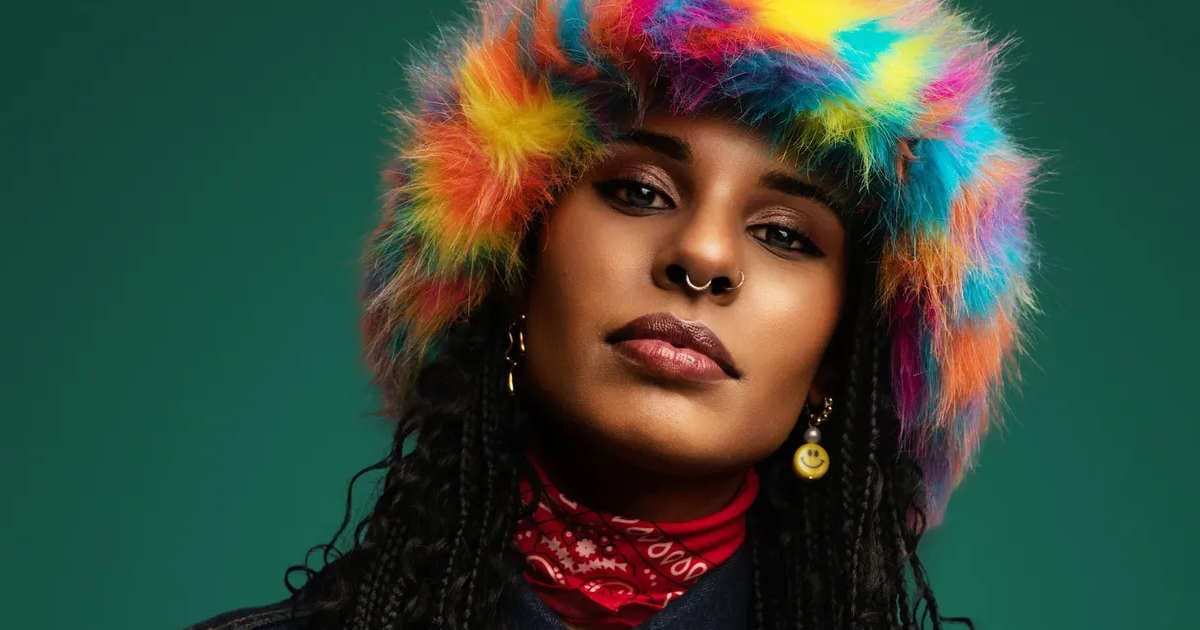
Catherine Saint Jude Pretorius, professionally known as Dope Saint Jude, is a Cape Town born rapper, singer, producer and performer whose innovative electro-hip-hop sound and bold lyricism have earned her fans and acclaim locally and internationally.
MambaOnline caught up with Dope Saint Jude about the inspiration behind her latest project and what it means to be a queer South African musician.
Q: So, you have a new album – what can fans expect, and what are the inspirations and the creative process behind the album?
A: Yeah, I’m pretty excited about the project. It’s called I Said What I Said, and it’s a little bit of a mixtape, actually. It’s got some old songs of mine that I recorded back in 2022 and I haven’t released, and there’s some songs I recorded last year, kind of newer songs. The project is really about transition because in the last while I’ve experienced quite a shift in my life.
It also marks, not a sonic shift, but kind of a more refined sound. So, what I did was I recorded a lot of indigenous sounds before I left to record the project in London, and I brought them into an electronic realm. So using, for example, a didgeridoo as a bass line in some of the tracks. And you might not notice that, but there is that element. A lot of people might not be able to identify the sounds, but there’s definitely this sonic development in terms of trying to figure out what African electro pop could sound like. Then in terms of themes, yeah, I guess just change, transition. The usual stuff that I like to talk about, owning yourself and having boundaries and all that, but I guess it’s in a much more real way for me, especially.
Q: Let’s chat about the track Hold Me Homie – I really resonate with that song. I think there’s something so queer about writing about friendship in any capacity because we prioritise romantic love in just about everything. How have the friendships in your life, whether that be with queer people, or with straight people, impacted your creative process?
A: I think they’ve impacted my creative process insofar as they’ve impacted my entire being. I wouldn’t be who I am without the support of my community because my friendships are where I’m truly myself. There are parts of me I never share with my family, a lot of the real me I show my friends. The embarrassing parts and the queer parts, the vulnerable parts. It’s obviously not always easy to share that with your family, especially if you come from a very Christian family. And so my friendships have really shaped me and given me a sense of belonging and community and that has informed the kind of rebellious attitude of my music. It’s because I feel safe, because I’m rooted in a community that has my back, that I’m able to go out in the world and make music that people might read as assertive. It’s because I have a thousand people behind me.
Q: What have been some of the changes that you’ve seen in the music landscape both locally and internationally as a queer South African musician?
A: I think that there are a lot of positive changes. I think when we see artists, not just queer artists, but artists like Tyla, like a lot of local artists getting an international platform, it really helps South African music as a whole. I think, in general, attitudes towards the continent are changing around creativity. I think there’s a real hunger for African creativity. So that’s been really positive. But in terms of being queer, I think that overall in the world, there seems to be a kind of far-right sentiment, and I think it does affect queer artists. I think that your politics matter at this moment, and I think it can affect your income. I think this is a much bigger conversation about capitalism actually.
A lot of artists, and I’m no exception, have to rely on the system in order to make a move. Often your music, your value as an artist, is in how you can communicate a product. So your politics matters – if you speak up about certain things, it will cost you. So, I’ve noticed that change. I think with the far-right sentiment sweeping the world at the moment, it is a little bit more challenging to be a queer artist, especially because I think queer people of color are more likely to have what the world considers radical political views. For me, in these last five years, it’s accelerated with AI and with the growing political tensions. So I think it really can be quite challenging to make a living as an artist who stands by what they believe in.
But I don’t believe that it’s for everything. I think that things happen in waves and things ebb and flow, and I think that when you have community, and you have your core audience, you can still build something meaningful.
Q: What would be your advice to an up-and-coming artist wanting to make their mark in this current environment?
A: I would say, I think most importantly, really take the time to know who you are and what you’re about because again, with things like AI and everything happening in the world, your voice as an artist is really important. There’s a lot of value in having a clear perspective. I think what’s challenging in our media landscape is that we expect a lot from artists on an emotional level. We expect a constant output of content all the time, being visible, being available. You really need to know who you are because it’s quite a lot to expect one person to do. I think it really helps when you have a kind of strong sense of who you are and what you’re about, to be firm in who you are and what you stand for. Ultimately that’s really what we want from artists. Throughout history, that’s what we’ve looked to artists to do – to provide a perspective.
Listen to I Said What I Said on Spotify or Apple Music.




One Comment