

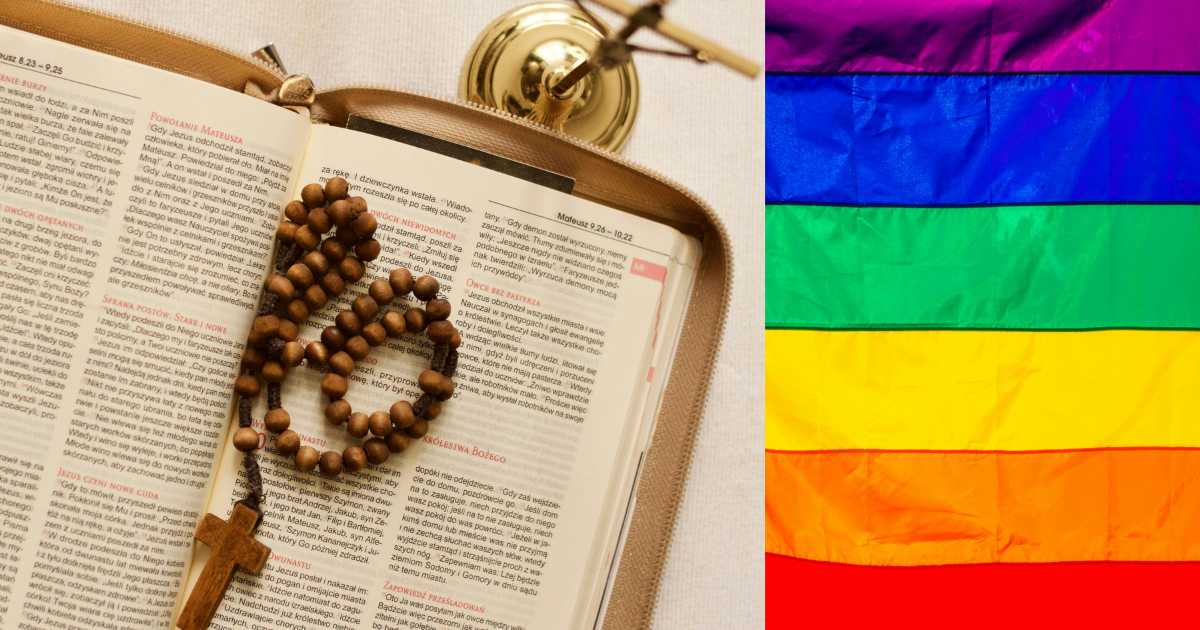
As Easter approaches, many people look forward to family gatherings, church services, and spiritual reflection. But for countless LGBTQ+ individuals, this season can feel less like a sanctuary and more like a storm.
For some, home becomes a place of quiet exclusion. For others, church doors remain symbolically or literally closed. The rituals meant to nourish the soul can instead reopen wounds.
We spoke to Rev Nombulelo Ngqayizivele Khumalo, a queer faith leader in the Methodist Church of Southern Africa, about how LGBTQ+ people can navigate this sacred season while protecting their peace and reclaiming their spirituality.
Her message is clear: your belonging has never been up for debate.
“I often say: start where God has never left, and that is within you,” Khumalo explains. “Institutions may fail us, but the Divine is not confined to buildings, pulpits, or doctrines shaped by fear.”
For those feeling spiritually displaced, she suggests returning to the self as a starting point. A quiet prayer. A walk. A song that carries memory and meaning. Small acts, she says, can become sacred ground.
“Belonging is not something you earn. It is something you reclaim.”
Rewriting the Meaning of Sacred Seasons
While Easter is often framed around sacrifice and ritual, Khumalo invites a deeper interpretation.
“These seasons are not about restriction, they are about realignment,” she says. “It’s about asking: what is disconnecting me from love, justice, and truth?”
For queer people, this can be a powerful opportunity to shed internalised shame and reconnect with their inherent worth.
“Sacred seasons are less about what you deny yourself, and more about what you make space for.”
When Faith Hurts
For many LGBTQ+ people, the hardest part of Easter is navigating religious spaces that feel unsafe or rejecting.
“Sometimes staying connected means stepping away, not from God, but from harm,” Khumalo says.
She emphasises that faith does not belong to institutions. It can exist beyond pews and pulpits, in chosen families, affirming communities, and even solitary practices that restore rather than deplete.
“Protecting your spirit is a holy act.”
Letting Go of Shame
Feelings of guilt and shame often intensify during religious holidays. Khumalo is unequivocal in her response:
“Shame is not a fruit of the Spirit. If your spirituality produces self-hatred, then something has gone wrong, not with you, but with what you’ve been taught.”
She encourages a gentler inner dialogue, replacing harsh self-judgment with compassion and truth.
“Replace ‘I am unworthy’ with ‘I am loved.’”
Creating Your Own Sacred Rituals
For those excluded from traditional spaces, Khumalo offers a radical yet simple idea: create your own rituals.
“Light a candle and name what you are holding. Write prayers in your own language, even if that language includes anger. Share meals with chosen family and call it communion.”
Spirituality, she says, does not have a single form or aesthetic. What matters is whether it brings you closer to life, love, and truth.
“If it does, it is sacred.”
Navigating Family Spaces
Family gatherings during Easter can be emotionally complex, especially when love and harm coexist.
“You are allowed to choose your wellbeing over tradition,” Khumalo says. “That may mean setting boundaries, disengaging, or not attending at all.”
She stresses that honouring yourself is not a betrayal of family, but an act of truth.
You Don’t Have to Choose
For queer people who feel torn between their faith and their identity, Khumalo offers a message that feels almost like a quiet rebellion:
“You do not have to choose.”
“The God who created you did not make a mistake. Your identity is not a barrier to faith, it is part of your sacred story.”
As Easter arrives, her words linger like a steady flame in uncertain spaces:
“You are not alone, and you are not wrong for being who you are.”