

There is something deeply unsettling about a society that turns a child’s future into a public referendum.
In Eswatini, there have been reports that six students were recently expelled from a high school over alleged same-sex relationships. This was after parents were asked to vote on whether those children should remain in school, and followed remarks by the country’s Education Minister in January calling for LGBTQ+ learners to be expelled from schools.
It forces us to confront a difficult question: When did education stop being a right and become a favour granted by collective approval?
A vote reflects power, prejudice and personal beliefs, which are often linked to tradition, culture, politics and religion. It is shaped by fear, by stigma, by long-standing narratives about morality and belonging.
To ask parents, many of whom may already hold hostile views about LGBTIQ+ people, to decide the fate of children is not consultation; it is deferring responsibility and repercussion. It is placing the lives of young people in the hands of those most likely to deny them protection.
And where is the law in all of this?
The Kingdom of Eswatini is not operating in a vacuum. It has a Constitution that guarantees the promotion and protection of fundamental rights, including equality before the law, equal protection of the laws, and the right to dignity. The Constitution further goes on to protect the rights of the child, including that a child shall not be subjected to abuse, torture or other cruel, inhuman and degrading treatment or punishment.
The Children’s Protection and Welfare Act of 2012 extends the Constitution and international human rights instruments, standards and protocols on the protection, welfare, care and maintenance of children in Eswatini. The Children’s Protection and Welfare Act of 2012 promotes non-discrimination of any child in Eswatini and says that every child must have psychosocial and mental well-being and be protected from any form of harm.
The reported expulsions of the students are harmful and put them at risk of violence. They are further in direct conflict with one of the mandates of this Act, which stipulates that access to education is fundamental to development. Therefore, taking students out of school and denying them education is unlawful.
Eswatini is also a signatory to the United Nations Convention on the Rights of the Child (CRC) and the African Charter on the Rights and Welfare of the Child. These are not just commitments made to make our governments look good and appeasing. They are obligations.
The Convention on the Rights of the Child is clear regarding all actions concerning children. The best interests of the child MUST be a primary consideration and NOT a secondary one. According to the CRC, as indicated in the Declaration of the Rights of the Child, “the child, by reason of his physical and mental immaturity, needs special safeguards and care, including appropriate legal protection, before as well as after birth.” It is not something to be weighed against public discomfort and popularity.
The African Charter on the Rights and Welfare of the Child reinforces this, grounding rights in non-discrimination (Article 3), privacy (Article 10) and protection from all forms of torture (Article 16). Access to education (Article 11). These frameworks are not conditional but are foundational rights. They are not something that can be taken away because a child is perceived as falling outside social norms and threatening the moral fabric of society.
So again, where is the law when children are being expelled?
It is tempting to say the law is silent, but that would not be accurate. The law is not silent; rather, it is being ignored and bypassed in favour of systems of decision-making that make those in power comfortable. When schools and their leadership defer to parental votes rather than legal standards, they are not acting neutrally. Expelling a child from school because of allegations is not a decision to be taken lightly. It disrupts education and limits future opportunities, and for children already navigating identity and social pressure, this kind of exclusion can have profound psychological effects. It isolates them. It marks them for potential harm.
Imagine being a child whose future is discussed in a room where people debate your worth. That is exposure. That is harm. There is a tendency to justify these actions in the language of culture, tradition, religion and protecting social cohesion. But culture is not static, and the practice of Ubuntu values is not an excuse to violate rights. If anything, the principle of Ubuntu demands the opposite of what has happened here.
Ubuntu is not about conformity. It is about recognition and is the understanding that our humanity is bound up in one another. That we are diminished when others are excluded. That care, dignity, respect and compassion are central to how we exist together. Where, then, is Ubuntu in a school where some children are deemed unworthy of access to education?
Why are those entrusted with protecting children failing to do so?
There is a very loud contradiction at play. On one hand, there is a claim to shared values and to the importance of community. On the other hand, there is a willingness to isolate and exclude those who do not fit within the narrow definition of what is acceptable. You cannot have both. A community that thrives on exclusion is neither cohesive nor safe.
It is worth asking why these decisions are being made in this way. Why not follow the established legal processes? Why not ensure that any disciplinary action within schools aligns with national and international obligations? Why introduce a vote at all? The answer is uncomfortable and lies in legitimacy and accountability.
A vote creates the appearance of a collective agreement. It distributes responsibility across many hands, making it harder to hold anyone accountable. It allows the school leadership to say “lesi sincumo sebantfu” [this is what the community decided, not me] rather than confronting their own role in human rights violations. If the law is clear and rights, responsibilities and obligations are established, then the question is not what the community feels. The question is why those entrusted with protecting children are failing to do so.
There is also a deeper issue here about whose rights are seen as negotiable. When we talk about children, we often speak of care, of understanding, of protection and safeguarding them because they are the future. But that language becomes selective when it intersects with sexuality, particularly when it involves LGBTIQ+ identities. Suddenly, care, understanding, protection and safeguarding give way to punishment.
Easy decisions are not always just ones.
If the Kingdom is serious about its commitments under its Constitution, the Convention on the Rights of the Child and the African Charter on the Rights and Welfare of the Child, then those commitments must be visible in practice, not just in policy documents. They must guide decision-making in schools and in communities.
That means recognising that a child’s right to education cannot be overridden by a show of hands. It means ensuring that schools remain spaces of inclusion rather than sites of moral policing. It means holding leaders and institutions accountable when they fail to protect those in their care.
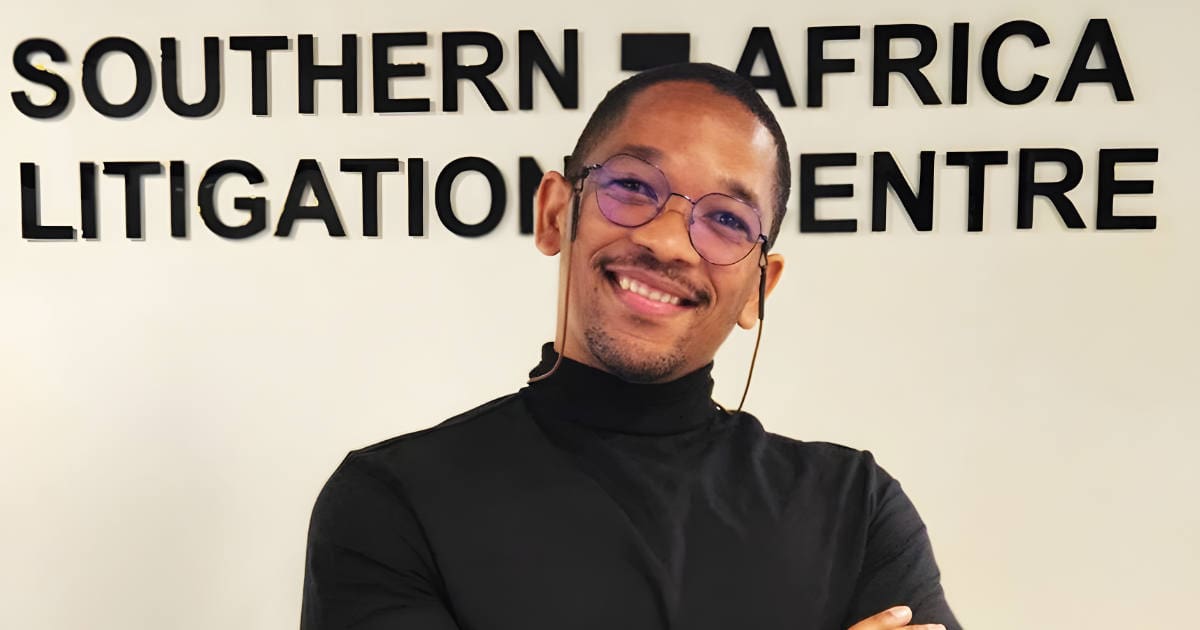
Bradley Fortuin is a consultant at the Southern Africa Litigation Centre and a human rights activist.