
As several African governments defend anti-LGBTQ+ laws as a rejection of Western influence, queer climate activist and filmmaker Angelo Louw asks the question: are these countries truly decolonising, or simply replacing one form of foreign ideology with another?
The winds of change have been blowing through the continent, with West African nations finally standing up to their colonial masters as a catalyst. However, despite positioning their mushrooming anti-queer laws as some sort of rebuttal of Western imposition on African culture, the paper trail suggests that our dear revolutionaries are simply bowing at the altar of a different white God.
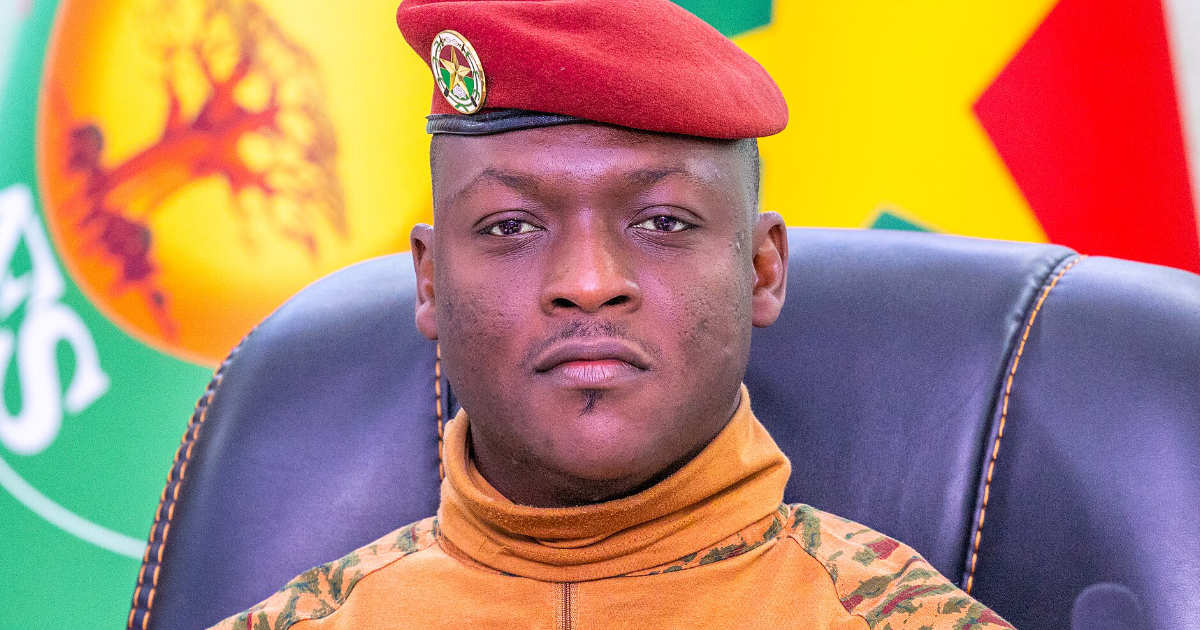
A man in a red beret kicked four French diplomats out of the newly captured country, and comrades across the continent rejoiced, as it seemed that Uhuru had finally come knocking on Africa’s door. Burkina Faso’s current president Ibrahima Traoré gained a lot of public favour for this rejection of the French imperialism that still plagues the region long after the continent’s official independence from its colonial masters.
And indeed, this single act inspired an acceleration of the rejection of France’s presence in the region. A series of coups in the Sahel region brought to power military officers who expelled French troops from their countries. France eventually handed over its last major military facility in Senegal after its president said these bases interfered with their sovereignty last year.
This bold attempt to break free from the extractive relationship with the France government certainly shook the world. Its impact on the French economy sent a clear message to Western countries flexing their muscle on the continent: Africa, in fact, has the upper hand (the minerals these so-called superpowers built their economies on, that is). Just look at how the “pan-Africanist” French president is currently scrambling for influence elsewhere with his Africa Forward conference in Nairobi.
Why are some African countries adopting anti-queer laws?
Traoré’s next big rejection of Western imperialism (seemingly) was to criminalise same-sex relationships less than a year later. The captain’s disregard for the principles and freedoms associated with democracy is no surprise; Traoré recently reneged on promises to hold elections in Burkina Faso, saying that people need to “forget” democracy. However, this offense against its LGBTQIA2S+ community has emboldened other countries in the region to follow suit with their own plans to adopt and worsen colonial era antiqueer laws.
Senegal, for example, just recently passed a bill to increase their prison sentences for people who are found to be queer or who are advocating for queer rights. Ghana is also on the same path, expanding its anti-queer laws. The Ghanaian MP behind its anti-LGBTQIA2S+ bill has repeatedly said homosexuality is un-African, infamously declaring: “Africa must begin to assert our rights… [and we are] not puppets and stooges of the West.”
That’s an interesting perspective, and certainly an effective way to garner support for your hate campaign. Oppressors have long used the politics of difference to create social divides which erode the power (and freedom) of the collective. Traoré stripped away the freedoms of his queer constituency first (to test the waters); now, the others will learn what that oppression feels like.
Who said sex-sex relationships were unAfrican?
Minority Africa’s analysis of local headlines on Senegal’s media coverage of its anti-queer legislation found that certain framing dominated the narrative. Most of these headlines positioned queer people as a healthcare risk, an organised criminal network, and embroiled in religious scandal. As a media practitioner and scholar, I can tell you that recurring frames in the media are deliberate and geared at shaping public opinion. But whose agenda is it really pushing?
US-backed hate group MassResistance, which leveraged on Trump’s reelection to try to outlaw same-sex marriage, are funding religious extremists in both Senegal and Ghana to push their LGBTQIA2S+ communities further into the margins. Ironically, this same group feels that, despite his erasure of trans people in the US, Trump is far too liberal with (and in favour of) queer rights.
Ghana, by the way, just hosted a US-backed anti-queer gathering of African leaders in which 20 nations supported its queerphobic charter. Niger has also jumped on the bandwagon, with a new anti-LGBTQIA2S+ penal code.
This is nothing new for the continent; Uganda is another very clear example of how religious extremists are allowed to run rife in Africa for the right price. Its reliance on aid in the form of missionary work is well-documented, along with the countless citizens killed, including hundreds of babies, because said missionaries are allowed to play God, conducting healthcare and governance with no formal knowledge or training (just the so-called will of white Jesus).
I’m not at all suggesting that Africa shouldn’t break from its colonial shackles. I just don’t think we ever will shake the destructive legacy of western domination by adopting the behaviours of our oppressors – let alone by getting cosy with new ones.
Angelo Louw is an award-winning queer climate activist, author and documentary filmmaker.