
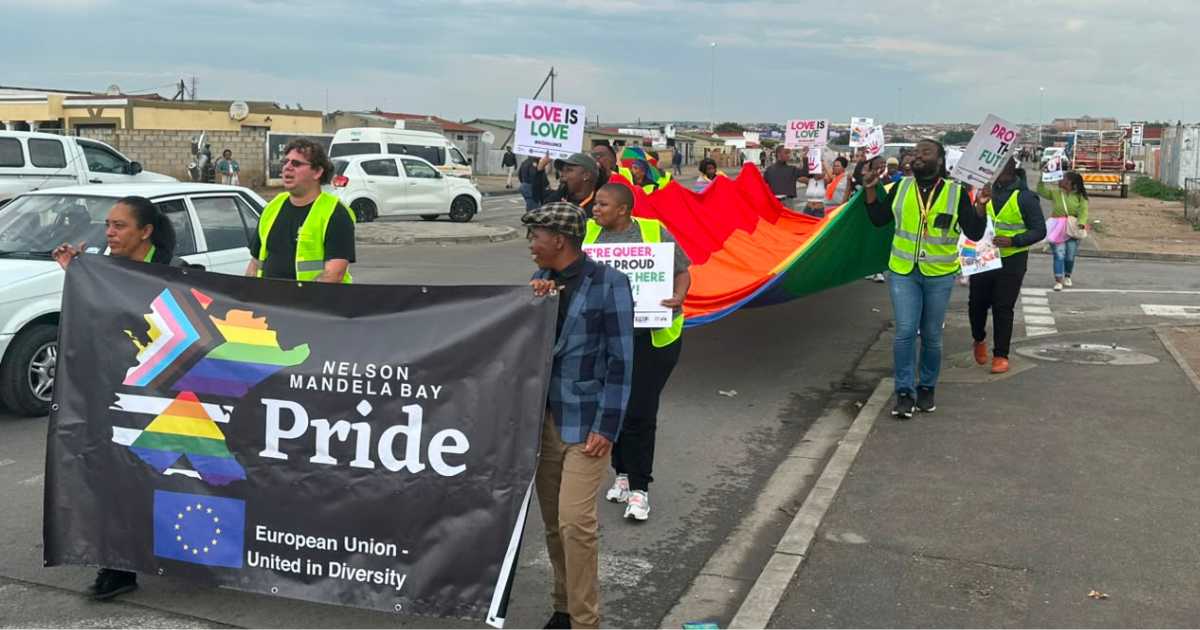
A vibrant wave of rainbow flags, determined voices, and community solidarity swept through KwaZakhele in the Eastern Cape on Friday, 26 June 2026, as Sicebise Social Inclusion (SSI), Nelson Mandela Bay Pride (NMBPride), and NMB LGBTQIA+ stakeholders, together with a wide network of partners, hosted a Gender-Based Violence (GBV) March and Queer Career Expo.
Timed to close Pride Month, the initiative brought together activists, residents, organisations, and stakeholders in a shared declaration: silence around violence, discrimination, exclusion, and hate will no longer be tolerated.
Far from being a symbolic gathering alone, the day fused protest with practical empowerment, pairing a march for justice with a career expo aimed at opening pathways to economic inclusion.
A march rooted in visibility and resistance
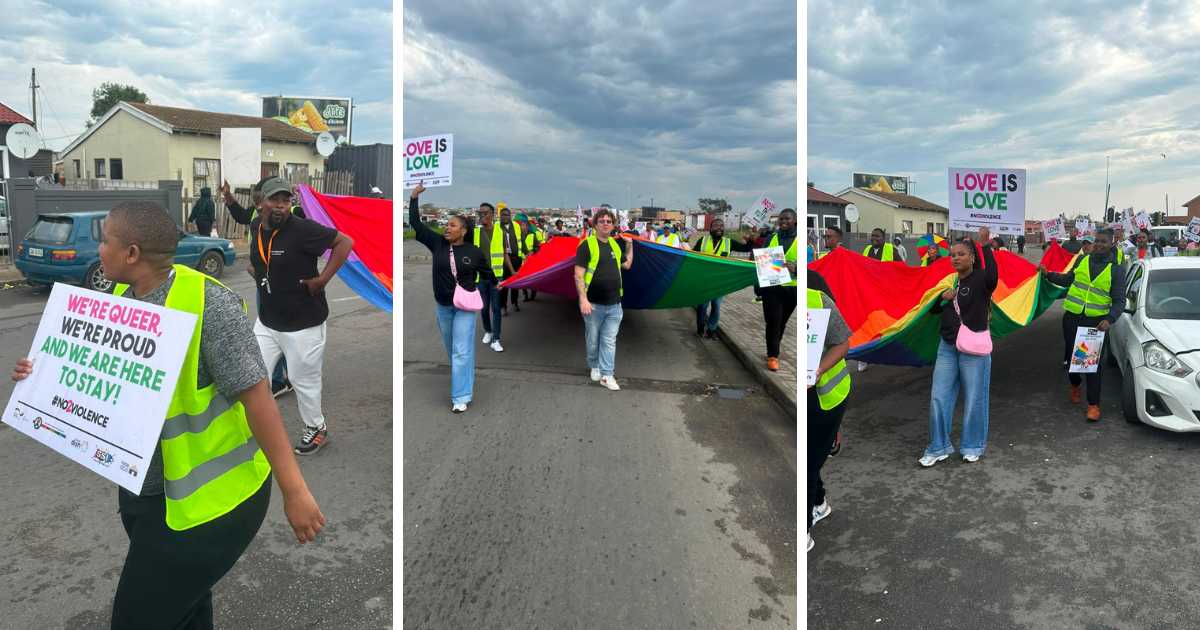
Participants moved through KwaZakhele carrying messages of hope, safety, equality, and human dignity. The streets became a moving canvas of resistance, with rainbow flags raised high and chants echoing a simple but urgent demand: protection and recognition for all, regardless of sexual orientation or gender identity.
Organisers described the event as a collective refusal to let marginalised communities remain invisible.
As stated in the event release, “The event served as more than a march and career initiative — it was a movement of courage, visibility, solidarity, and a united stand against gender-based violence, discrimination, exclusion, and hate.”
Even with modest attendance, organisers emphasised that impact was never measured in numbers, but in conviction and presence.
“We stood together in solidarity. We stood together in unity,” the statement read. “We showed that even when numbers are few, purpose remains powerful.”
Building opportunity alongside protest
Alongside the march, the Queer Career Expo offered information, support services, and access points for employment and development opportunities. The initiative aimed to bridge both social and economic exclusion, recognising that safety and dignity are tied to livelihoods and opportunity.
Stakeholders included Department of Social Development, Sanlam, Independent Electoral Commission (IEC), South African Police Service (SAPS), Nelson Mandela Bay Municipality Metro Police Service, NICRO, and community organisations including SSI, NMBPride, Life, Azania Reign, Serithi Saka Umma, Reaching Out, and Ubuntu.
Voices from the march
Attendees were asked why the march mattered to them and what outcomes they hoped to achieve. Their responses painted a layered picture of urgency, hope, and collective responsibility.
“Silence is permission”
For Asiphesona Mnyakaza, the march was both a closing statement to Pride Month and a call for economic and social safety.
“To end Pride Month on a good note, to break the silence on GBV, claim safety for queer people and provide career opportunities to all in the economy we live in.”
“Visibility and human rights”
Unathi Masimini highlighted the importance of public presence.
“It is important to march for visibility and historical context; marching is also a way of advocating for human rights.”
And on the desired outcome: “The outcome is that people in our communities are aware now, which means less hate crimes and more understanding and less judgement for us.”
“We are seen and heard”
From NICRO, Pumza Ntsete emphasised presence beyond digital spaces.
“We are a loud and proud community; we didn’t only want to be heard but we want to be seen also.”
On impact: “Visibility is part of marketing. Digital marketing was done, but because the event was in an underprivileged location where some people may not have access to online communication, when they see us they can become aware and follow.”
“No one should be silenced”
Reyana Petrus framed the march as a stand against violence affecting both LGBTQIA+ communities and society at large.
“Every person deserves to feel safe, respected, and protected, regardless of their sexual orientation or gender identity.”
She added: “Our hope is that the South African Police Service (SAPS), community leaders, and society as a whole will listen, acknowledge the realities faced by the LGBTQIA+ community, and take meaningful action against gender-based violence and discrimination.”
“This isn’t your problem. It’s ours.”
One of the most striking reflections came from Owam Kolele, who spoke to shared responsibility.
“Silence is permission. As a heterosexual male, I don’t live with the fear of being attacked for who I love… But I do live in the same country, the same communities, where LGBTQI+ people and women are still unsafe.”
He continued: “We marched so people who are usually told to hide, to be quiet, to take less space, could take the streets instead.”
And on outcomes: “I hope someone watching the march felt less alone today… We also want a cultural shift. I’m hoping marching adds pressure until it becomes normal for LGBTQI+ people to be protected not only by law, but also in practice.”
A united front against GBV and exclusion
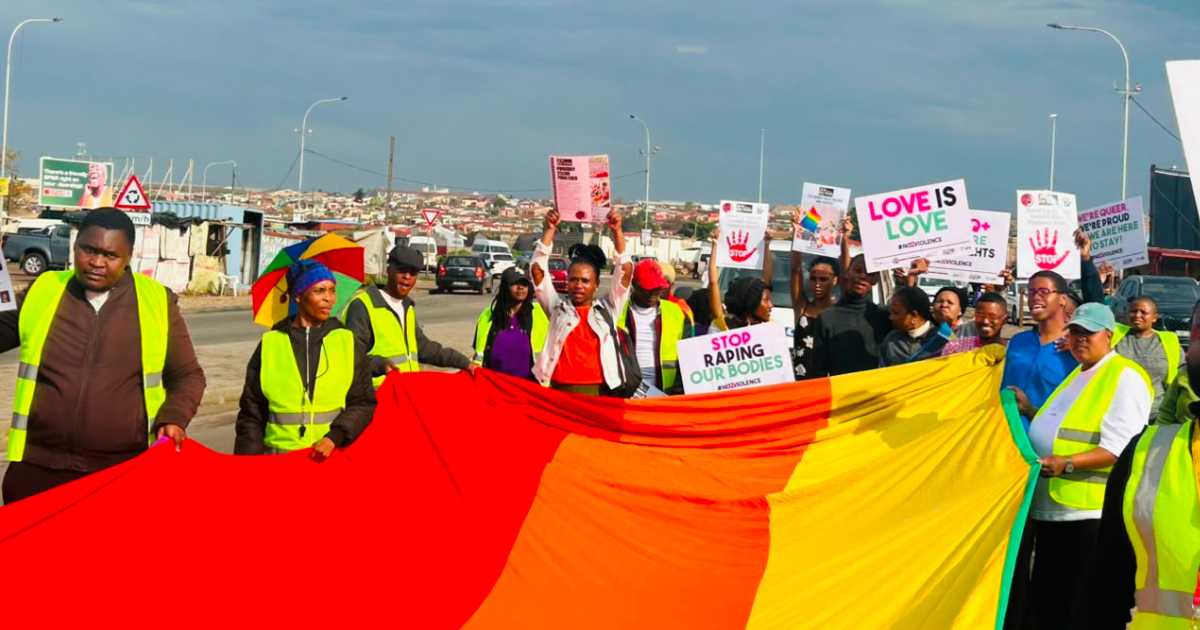
Organisers underscored that the event was not only about visibility, but transformation. The Queer Career Expo added a practical dimension to activism, reinforcing that dignity must include access to opportunity.
As the march closed Pride Month, it left behind a clear message echoed across KwaZakhele’s streets: safety, equality, and dignity are not negotiable ideals, but shared responsibilities.
Closing message
The GBV March and Queer Career Expo stood as a reminder that even small gatherings can carry seismic meaning when grounded in unity and purpose.
“Together we kept our Rainbow Flag high, stood in solidarity, and proved that unity has a voice that cannot be ignored.”