

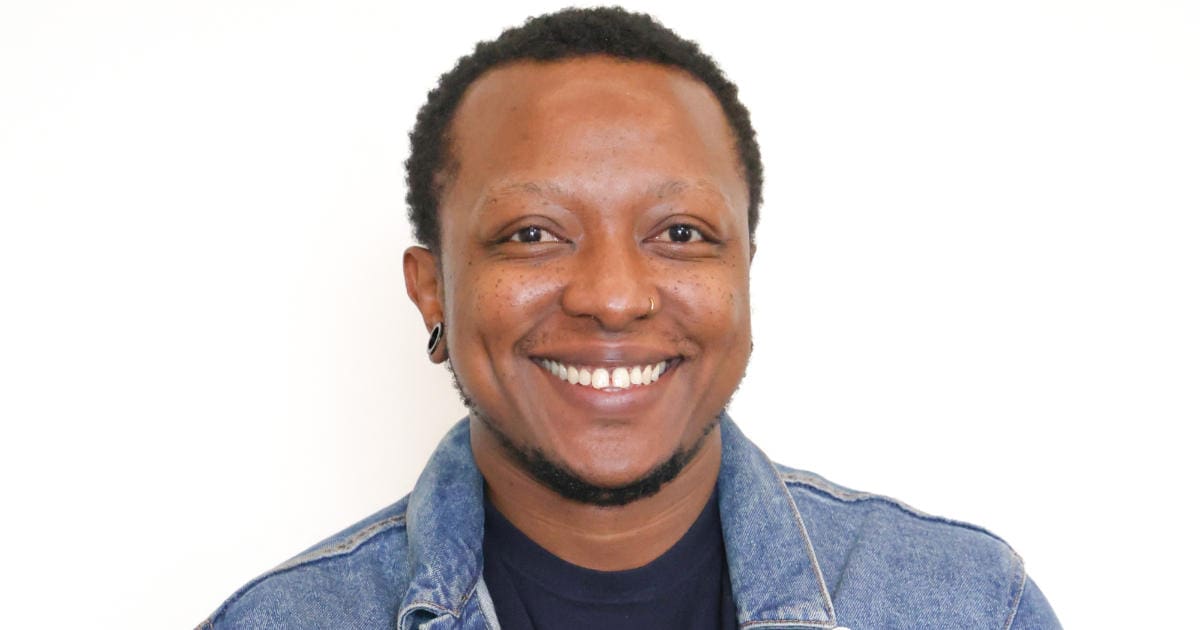
Leading Johannesburg-based LBQTI+ human rights organisation Iranti has appointed activist, researcher and movement builder Akani Shimange as its new Executive Director.
It marks a significant new chapter for one of Africa’s foremost organisations documenting and advocating for the rights of lesbian, bisexual, queer, transgender and intersex (LBQTI) communities.
For Shimange, the appointment is more than a career milestone. It is a deeply personal homecoming.
“I keep saying this: Iranti was my first job, over a decade ago,” Shimange told MambaOnline.
Recalling their first encounter with the organisation, Shimange described travelling from Limpopo to Johannesburg after being invited to an Iranti event.
“I was a trans person in Limpopo who had never met anyone like me… For the first time in my life, I walked into a room full of people like me,” they said. “Jabulani Pereira, Iranti’s founding director, sat in that room with the biggest smile and gave me a warm bear hug. It felt like coming home.”
Reflecting on their appointment, Shimange added: “I have come home. I love this organisation, as so many of us do. I could never have imagined this moment, and I’m deeply grateful for it.”
Strengthening a Movement in Challenging Times
Shimange joins Iranti after years of helping build the pan-African trans and gender-diverse movement, including leadership at the African Trans Network. They say those experiences taught them that sustainable activism depends on strong organisational foundations.
“At the African Trans Network, I learned that movement building lives or dies on the unglamorous things: financial governance, registration paperwork and grant accountability frameworks,” Shimange explained. “Vision needs a spine.”
Those lessons will be particularly important as many LGBTQIA+ organisations across Africa face shrinking funding opportunities alongside growing political hostility.
“Like most rights organisations on this continent, Iranti is contending with a funding environment that’s becoming more conditional and more unpredictable, at exactly the moment political hostility is increasing,” Shimange said.
Rather than rushing into high-profile campaigns, they intend to first strengthen the organisation internally.
“I’d rather spend my early months making sure Iranti’s house is in order than rush into visibility we can’t structurally support.”
Storytelling as Resistance
Founded in 2012, Iranti has earned international recognition for documenting human rights violations, preserving queer histories and using multimedia storytelling to amplify often marginalised voices across Africa.
Shimange believes that work has never been more important.
“The anti-rights movement uses many different tactics to reverse the gains LGBTQIA+ people have made, but underneath all of them sits one intention: to erase us,” they said.
“Erasure works by keeping no record, and the core of Iranti’s work is to keep the record. Iranti is the movement’s memory. That work is necessary in this moment, the work of documenting what’s happening, keeping what’s already happened, and bringing people into the same room often enough that the movement stays a movement.”
They described storytelling as one of the most powerful tools available to counter misinformation and discrimination.
“Misinformation works by making people abstract. It turns a person into a statistic, a statistic into a threat, and a threat into something you can dismiss without guilt. Storytelling is the only tool I know that reverses that process reliably.”
Shimange added that documenting violence against LBQTI communities is not simply about recording abuse but about restoring people’s humanity.
“The moment you document it properly, naming the person, where they lived, what was done to them, the pattern stops being arguable and the humanity becomes impossible to ignore. I want more of our work to be about our lives than our deaths. We are not only worth recording when something terrible happens to us. Our joy is worth being recorded.”
Building an Organisation Rooted in Community
Looking ahead, Shimange says Iranti’s priority is to listen to its staff, partners and communities while rebuilding the organisation’s role and restoring its Johannesburg office in Brixton as a welcoming, inclusive space for LGBTQIA+ people.
“Iranti has the privilege and blessing of owning its offices and home, which is called ‘Iranti Home’. That home is not just for Iranti; it’s a community home,” they said. “I have a vision of those walls being full of laughter, queer joy just radiating. If you visited a year from now, I’d want you to hear the house before you saw it and feel it as you walk in.”
Shimange imagines a vibrant community hub where activists, filmmakers, podcasters and grassroots organisations can work, collaborate and create together.
“A shared office in one room, an event spilling into the yard, someone editing a video, someone recording a podcast… A home. And from that home, we will be telling stories.”
Collaboration is Essential
Shimange also stressed that advancing LGBTQIA+ rights across Africa depends on collaboration rather than competition.
“Collaboration is mandatory in this work, not optional,” they said.
“No single organisation, however well run, has the legal standing, language reach or political cover to win these fights alone.”
A Long-term Vision
Ultimately, Shimange says they are focused on building an organisation that can weather today’s political challenges while continuing to serve future generations.
“I’m not interested in leading Iranti toward a version of success that looks good in a press release but collapses the first time someone tests it,” they said.
“I want an organisation that’s still standing, still documenting, still telling the truth about what’s happening to LBQTI people in Africa, long after this particular political moment has passed.”
For Shimange, success will be measured not only by policy victories or organisational growth, but by whether Iranti continues to be a place where LGBTQIA+ people feel they belong.
“I also know what failure would look like for me: a quiet house,” they reflected. “If Iranti’s building never becomes communal, if it never becomes a home for LBQTI people, then whatever else we achieve won’t count for much.”