

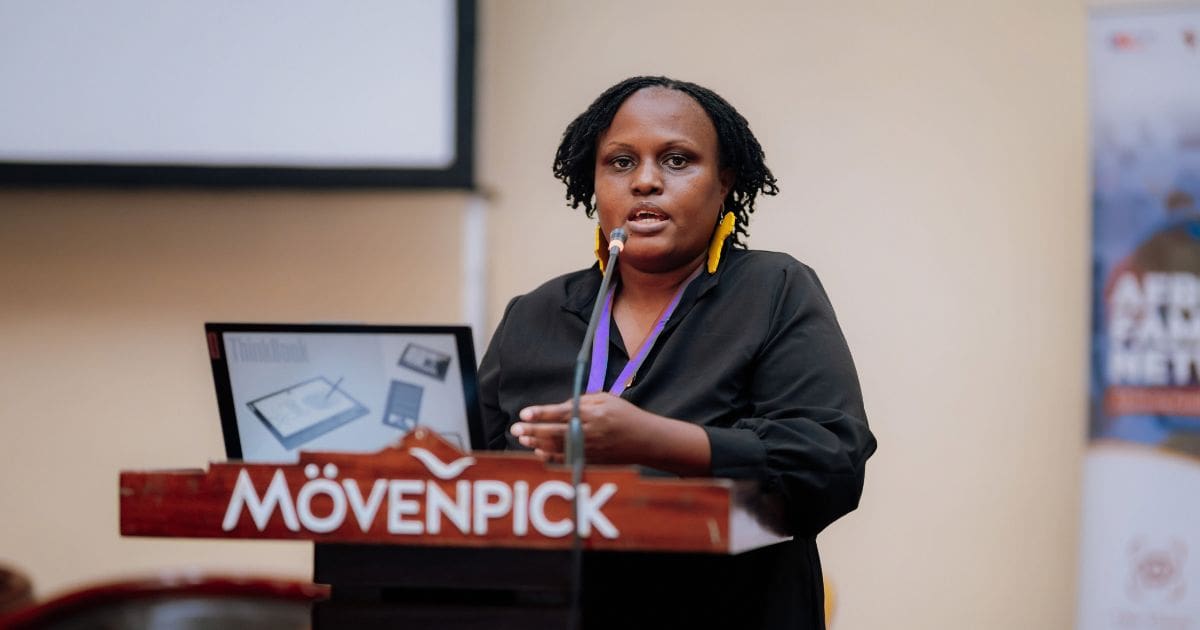
In this opinion piece, Deborah Nyokabi, Associate Manager at Economic Justice and Family Law, Equality Now, examines the implications of the planned Third Pan-African Conference on Family Values, scheduled to take place in Cape Town in May 2027. The author argues that the proposed African Charter on Family, Sovereignty and Values risks undermining LGBTQ+ rights, gender equality and existing human rights protections across the continent. Drawing on African human rights frameworks, including the Maputo Protocol, the piece explores why the debate over family values extends beyond LGBTQ+ communities and calls for the protection of equality and dignity for all.
A planned family-values conference in Cape Town is already facing opposition before a single delegate has arrived. LGBTQIA+ organisations have written to President Cyril Ramaphosa asking him to stop the event, and a petition opposing it has drawn more than 11,000 signatures. The third Pan-African Conference on Family Values is scheduled for 12–15 May 2027. Conference organisers describe it as a defence of “family values”, while the draft Charter defines the family in terms of marriage between a man and a woman, with no recognition for same-sex couples.
The immediate dispute is not about whether the conference should go ahead at all. But the deeper issue is what its underlying agenda would mean for equality and human rights more broadly. That agenda is set out in the draft African Charter on Family, Sovereignty and Values, a proposed continental framework that would shape how African states legislate on family, marriage, and sexual health and reproductive rights.
South Africa has already rejected it once; in June, at the 4th African Inter-Parliamentary Conference on Family Values and Sovereignty in Accra, delegate Zandile Majozi informed the convening the draft conflicted with Chapter 2 of the country’s Constitution. Mozambique also declined to endorse it.
From Nairobi to Cape Town: the family-values charter’s path
The Pan-African Conference on Family Values began in Nairobi in May 2025, where organisers adopted a declaration affirming the family as society’s “natural and fundamental” unit and calling for stronger legal protection of parental authority.
The Nairobi declaration set the terms for a debate that continued in Accra the following year, where delegates from more than 20 African countries endorsed the draft Charter, and organisers said they intended to finalise it and submit it to the African Union.
Both meetings framed a narrow, patriarchal model of family based on heterosexual marriage as something needing legal protection from outside interference. In practice, that framing becomes a tool for excluding anyone who falls outside it; a same-sex couple, an unmarried mother, a grandmother raising her grandchildren, or a woman seeking a divorce. Twenty of the countries at Accra endorsed the Charter outright; South Africa and Mozambique did not.
Why family law matters to everyone
What is happening here is part of a wider pattern, in which “family values” are being weaponised to justify stripping fundamental human rights and obligations on gender equality. Family law, the law that governs marriage, divorce, property, inheritance and custody, is where that plays out in practice. Because it governs these basic relationships, it shapes everyone’s ability to live safely, equally and free from discrimination.
Governments have an obligation to protect equality for all citizens, and family law is one of the clearest tests of whether they do. Equality Now’s research across 20 African countries shows how family laws determine women’s rights to property and inheritance, their ability to leave a marriage on equal terms, and their rights and responsibilities towards their own children. These are not private or cultural questions. They affect economic justice, bodily autonomy, mental health, safety and equality for everyone a family law touches.
Family law is nonetheless one of the hardest areas to reform, because governments and communities often treat it as too personal, or too tied to culture, to change. Even under CEDAW, the world’s primary treaty on women’s rights, Article 16, on equality in marriage and family relations, has the highest number of reservations from governments. Similarly, Article 6 of the Protocol to the African Charter on Human and Peoples Rights on the Rights of Women in Africa (the Maputo Protocol) on equality in marriage and the family has the highest number of reservations from African governments.That resistance is exactly why family law matters here: it shows how easily a government can sign up to equality in principle while carving out regressive exceptions for “the family”.
The Maputo Protocol already protects equality in African family law
African states have already negotiated their own answer to these questions. For readers meeting it for the first time: the Maputo Protocol is the African Union’s own treaty on women’s rights, formally called the Protocol to the African Charter on Human and Peoples’ Rights on the Rights of Women in Africa. African governments adopted it in Maputo, Mozambique, in 2003, and 46 of the AU’s 55 member states, including South Africa, have since ratified it.
It guarantees women equality in marriage and the family, protection from harmful practices such as female genital mutilation and child marriage, and the right to make their own decisions about their reproductive health.
It is not a foreign import. It is one of the continent’s own human rights instruments, negotiated and adopted by African governments.
Yet the draft Charter calls on states to withdraw from agreements that conflict with its principles, naming Maputo specifically. The language of sovereignty sits uneasily with a proposal asking African states to reconsider standards they themselves negotiated and adopted. In a 2018 ruling against Mali, the African Court on Human and Peoples’ Rights affirmed the opposite: that equality within the family cannot be separated from equality before the law, and that culture and religion cannot be used as grounds to justify discrimination.
African civil society is pushing back against the family-values charter
The Charter’s backers do not speak for all of Africa. Since 2022, the Africa Family Law Network (AFLN), founded by Equality Now, FEMNET, Musawah and the SIHA Network, as well as the Global Campaign for Equality Law, has brought together African civil-society organisations across more than a dozen countries, including South Africa, who reject the weaponisation of “African tradition” to justify inequality, and who share the belief that families should be places of equality, not exclusion.
At the AFLN conference in Nairobi in August 2026, judges, lawyers and civil-society advocates examined the real, lived consequences of family laws built on narrow and outdated value systems: women denied property after a divorce, daughters excluded from inheritance, mothers stripped of custody. Those consequences, not abstract debates about values, are what is at stake.
What this means for LGBTQ+ people
For LGBTQ+ people, the implications are immediate. The draft Charter’s proposed definition of family explicitly excludes same-sex couples. The same conference circuit has, in Uganda, been linked by the Guardian to the country’s 2023 Anti-Homosexuality Act, which peer-reviewed community-led monitoring found produced a measurable chilling effect on HIV testing and treatment.
South Africa’s constitutional model is the opposite: equality protections that apply regardless of sexual orientation, and legal recognition for same-sex couples. Cape Town is where that model will be tested, in public, by the conference’s arrival.
Cape Town’s test for LGBTQ+ rights and family law equality
South Africa already showed in Accra that it is willing to defend equality rather than accept the weaponisation of family values as a tool for exclusion. The petition and the letter to President Ramaphosa show that South Africans are prepared to defend that position again, on their own ground, before the conference even takes place.
That is the principle worth holding onto between now and May 2027; a family is a place where people should be protected and treated equally, not a justification for deciding who does not deserve protection at all.
Deborah Nyokabi is Associate Manager, Economic Justice and Family Law, at Equality Now, a global human rights organisation dedicated to ending discrimination against all women and girls. She is based in Nairobi, Kenya.