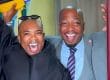


In a resolute call for justice and equality, Deputy Minister Mmapaseka Steve Letsike has condemned the ongoing persecution and torture of LGBTIQ+ people across Africa, asserting that it is not only unacceptable, but fundamentally illegal.
Addressing a pivotal roundtable hosted at the RH Hotel in Pretoria, South Africa, on 29 April 2025, Letsike delivered a powerful indictment of systemic abuse and urged African governments to rise to the challenge of safeguarding human rights.
“This is a crisis,” declared Letsike. “LGBTI persons face imprisonment, violence, and persecution—not just from strangers, but often from the very people who are supposed to protect and love them. Parents are the first perpetrators of conversion practices.”
The event, hosted by the Department of Women, Youth, and Persons with Disabilities in partnership with regional human rights advocates, gathered legal experts, activists, and policymakers from across the continent.
The roundtable centered on Resolution 275 of the African Commission on Human and Peoples’ Rights (ACommHPR), which condemns torture and ill-treatment based on sexual orientation or gender identity.
Legal Victories, Social Betrayals
South Africa was highlighted as a paradox—progressive in law but still deeply troubled in practice. Despite being the first country in the world to outlaw discrimination based on sexual orientation in its Constitution and legalising same-sex marriage in 2006, attacks on LGBTIQ+ individuals are rising.
“We are seeing assassinations—targeted killings—of openly queer human rights defenders,” Letsike said. “This is happening in a country with one of the most progressive constitutions in the world. We must ask: What does legal protection mean if people are still living in fear?”
Recent murders, including that of Imam Muhsin Hendricks and a prominent queer activist in Cape Town, underscore the dangers faced by South Africa’s LGBTIQ+ community, even within the framework of supposed legal safety.
From Colonial Laws to Contemporary Violence
In Kenya and Malawi, where same-sex relations remain criminalised, violence is often sanctioned or ignored by the state. Sheila Lulu, Programme Officer at the National Gay and Lesbian Human Rights Commission (NGLHRC) in Kenya, shared a bleak picture.
“In 2023, we received 1,561 cases of violations. Many of these were by state actors,” said Lulu. “Post-anal examinations are still being conducted—acts the United Nations classifies as torture.”
Despite Kenya’s Constitution declaring freedom from torture an absolute right, Lulu noted, “The courts often refuse to classify gruesome killings or medical abuse of LGBTIQ+ persons as torture. Instead, they are simply labelled as ‘murder’—stripped of the hate and cruelty they truly represent.”
A Call to Action
Letsike’s message was clear: legal reform is necessary but not sufficient. “We must change laws and practices—but we must also change hearts and minds,” she urged.
Her remarks echoed those of former UN Secretary-General Ban Ki-moon: “Human rights are for all of us, all the time, whoever we are.”
She laid out a roadmap for action:
- Decriminalisation: “It is long past time to abolish laws that criminalise love and identity,” Letsike said emphatically.
- Accountability: “Perpetrators of torture—whether police, parents, or politicians—must be held responsible.”
- Education: “We need to engage youth, religious leaders, and communities in conversations that promote understanding and acceptance.”
- Support for Survivors: “Legal aid, safe houses, medical and psychological care must be prioritised.”
- Regional Cooperation: Letsike proposed a follow-up to the 2016 African seminar on LGBTIQ+ rights, noting that more African nations are now allies. “We have more friends—Botswana, Namibia, Mozambique—ready to stand with us.”
Resistance, Resilience, and Reform
Chris Esdaile, Senior Legal Advisor at Redress, highlighted that barriers to justice include not only legal challenges but entrenched prejudice within the justice system. “In Kenya and Malawi, victims fear reporting. In South Africa, police ignorance leads to secondary victimisation,” he said.
And yet, despite hostile environments, activists persist.
“In all three countries, civil society is the difference,” Letsike noted. “Brave lawyers, community leaders, and survivors are standing in the gap—demanding dignity, one case at a time.”
“Let Us Not Be Silent”
Ending her address with a rallying cry, Letsike reminded the audience of Nelson Mandela’s words: “There can only be one division amongst us—between those who cherish democracy and those who do not.”
“Let us not grow weary,” she said. “Let us be the generation that finally declares: there is no place for torture, no place for hate, and no place for injustice on this continent.”