

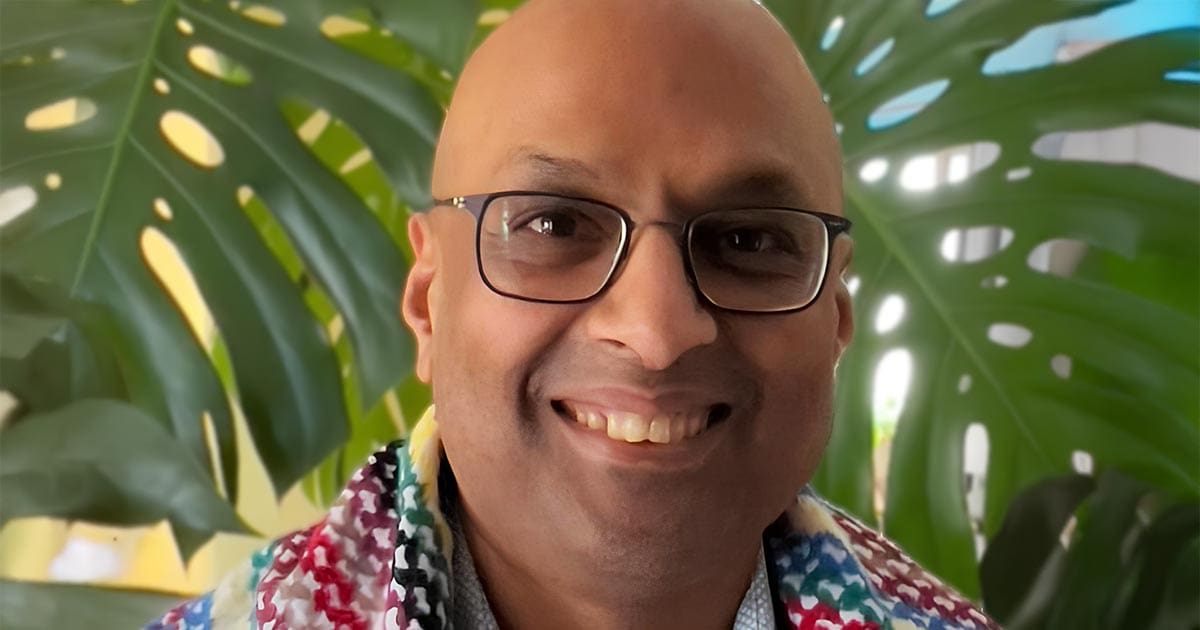
Activist Sikhander Coopoo, pictured above, reflects on the trauma and terror faced by queer Muslims in South Africa following the assassination of Imam Muhsin Hendricks — and the state’s silence in the face of rising incitement and hate. He warns that unless urgent action is taken, more lives will be lost.
I clearly remember the day I first saw the list appear online; 214 names, mine among them, published by a radical Muslim organisation in Johannesburg. My chest tightened, my breath caught, and for a moment I was a child again, hiding under the covers, wondering if the monsters in my dreams would find me.
That fear is real for queer Muslims today; the same faith that nourishes our souls is being twisted into a weapon against us. When I reported the public call for our executions, captured on video by Cape Town cleric Sheik Jameel Adams, and pointed to that chilling list, I expected protection and justice. Instead, I was told there was “no crime” in calling for our deaths.
On 15 February 2025, gay Imam Muhsin Hendricks was assassinated. His murder sent shockwaves through South Africa’s queer Muslim community and beyond. Imam Hendricks was more than a religious leader, he was a symbol of hope, of radical love, of possibility. For queer Muslims navigating rejection, silence, and erasure, he stood as a testament that we could belong to our faith and to ourselves.
His death has left us gutted. And while we mourn, others take to pulpits and digital platforms to preach hate, unchecked.
In the days that followed, a video began to circulate. In it, Sheik Jameel Adams does not simply express disapproval, he issues a direct and public call to violence. Citing the story of Prophet Lut, he says:
“Being gay or being homosexual, which you openly proclaim. Number one, it is a major sin… Whoever you find doing the action of the people of Lut, execute the one doing and the one done to.”
Let those words land.
“Execute the one doing and the one done to.”
This was not just a casual remark in a comment section; it was a sermon delivered by a religious leader, calling for the execution of queer individuals. His message was unambiguous and direct, encouraging actions that could lead to violence, all while cloaked in scripture and amplified to an audience that might be swayed to act upon it.
In the aftermath, a Johannesburg-based organisation published a list of 214 names, including those of academics and activists, labelling us as enemies of Islam and society. This act is more than doxxing; it was a frightening invitation to violence. As of now, that list remains available online, contributing to an environment of fear and uncertainty.
In response to this alarming situation, I did what anyone in a constitutional democracy should be able to do: I reported it. With the unwavering support of close friends, I filed a threat-to-life case with the South African Police Service (SAPS).
The evidence gathered was disturbingly clear, public incitement to violence, a published targeted list, and the assassination of an openly gay Imam compounded by a flood of online hate speech.
Despite all of this, I was informed by SAPS that both the police and the Public Prosecutor’s Office in Cape Town declined to proceed with the case, citing that it “lacked elements of a crime as well as elements of intimidation.” A complaint was registered with the South African Police Services, which has been acknowledged.
It’s disheartening to see that the list remains online, the video continues to circulate, and the hate speech endures. The individuals who called for our executions are still free, leaving those of us who are targeted feeling vulnerable and unprotected. It’s a painful reminder of the work that still lies ahead in the fight for justice and safety.
The message from the state is clear: unless someone pulls the trigger again, this is not a crime.
That should terrify us all.
It is staggering that such an explicit threat, so public, so documented, can be dismissed so easily. This is not just institutional apathy. It is complicity. When the justice system refuses to act, it sends a chilling message: queer Muslim lives are not worth protecting.
The betrayal is profound and for queer Muslims, it cuts even deeper. Many of us are forced to live double lives, navigating our identities within communities that barely tolerate us. Some of us are trying to reconcile our faith with our truth, striving to embody both fully. But how do we do that when even progressive religious leaders are targeted, not just socially, but violently? And when someone like Imam Hendricks dared to model that wholeness, he became a target. Not just of words. Of bullets.
The precedent being set here is one of abandonment. This is about a culture of permission; permission to hate, to dehumanise, to threaten, to kill. Hate crimes don’t start with a weapon. They start with words. With sermons. With unchecked rhetoric. With lists. And when those things are ignored, they escalate. This is how communities are erased.
The Constitutional promise of equality becomes meaningless when hate speech is tolerated under the guise of freedom of religion or expression. South African law is clear: freedom of expression does not extend to incitement to cause harm, nor to hate speech based on sexual orientation or religion. And yet, here we are, with a video explicitly calling for executions, and with law enforcement agencies refusing to act. The justice system must hold those who preach death accountable, not after another life is lost, but now.
From the time Imam Hendricks was assassinated, in the Eastern and Western Cape, Linten Jutzen, Kabelo Seseli, Qhawe Ndabeni, Nelsiwe Chapa and Shakira are believed to have been victims of anti-LGBTQIA+ hate crimes. Why must we wait for more killings before action is taken?
What is being ignored, or deliberately avoided, is this: hate speech lays the foundation for hate crimes. Every queer person knows this. First, our dignity is chipped away. Then our humanity. Then our existence is painted as a threat. And finally, someone acts.
It shocks our moral wiring that a society built on the ashes of apartheid could condone, or even tolerate, any group’s targeted hatred. We cannot stand idly by as religious rhetoric escalates into open threats, and then be told by the very institutions sworn to defend us that “there is nothing to see here.”
But there is still hope.
Not all have looked away. Deputy Minister Steve Letsike responded with urgency and empathy. Her office has committed to raising this directly with the Deputy Minister of Justice and the Deputy Minister of Police. In a landscape where silence too often reigns, her support has been a vital act of solidarity.
South Africa’s National Hate Crimes Rapid Response Team and the South African Human Rights Commission are also aware of the situation. The truth is: the system knows. The mechanisms exist. The threat is documented and undeniable.
To every queer person, especially those who are Muslim, please know this: you are not alone. Your pain is real. Your life has value. And your existence is not a sin. We are many. We are here. And we will not be silenced.
We must continue to speak, to organise, to protect each other. The system may be failing us for now, but we will not fail each other, and we will not stop demanding justice for Iman Muhsin Hendricks and for every queer person living in fear. Our allies need to stand with us and not silently abandon us in the fight for justice.
This is not just a call to law. It is about a growing, festering permission that society is granting to hate. And if we don’t stop it now, through law, through compassion, through unwavering solidarity, we will have blood on our hands. The time to act is before another queer body falls.
Sikhander Coopoo is a black, queer, Muslim intersectional feminist with backgrounds in gender, pedagogy and local governance. He is a social justice and humxn rights activist at heart. Sikhander serves on the Gender and Sexuality Alliance of East London committee and writes in his own capacity.




One Comment
Spine chilling that justice system still stands-by and does nothing when dead bodies keep on pilling up!…and our community is consistently targetted on dating apps and everywhere else!…