

One hundred days after the brutal assassination of queer Imam Muhsin Hendricks, a sacred space was created in his memory—one that held grief, celebrated resistance, and dared to imagine a world where queer love and faith not only coexist but flourish.
Hosted by Inclusive and Affirming Ministries (IAM) in partnership with the Act Church of Sweden, the University of Cape Town’s (UCT) Centre for African Feminist Studies, and the University of KwaZulu-Natal’s (UKZN) Islamic Studies Research Unit, the inaugural Imam Muhsin Hendricks Memorial Lecture was a powerful call to action.
Held in Cape Town on Wednesday night, the event marked not only the passage of time but the endurance of a legacy—one rooted in courage, radical inclusion, and transformative theology.
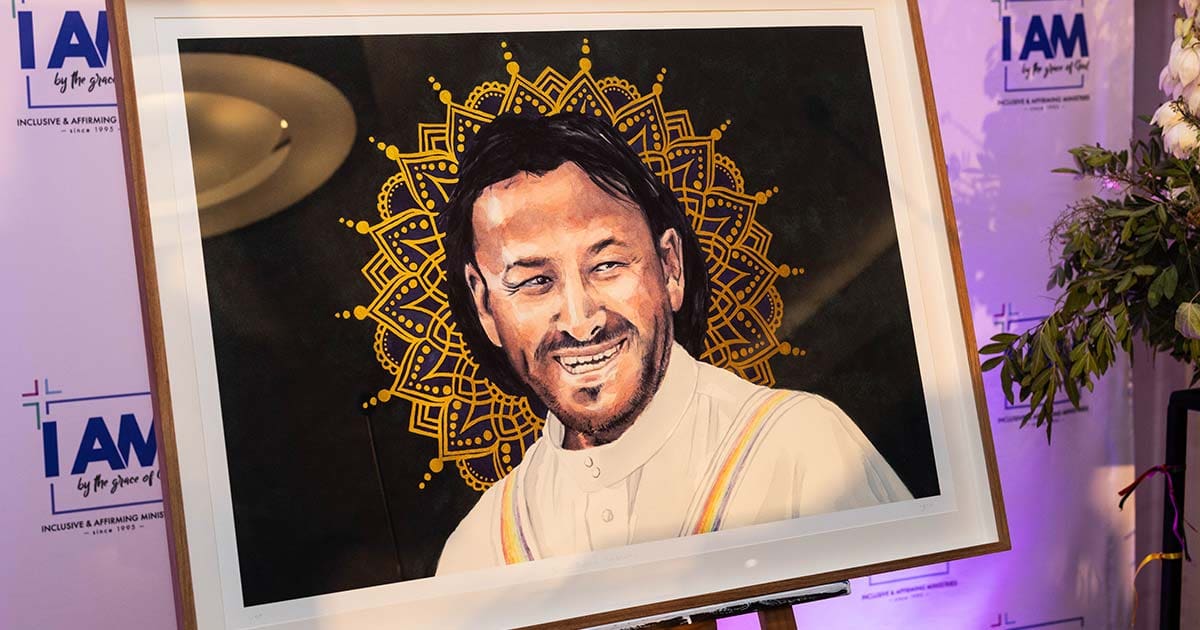
An emotionally charged portrait of Imam Hendricks, unveiled during the evening, bore silent testimony to his life’s work. Created by artist Seth Deacon, the piece forms part of a broader series titled Communion—an artistic counter-narrative to hate, celebrating queer joy, resilience, and reverence.
“I wanted to resist the idea that queer lives are something to be hidden or hated,” said Deacon. “This is not just a painting. It’s part of an archive of dignity.”
A Sacred Gathering, A Sacred Loss
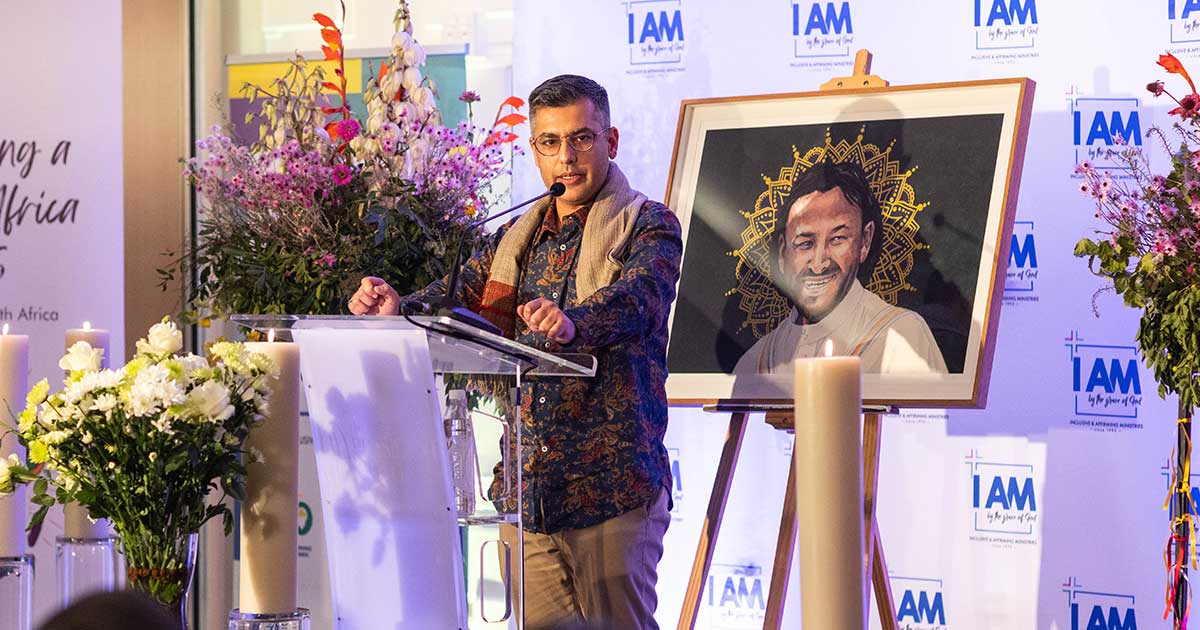
At the heart of the evening was the lecture and keynote address delivered by Dr Nadeem Mahomed, who offered profound insight into the intersections of queerness and faith. In honour of Imam Muhsin Hendricks, Dr Mahomed’s address wove together deep scholarship, personal reflection, and spiritual inquiry—tracing how theology, identity, and resistance can co-exist in sacred harmony.
“To live before God without shame, to wrestle with scripture not as a curse but as a calling—that was Imam Muhsin’s sacred task,” said Mahomed. “His life was a testament to the revolutionary power of authenticity.”
Mahomed began his lecture with a moment of reflection:
“It is with a full heart that I stand before you this evening, humbled by the honour, grateful for the invitation, and moved by the memory of a remarkable soul. Imam Muhsin’s life departed too soon, yet we trust in the wisdom of the Divine, particularly in times when the faculty of understanding may seem most opaque.”
He spoke of the theological evolution Imam Hendricks modelled—a God not draped in punishment and condemnation, but a God of mercy, tenderness, and justice.
“Imam Muhsin delved into the neglected archives of Islamic culture. He found that same-sex desire had, at various times and places, been celebrated, understood, and at the very least, treated as human. He offered a reinterpretation of sacred texts, one that dignifies our lives rather than condemns them.”
Quoting theologians, poets, and political thinkers, Mahomed wove together a constellation of thoughts:
“What we often call tradition is in truth the sediment of power, preserved in the name of sacred continuity.”
“Interpretation is not an academic indulgence. It is survival. It is the refusal to let scripture speak only death to us.”
He explored how visibility and silence can both be acts of resistance and survival:
“Imam Muhsin was never prescriptive. His own visibility was not a demand, but a light held up for others to see—not a torch forced into unready hands. For some, the closet is not shame, but survival.”
Mahomed also offered a powerful reflection on faith and queerness:
“For queer people who cannot and will not abandon God, our calling is more complicated. It is not enough to walk away. We stay. We wrestle. We reinterpret. Because faith is not the enemy of queerness. It can be the language through which our truth is spoken.”
“Our lives, our loves, our longings are not aberrations. They are sacred texts in themselves. Imam Muhsin knew this. He lived this.”
And finally, he ended with a meditation on love:
“Love does not insist on perfect clarity. It simply attends, fiercely, faithfully. Where love is possible, let it guide us. Where it is not, let justice keep its place.”
Reflections of Love, Grief, and Endurance
Aqielah Pillay, a close friend of Hendricks and a board member of the Al-Ghurbaah Foundation, opened her tribute with raw honesty:
“He was more than our executive director. He was our imam. He was our faith.”
She spoke of sitting alone the night before, gripped by grief, “sinking into cement,” and the weight of loneliness that had nearly consumed her. But, looking around the room, she said she chose to rise.
“We too must rise stronger, more united. Our grief may feel like the end, but it is not. Like a tree that has been cut down over and over, yet through its roots, new branches emerge—life once more.”
Her poetic reflection reminded the community that pain, while deep, is not permanent. That healing, like faith, requires community.
“Our candles will not die. Our flowers will not wither. We will rise, and we will be heard.”
A State Acknowledgement of a Spiritual Warrior
Delivering a powerful tribute on behalf of the South African government, Deputy Minister Mmapaseka Steve Letsike described Imam Hendricks as a “spiritual traitor”—not in betrayal, but in resistance to injustice.
“He dared to open sacred doors for queer Muslims,” she said. “He showed us that faith and freedom are not mutually exclusive.”
She called for the memorial lecture to be more than ceremony—to be a platform for real transformation:
“Too often, LGBTQI+ persons of faith are forced to choose between their spiritual identity and their authentic selves. That is an impossible and unjust choice.”
She ended with a call to action:
“Let this space affirm, without hesitation, that queer people of all faiths, all backgrounds, all experiences have a rightful place in our democracy, our communities, and our sacred spaces.”
From Mourning to Movement
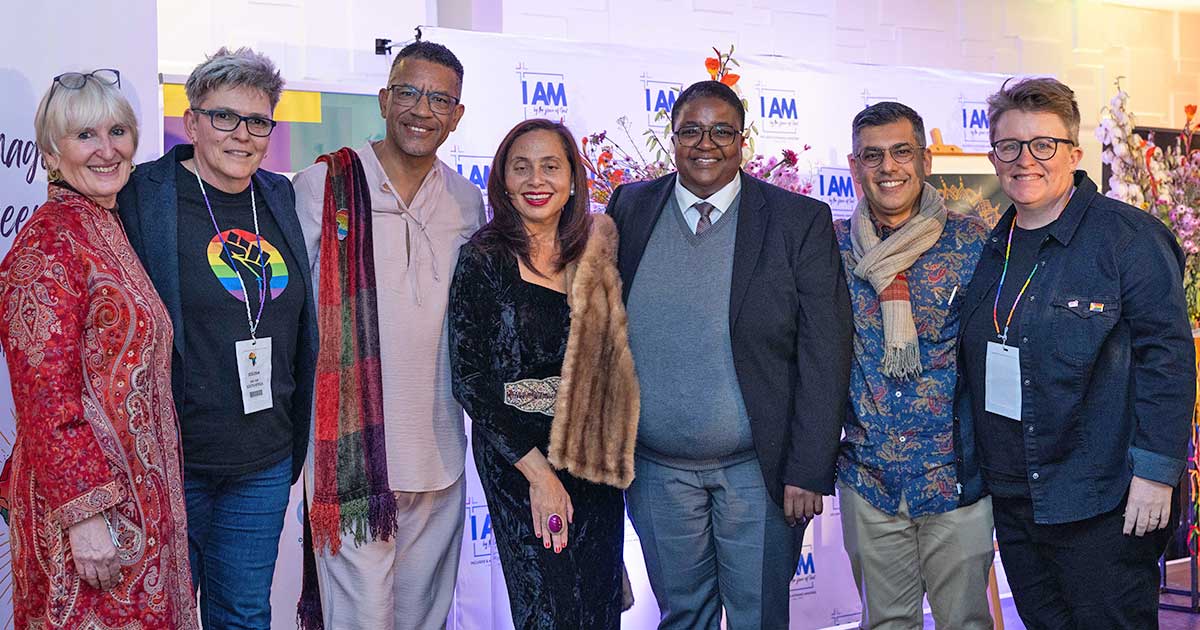
While grief remained heavy in the room, the evening pulsed with defiant love. Every speaker echoed the urgency of continuing Imam Hendricks’ mission—to carve out safe, sacred spaces where queer people of faith are not just welcomed but celebrated.
As IAM and its partners called for continued advocacy, theological reimagining, and resistance against hate, the message was clear: the memory of Imam Muhsin Hendricks will not be silenced.
“Imam Muhsin taught us that God is found in love, not condemnation,” said Mahomed. “His death may have silenced his voice, but it has amplified his message.”
In his absence, a movement stands stronger. The lecture was not just a remembrance—it was a vow.