

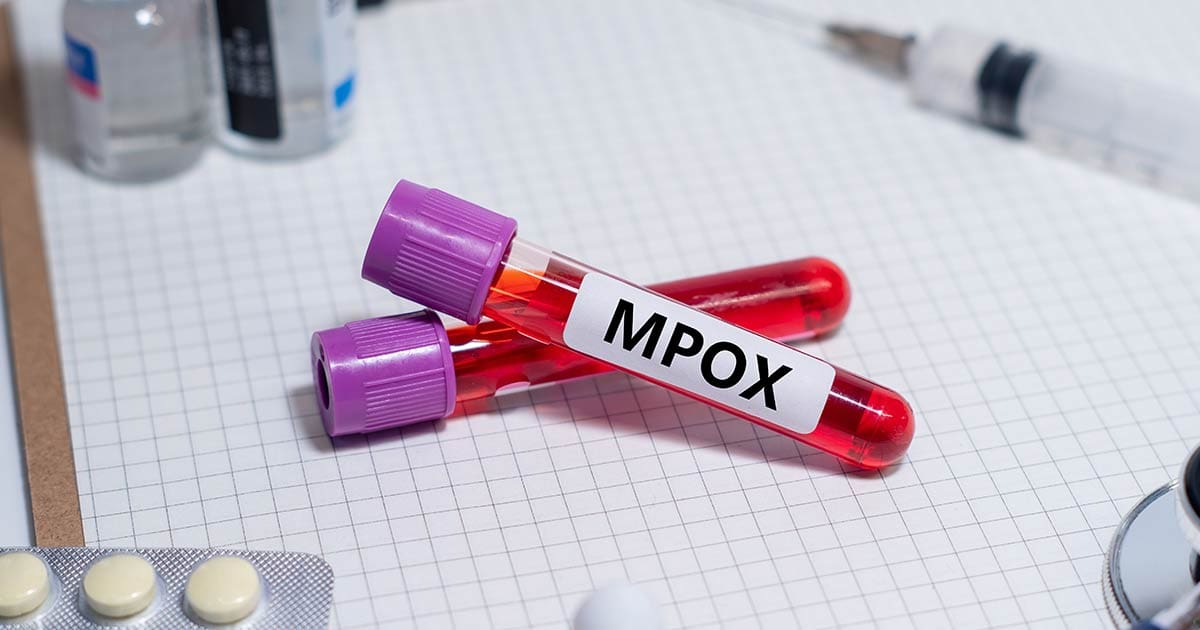
South Africa’s Department of Health has announced that vaccines for mpox are now available in three provinces, while also confirming two new cases.
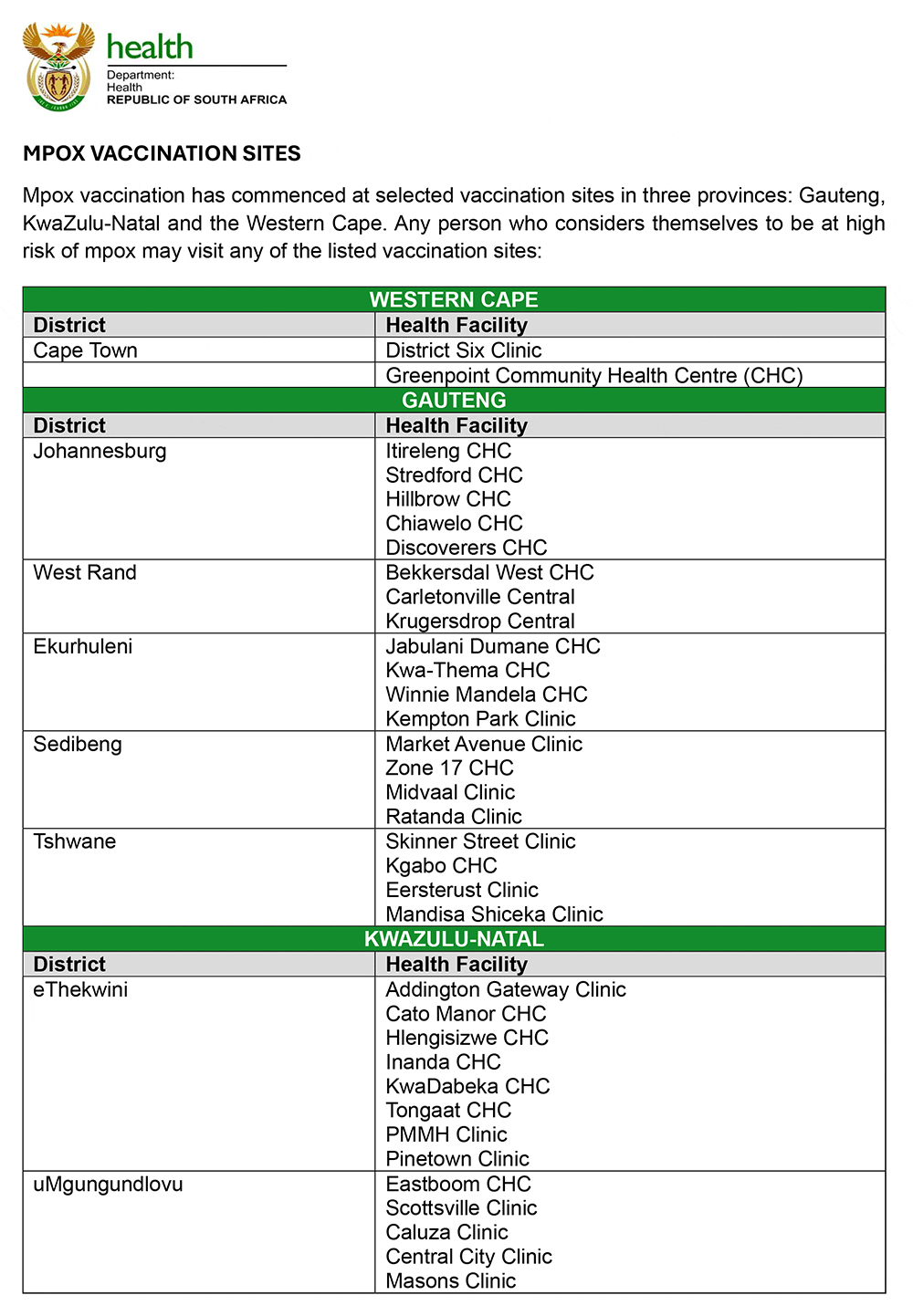
The Department has prioritised the most affected provinces — Gauteng, Western Cape and KwaZulu-Natal — for the initial rollout. Vaccinations are accessible at selected public health facilities, travel clinics, and a few private healthcare providers in these regions.
Those at higher risk of contracting the virus will be prioritised. This includes individuals who have been in close contact with confirmed cases, people with multiple sexual partners, and travellers heading to areas experiencing mpox outbreaks.
South Africa has received approximately 10,500 doses of the mpox vaccine, Imvanex®, donated by the Africa Centres for Disease Control through the Access and Allocation Mechanism for Mpox.
Given the limited quantity, the vaccine will be distributed in phases, focusing on outbreak hotspots and guided by availability.
- A list of public health vaccination sites is available here or see below.
What to Expect After Vaccination
The vaccine has already been used to help control mpox in countries such as the Democratic Republic of Congo, Nigeria, Uganda, the United States, Canada, and in Europe.
As with most vaccines, recipients may experience mild to moderate side effects—typically a normal indication that the body is building immunity.
Common side effects include pain, redness, swelling and itching at the injection site, muscle pain, headache, nausea, and fever. These usually resolve on their own within a few days without treatment.
Mpox in South Africa
According to the National Institute for Communicable Diseases (NICD), there were 25 laboratory-confirmed mpox cases in South Africa in 2024, including three deaths. Many of those infected were gay or other men who have sex with men (MSM).
So far in 2025, ten confirmed cases have been reported. The two most recent involve a 32-year-old from Cape Town and a 45-year-old from Johannesburg, both with no recent travel history, suggesting local transmission within South Africa.
While mpox is generally a mild disease with a low fatality rate, it can pose a greater risk to people living with immunodeficiencies, especially those with untreated HIV/AIDS.
Symptoms and Transmission: What You Need to Know
Mpox symptoms typically include a rash lasting two to four weeks, fever, headache, muscle aches, back pain, low energy, and swollen glands. The rash can appear as painful blisters or sores and may affect the face, hands, feet, groin, and genital or anal areas.
Although not classified as a sexually transmitted infection, mpox can be spread through close or intimate physical contact. This includes oral, anal, and vaginal sex, as well as touching the genitals or anus of someone with the virus.
Other transmission routes include hugging, kissing, massage, or talking in close proximity, as well as contact with contaminated bedding, towels, clothing, or sex toys.
If you suspect you may have mpox, please visit your local clinic or health care provider. For more information on mpox, read our mpox guide for men who have sex with men or visit the NICD website.




One Comment
Daer Mamba,
Cf the above: the press release mentions the availability of the Mpox vaccine at private travel clinics. This is thanks to cooperation between the Gauteng Department of Health and the Southern African Society of Travel Medicine. Please find below a list of clinics where a limited supply of vaccine is available until Friday 25 July 2025.
Bloemfontein
National District Hospital Outpatients Department
Cape Town
The Cape Town Mediclinic Emergency Centre
21 Hof Street, Oranjezicht
Tel: 021 464 5554
Dr Brauer & Associates
Suite 106, Level 1, Clock Tower Office Suites, V&A Waterfront
Tel: +2721 419 1888
Durban
Dr Ameshin Moodley
Infinity Dermatology Inc
Ahmed Alkadi Hospital
490 King Cetshwayo Highway
Mayville
Tel: 031 4923459
George
EasyCare George
69 Meade Street
George Central
Tel: 044 8037650
Johannesburg
The Travel Doctor Johannesburg
8th Floor
Firestation Rosebank
16 Baker Street
Rosebank
Tel: 010 900 3013
The Travel Doctor Northcliff
NHC Northcliff
Cnr Beyers Naude & Waugh Street
Northcliff
Tel: 011 214 9030
Mosselbaai
EasyCare
111 Montagu Street
Mosselbaai
Tel: 044 690 3545
The vaccine, with a street value of around R3 000-00 per vaccine, is available FREE OF CHARGE at these clinics. The vaccine is provided by the Department of Health. The clinics will charge an administration fee of around R300-00. The vaccine is available to ANYONE who considers him / herself at risk, travellers to highly endemic countries, laboratory and health care workers. Persons who want the vaccine can also register at the following link. link to forms.office.com (If this link does not work, please go to : http://www.traveldoctor.co.za and follow the link there.)
We will direct interested persons to the nearest clinic where the vaccine is available. Note that vaccine is also available in Bloemfontein and on the Garden Route. If there is a big enough uptake we will make more available in other centres. Please note the statement by the NDoH: “Given the limited quantity…”
Please spread the word far and wide.
Thank you
Dr Albie de Frey
PRESIDENT, SASTM