

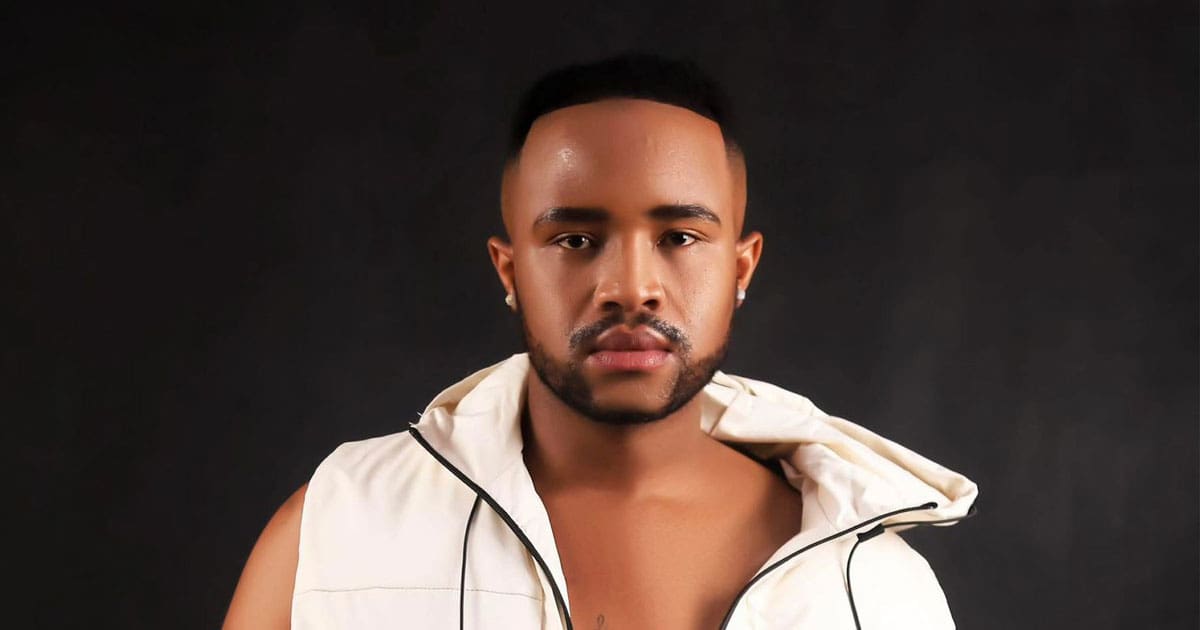
South African reality star, musician, entrepreneur and socialite Inno Matijane has never shied away from the spotlight and is certainly no stranger to controversy.
Inno is best known for his role in the Moja Love reality show, The Way Ngingakhona, which focuses on the lives of members of the LGBTIQ+ community.
Once celebrated as a trailblazing gay and then trans figure in local entertainment, he has since taken the contentious step of detransitioning, citing a deep spiritual revelation. His decision and the way he now discusses the queer community has ignited national debate.
Inno recently announced that after five seasons on the show, he is officially closing that chapter of his life because “not every environment will always reflect who you are becoming.” He’s also continued to spark anger with his statements, such as describing LGBTIQ+ identities as a “lifestyle”.
In a candid interview, Inno opened up about his journey; one that he explains has been steeped in emotional scars, deep internal conflict, and the clash between religious beliefs and queer identity.
Speaking to MambaOnline, Inno says, “My sexuality and gender have been a very traumatic experience for me… confusion in that regard is not a nice thing. Because you spend a lot of your time trying to figure yourself out.”
[Fact check: Detransitioning is the process of stopping or reversing some or all aspects of a gender transition. Trans people may choose to detransition for diverse reasons. This could be due to a change in personal beliefs, a change in how they understand their gender, for medical reasons, or, most often, to avoid discrimination, rejection and stigma. Choosing to detransition does not in itself indicate regret at transitioning or indicate a rejection of a person’s transgender identity.]
“God Told Me to Let It Go”
Inno says his turning point in deciding to detransition came during a spiritual low, when he looked to Christianity to seek answers.
“I decided to start reading the Bible from scratch… That’s when I met a revelation, and God told me, ‘You need to sacrifice the one thing that means so much to you.’ And for me, that was my gender identity,” he tells MambaOnline.
While some critics have accused him of courting attention or betraying the LGBTIQ+ community, Inno insists this decision came at the cost of mental anguish and near-suicidal ideation.
“I hated myself… I hated my biological makeup,” he says. “I reached out to a queer organisation and said, ‘If you don’t help me, I’m going to end it all.’”
Personal Truth or Betrayal?
Inno has since been accused by LGBTIQ+ activists and trans public figures like Yaya Mavundla of promoting transphobia and aligning with harmful rhetoric, particularly around topics like trans women in women’s spaces.
He’s particularly vocal about what he sees as safeguarding children from early transitions.
“Kids can’t drink, can’t get tattoos, but we allow them to take puberty blockers? We need to have that conversation,” he argues.
[Fact check: Puberty blockers are not something that young people can get on a whim, like tattoos. They are legitimate medical interventions only prescribed by doctors, typically with the consent of parents. Puberty blockers temporarily pause the physical onset of puberty until a trans child can make an informed decision about their gender identity. They have been shown to be reversible and lifesaving interventions for many young trans people.]
Inno remains unrepentant, seeing himself as a truth-sayer who is being victimised by the LGBTIQ+ community.
“Standing for truth is not betrayal,” he says. “You had to fight for your truth. Now you’re doing what people did to you, to me, and to detransitioners. And it’s not fair.”
He also repeats a popular narrative being amplified by anti-trans campaigners and groups – that disillusioned trans people have started detransitioning in vast numbers. “There’s a growing number of detransitioners, and people are suffering in silence,” Inno asserts.
[Fact check: While people who detransition may have become more visible on social media, this does not necessarily indicate that many more transgender people are detransitioning. In a recent and largest-ever survey of trans Americans (92,329 people), just 9% said they had gone back to living as their sex assigned at birth at some point in their lives. Of these, 96% said this was due to societal or family pressure. Just 4% of that group said it was because they realised that gender transition was not for them.]
Faith and Sexuality: The Ongoing Tug of War
Even now, Inno doesn’t pretend that all his internal conflict has disappeared since he turned to God. He also admits to still being attracted to men but says his priorities have shifted; choosing to stifle his sexuality in favour of his interpretation of God.
“I’m not constantly always thinking about men or DMs… If a cute guy hits me up, I genuinely do not care. I value my relationship with God more than my desires.”
When asked why he doesn’t join a queer-affirming Christian church, Inno responds: “I’m not going to step into someone’s household and make the rules. Christianity has its own laws. If you’re a Christian, I believe you should abide by its values. This isn’t coming from me, it’s coming from God.”
[Fact check: There is no “one” or correct version of Christianity and its values, as is seen by the wide range of Christian churches and denominations that interpret and understand aspects of scripture in different ways. While some maintain long-standing, rigid and outdated positions, others are inclusive, affirming and even celebratory of the diversity of the LGBTIQ+ community.]
“I Want a Family. I Want Children.”
Despite the storm swirling around his public transformation, Inno says his eyes are firmly on the future, a future that includes love, a partner, and fatherhood.
“Is it something I want? One hundred percent,” he tells MambaOnline. “I cannot fathom the idea of raising a kid without maternal love…” he adds. “I definitely am looking forward to having a family. I do want to have kids. I do want to get married.”
He lights up as he talks about fatherhood. “I can’t wait to take my son to rugby, I used to play rugby, and I was good at it. I can’t wait to take my son to his games or watch my daughter play netball.”
Inno also reveals that he is attracted to women and imagines that he may one day end up in a relationship with one.
“The idea of having a beautiful life with a woman, it’s getting there. Is it something I would revisit? I do not know. But it’s something I’m open to,” he says.
[Fact check: Being LGBTIQ+ is not incompatible with having a family. Many queer and same-sex couples around the world successfully raise children in loving homes. Numerous studies over the years have overwhelmingly shown that children in same-sex families typically do as well as, and in some cases do better than, those in traditional opposite-sex families.]
Complexity and Contradiction
Inno’s story is not about easy answers. It is about complexity and contradiction, and in his view, courage, whether you agree with him or not.
“I’m not trying to be straight. I’m not forcing anything,” he insists. “I think I’ve been misunderstood by both the LGBTQ+ community and religious people. My life should be respected the same way both communities want to be respected.”
He doesn’t claim to speak for everyone, only himself. But says he’s willing to bear the burden of backlash for his views.
“We are glamourising transgenderism,” he claims. “But there’s pain. There’s trauma. And I’m just trying to talk about it, because someone has to.”
[Fact check: Transgender identities and experiences should unapologetically be visible. These representations do not have to only represent struggle – they should also unashamedly reflect the joy, beauty and successes of trans people. It’s also important to note that the term “transgenderism” is offensive as it suggests that being transgender is an ideology, trend or fashion rather than a person’s innate identity.]
While Inno Matijane’s decision to detransition and to question or suppress his sexuality for his religious beliefs is a personal journey that must be respected, it also intersects with broader and more complex public conversations. Particularly, when he echoes rhetoric and language used by anti-rights groups to harm or delegitimise transgender and queer identities.
In a time of escalating hostility and backlash against LGBTIQ+ people, the hurt, anger and debate surrounding Inno’s statements reflect the real consequences of visibility and influence. Public figures, especially those within marginalised communities, carry a responsibility to navigate their platforms with care and to understand the implications of their statements.
At the same time, this moment also invites reflection within the LGBTIQ+ community. How do we hold space for those whose journeys diverge from our own, even when their views are painful or harmful? These are difficult but necessary questions that will continue to be asked in an increasingly divisive and public world.