

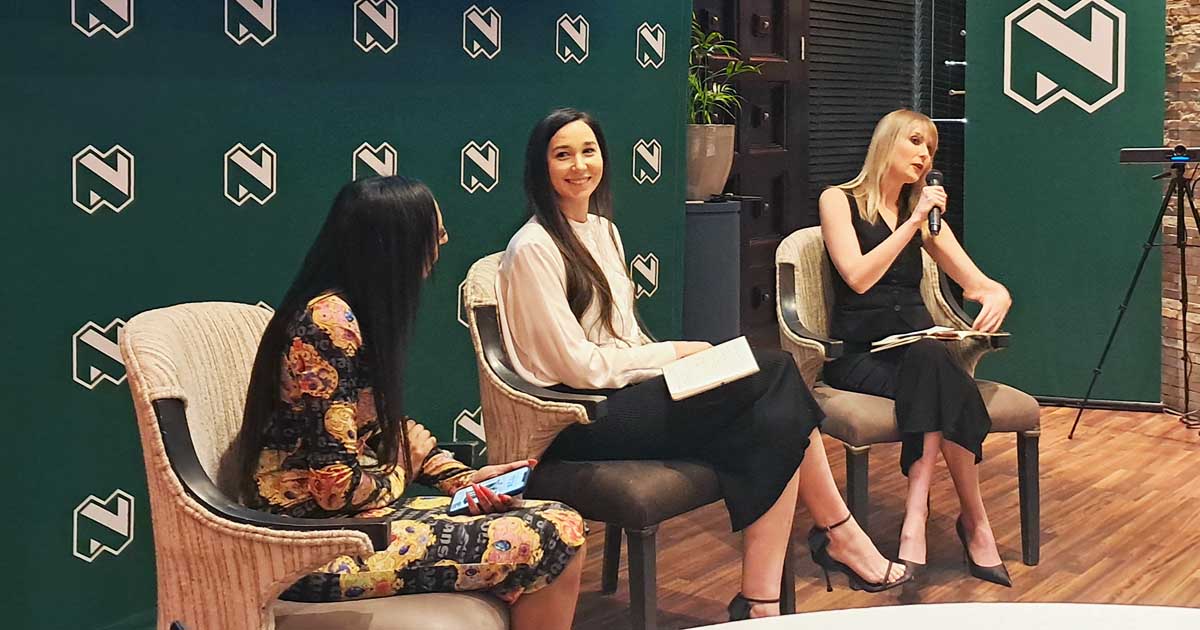
MambaOnline attended a panel discussion hosted by Nedbank in Johanesburg exploring the evolving state of diversity, equity, and inclusion (DEI) in South Africa and across the continent.
Held at African Pride, Melrose Arch on 3 September, the event underscored the pressing need for inclusive practices that go beyond compliance to meaningfully transform workplaces and society at large.
Globally, DEI is at a crossroads, challenged by polarised politics and fatigue around disclosure. Yet, as the panellists agreed, South Africa cannot afford to step back. “Inclusion remains non-negotiable. It underpins access, workforce stability, and future-fit strategy,” Nedbank emphasised in its framing of the dialogue.
The Productivity Case for Inclusion
Professor Robert Balfour, Vice-Chancellor of the University of the Western Cape, stressed that ignoring diversity comes at a cost. Drawing on international research, he warned that workplaces that erase or downplay categories of identity undermine their own potential.
“The study I’m referring to demonstrates an increase in workplace productivity,” he explained, referencing research from India that linked LGBTQIA+ inclusion to performance.
“If you make it such an unwelcoming space for people to function in, then levels of dysfunction are going to be the consequence of that for you. It’s difficult to talk about diversity unless we ourselves are diverse, and it’s difficult to register the importance of inclusion unless we ourselves commit to it in terms of emotional labour.”
From Ambition to Action
For Kershini Govender, Nedbank’s Executive Head of Transformation Strategy, inclusion must be understood in simple, practical terms to move from theory to real change.
“We talk about the what, the so what, and the now what,” she said. “That moves you from ambition to action. Our job is to help people make sense of things.”
Govender stressed that Nedbank views DEI through the lens of transformation, rooted in a vision of “inclusive prosperity.” That means creating opportunities for women and young people to lead change, not simply benefit from it.
She highlighted the bank’s YES (Youth Employment Service) partnership, where 63% of participants are women, and 80% come from households with no prior formal employment.
Despite such progress, Govender cautioned that more must be done. “The World Economic Forum gives a statistic that says gender parity at this trajectory will only be achieved by 2148. Despite the progress that’s been made, there really needs to be an acceleration, and it can only be at scale.”
Youth at the Centre
Samantha Steyn, CEO of YES, reminded the audience that youth unemployment remains one of South Africa’s biggest risks. “If every company in South Africa had to just create opportunities for youth, it would make a material difference,” she said. Since its inception, YES has created over 190,000 work opportunities through partnerships with 1,800 corporates.
“It’s not talent that is lacking, it’s the opportunity that is lacking,” Steyn argued. “When corporates are intentional and committed, beyond compliance, we see the positive multiplier effect of youth entering the workplace.”
Seeing People as Assets
Moderator Bronwyn Williams, a futurist at Flux Trends, pointed out that inclusion is ultimately about how societies view human potential.
“It’s the same thing with seeing people as an expense or seeing people as an asset. The only asset that we really have ultimately is people, because where does all that income come from? It comes from trading with real people and solving real problems for real people. Shifting that perspective is so critical.”
The Road Ahead
The discussion made clear that while progress has been made, DEI in South Africa requires renewed urgency, creativity, and collective responsibility. For South Africa, DEI is not just a moral imperative but a business necessity and, as this panel highlighted, an opportunity to reimagine prosperity that is shared, inclusive, and sustainable.
For queer South Africans, this conversation is more than a corporate talking point, it is a question of visibility, dignity, and opportunity. As Professor Balfour reminded us, workplaces that erase LGBTQIA+ identities don’t just fail individuals, they undermine their own potential for innovation and productivity.
Inclusion cannot stop at compliance or symbolic gestures; it demands real accountability, culture change, and a commitment to ensuring queer employees are not left behind. DEI in South Africa will only be meaningful when every identity is valued, and when workplaces recognise that their strength lies in the full diversity of their people.