

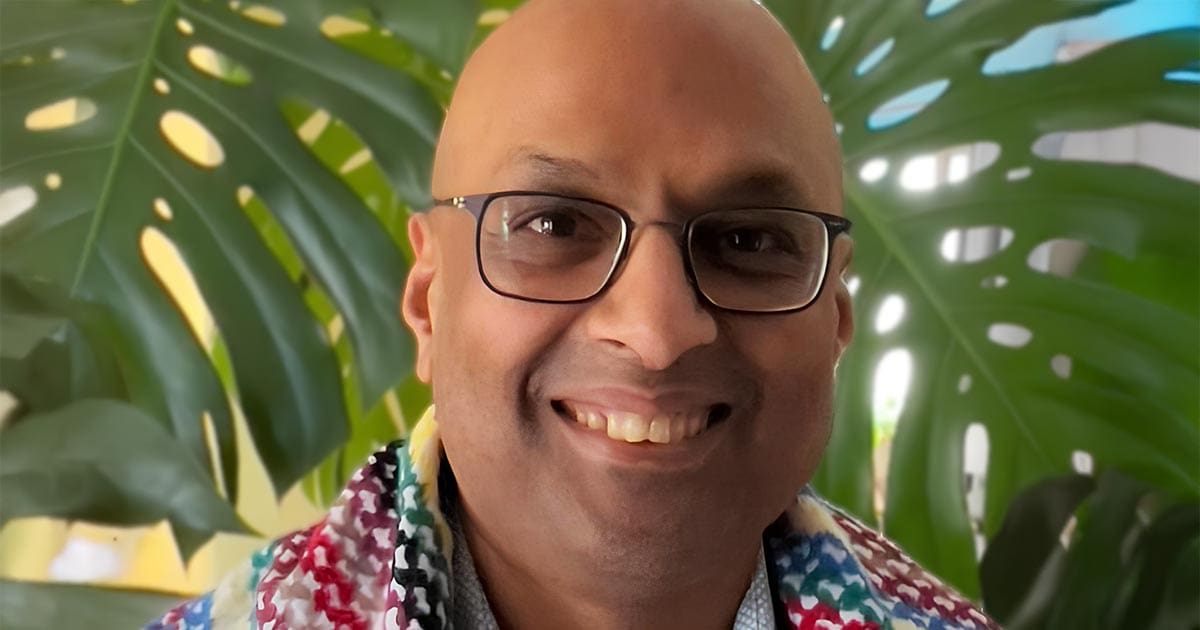
Heritage Day is often seen as a celebration of unity, but for activist Sikhander Coopoo, it is also a confrontation with exclusion, faith, and survival as a Black queer Muslim.
Every year, we stop to celebrate Heritage Day. It’s a day of unity, a chance to honour the cultures, traditions, and histories that shape South Africa. On paper, it sounds beautiful. But it’s not that simple. Heritage Day demands I ask: where do I fit? Where does someone like me, a Black queer Muslim, belong in this so-called Rainbow Nation?
Heritage is supposed to be what we inherit, what we carry from those before us. But for me, it is also what I fight to protect: my dignity, my queerness, my faith, my love. It’s the protests I joined, the prayers I whispered, the chants for Palestine, the calls for trans liberation, the tears shed for women murdered in their own homes. My heritage is not neat. It’s layered, messy, painful, and beautiful. It forces me to confront both the beauty and the brutality of what I inherited.
I’ve been told many times that queerness is “un-African.” I remember one community dialogue where a man stood up and said, “This is a White man’s disease, brought here by colonisers.” The irony burned my throat, because it wasn’t queerness that colonisers forced on us, it was homophobia. It was sodomy laws and Victorian morality disguised as God’s truth. Before colonialism, our societies knew fluidity. We knew expansiveness. We had room for difference. It was colonial power that crushed all that, rewrote us, and told us to believe the lie that queerness was never ours.
Yet, even after democracy, this so-called Rainbow Nation tells me daily that my life is disposable. Yes, the Constitution protects me on paper. But paper rights don’t shield us from fists, knives, or the looming threat of “corrective rape.” They don’t silence preachers who call for our death. It doesn’t stop shopkeepers from putting up signs like the one Dawood Lagardien put up in 2023 in Nelson Mandela Bay, “No LGBTQ Allowed. Save our Children.” When I saw that, it felt like apartheid signage reborn, this time aimed at my queerness. And the horror is that others followed his lead.
That same city became the graveyard of Imam Hendricks. On 15 February 2025, he was assassinated. He was one of the few who dared to say what so many of us know in our bones, that queerness and Islam are not enemies but companions. His murder was the result of sermons dripping with hate, WhatsApp groups filled with poison, and fatwas turned into death sentences. When preachers like Sheikh Jameel Adams stand on pulpits and declare that people like me deserve to die, it doesn’t just disappear into the air. Someone listens. Someone acts.
Being Muslim in South Africa has never been safe. My faith is policed. My body is criminalised. My Blackness is undervalued. Vulnerabilities stack until I feel buried under them. I think of queer Muslim refugees I’ve met, people who fled violence only to be betrayed here, too. A brother from Zanzibar told me he had no choice but to return to the very place he fled, because South Africa offered no refuge after all. This pains me.
So what do I do with Heritage Day? For me, it is not only a celebration. It is a confrontation. It is loneliness. It is the ache of knowing that when others gather around braais or cultural festivals, I sit with fracture. I live in East London, where the Muslim community is small, traditional, and tightly bound. I know there’s no room there for all of me. During Ramadaan, that ache is sharpest. The isolation cuts deeper when I fast, holding together faith, queerness and feminism.
And yet, I cannot leave the story here because despair is not an option. Survival demands hope. Hope is heritage too. I believe in a Queer Safe Africa, even if it feels far away. Because the truth is, we have always been here. We are healers, warriors, poets, farmers, dreamers. Our queerness has always lived in the rhythm of drums, in rituals of healing, in the stories whispered around fires. Africa is not inherently queerphobic. That is a colonial lie. My queerness is not foreign. It is ancient. It is written in the soil itself. The future of this continent belongs to queer people, alongside other people.
I hold on to that when the weight gets heavy. I remind myself: we are the storm and the rainbow. We’ve learned to dance in hurricanes because we are hurricanes. Our ancestors whisper to us still: “The wisdom you need is already inside you. You are enough.”
So for me, Heritage Day is not about flags, food, or nostalgia. It is about refusing erasure. It is about holding all of who I am, Black, Muslim, queer, alive, and insisting that this, too, is heritage. It is about carrying both pain and possibility. It is about building a future where queer people are not an afterthought, but central to Africa’s story.
Heritage Day, for me, is a reminder that belonging is not something I am given. It is something I claim.
Sikhander Coopoo is a black, queer, Muslim intersectional feminist with backgrounds in gender, pedagogy and local governance. He is a social justice and humxn rights activist at heart. Sikhander serves on the Gender and Sexuality Alliance of East London committee and writes in his own capacity.



One Comment
Perfectly put. Excellent article, Sikhi!!!