

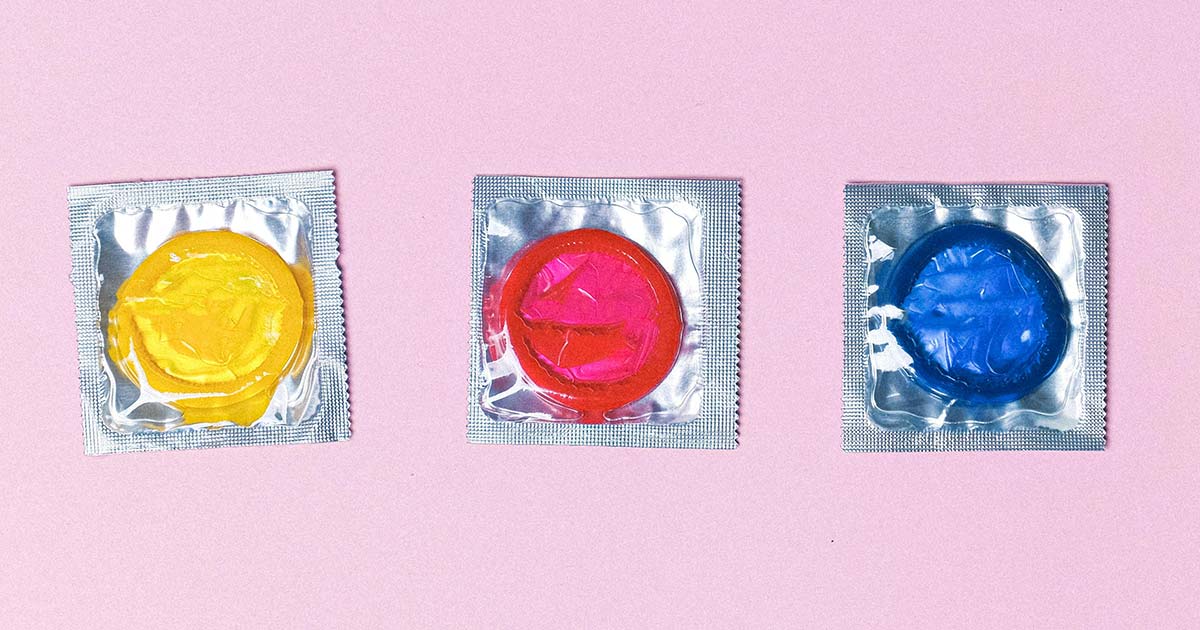
A new kind of condom recently made waves via several news outlets, including Kaya 959, for its potential to detect sexually transmitted infections (STIs) by changing colour. The idea sounds revolutionary: a condom that doesn’t just protect against infections but also signals when one may be present.
That is the bold idea behind a colour-changing condom concept that has attracted global attention. While exciting, the National Department of Health (NDoH) has confirmed that such a product remains firmly in the realm of innovation, not reality.
The condom, still only a prototype, is designed with a special lubricant infused with agents that react to proteins associated with infections like chlamydia, gonorrhea, and syphilis. If exposed, the condom would visibly change colour during use. Different colours have been proposed for different infections: green for chlamydia, yellow for herpes, and blue for syphilis.
The design is not a diagnostic tool. It would serve only as an early warning system, meaning users would still need to undergo proper medical testing and treatment. There are also unanswered questions about how reliable the colour change would be, whether it could detect multiple infections at once, and the ethical implications of discovering an infection in the middle of a sexual encounter.
The concept is not new. In 2015, three British teenagers, Daanyaal Ali, Muaz Nawaz, and Chirag Shah, developed a similar prototype called the “S.T.EYE”. Their design, inspired by HIV testing methods that rely on colour reactions, won the TeenTech Award for best health innovation.
At the time, their invention drew interest from manufacturers but never advanced to production. The recent reports suggest that developers are once again exploring this idea, though it has yet to progress beyond the experimental stage.
The Department of Health has responded with cautious interest. “It’s a brilliant spark of imagination but has not advanced to clinical trials, regulatory approval, mass production, or deployment anywhere in the world,” the NDoH told MambaOnline. “The Department of Health is not evaluating it at present.”
Officials stressed that South Africa’s response to STIs remains grounded in proven strategies. “Our focus is on interventions that we know work, correct and consistent condom use, comprehensive sexual health education, regular testing, timely treatment, and prevention tools such as PrEP,” the Department said.
While not dismissing the potential of such technologies, the NDoH emphasised the importance of scientific rigor. “We stand at the crossroads of imagination and implementation,” the Department noted. “This colour-changing condom is a beautiful sketch, a symbolic gesture towards empowerment. Yet health is not served by fantasies but by rigor, evidence, and equity.”
For now, the colour-changing condom remains a prototype, an exciting concept that could one day transform safer sex, but not a product you can buy at a pharmacy. Until then, South Africans are urged to stick with the basics: use condoms consistently, get tested regularly, and seek treatment or preventive care when needed.