


After a week marked by debate and division within South Africa’s queer community following the release of the NoGoBurg Pride open letter, the House of Ditsie offered an alternative way to honour Pride Month, through rest, reflection, and reconnection.
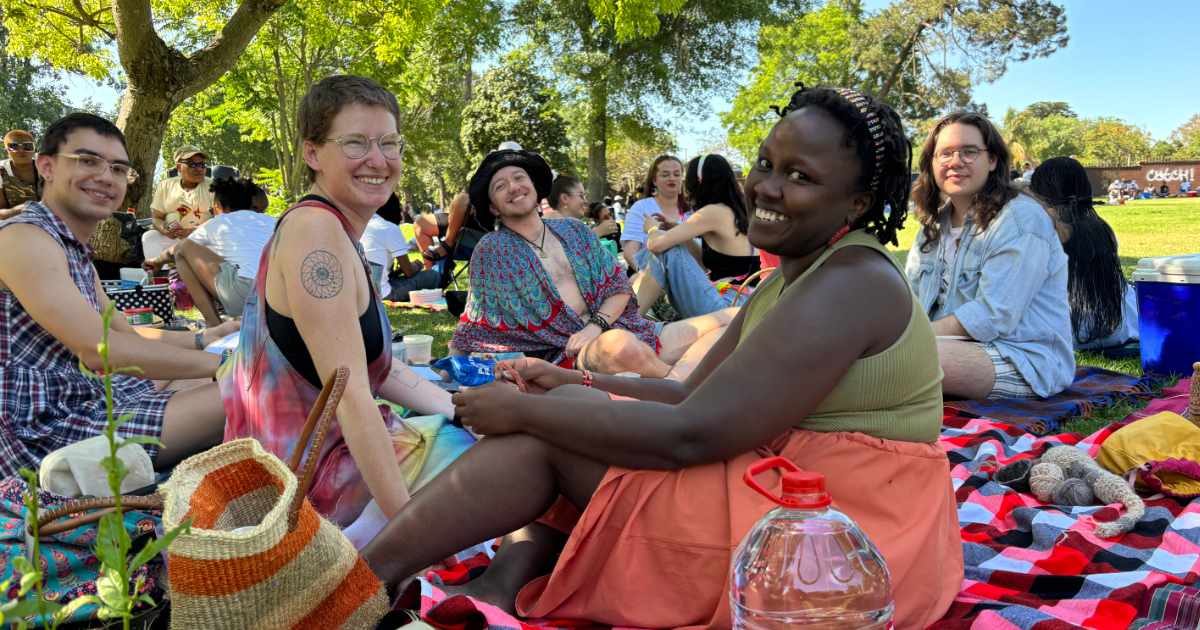
The Nostalgic Pride Picnic hosted by the House of Ditsie took place on Saturday, 25 October, at Zoo Lake in Johannesburg, drawing over a hundred members of the LGBTQIA+ community. The relaxed gathering provided a space for queer people to celebrate visibility, joy, and solidarity away from the fanfare and crowds of the Johannesburg Pride event a few kilometres away.
The open letter that sparked the week’s tensions, endorsed by several organisations including the House of Ditsie, accused Johannesburg Pride of being sponsored by Amazon, a company allegedly complicit in Israel’s actions in Gaza. Johannesburg Pride later clarified that Amazon, a sponsor in 2024, was not a sponsor in 2025.
In a statement released the eve of Johannesburg Pride, Dr Bev Ditsie , one of the founders of the first Johannesburg Pride and a key figure in South Africa’s queer rights movement , explained that the picnic was never intended as a counter-protest.
“This was never an event or an act of opposition, but a quiet gesture of return, a reminder that Pride, like our public spaces, belongs to everyone,” she said.
The picnic drew familiar faces from government and activism, including Deputy Minister for Women, Youth and People with Disabilities Steve Letsike, Deputy Minister of Justice Andries Nel, and Member of Parliament Palomino Jama. Human rights advocate and one of the first Johannesburg Pride participants, Dr Thulani Mhongo, was also in attendance.
The day was filled with laughter, storytelling, and connection as attendees shared food, played games, and reflected on what Pride means in today’s context. However, the picnic briefly drew the attention of security officials who claimed the gathering exceeded the park’s limit of 19 people.
Addressing the crowd, Dr Ditsie encouraged calm and unity: “They said we’re an illegal gathering because there are more than 19 people in one spot, but this is a public park.
Deputy Minister Steve also reminded security that this space belongs to the public. We’re here peacefully, just to enjoy the day and celebrate Pride.”

Despite the brief interruption, the spirit of the day remained joyful and grounded in community.
“Zoo Lake Queer Pride Picnic was a beautiful reminder of why I do this work,” said Sibonelo Ncanana-Trower, Co-Chairperson of the National LGBTIQ+ Task Team.
“It was heartwarming to see so many queer people come together in joy, pride, and community. The space was inclusive, even for physically challenged queers, and full of life. It was inspiring to see queers showing solidarity with global struggles such as those in Palestine and the Congo, reminding us that our liberation is intertwined with that of others.”
Ncanana-Trower added that the presence of government representatives was a meaningful show of solidarity.
“I also appreciate that Deputy Minister Nel and Deputy Minister Steve, long-time supporters of the movement, were part of both Zoo Lake and Johannesburg Pride. I am certain Simon Nkoli was smiling down on that space.”

For many attendees, the picnic offered a welcome alternative to the loud, more commercial side of Pride celebrations.
“The picnic was a necessary space,” said Zandile Mabaso, coordinator at FEW (Forum for the Empowerment of Women). “It was perfect for people who aren’t fans of clubs or loud stages, a space to have fun without alcohol, without worrying about outfits or tickets. It catered to everyone, from younger queers to those over 40. It was the perfect example of queer joy as a tool for mental health and community.”
Reflecting on the significance of the moment, Mogau Makitla, another attendee, noted:
“October marks 35 years since GLOW took to the streets of Johannesburg for the first Pride march in Africa. As we see the rise of anti-LGBTQI+ movements globally and at home, it’s important that we reflect on Pride’s history and continue striving for inclusive societies.”
What began as a quiet gathering in the park ultimately became a powerful statement, a reminder that Pride is not only about parades and parties, but also about reclaiming public space, nurturing connection, and embodying resistance through joy.





One Comment
Can this become a regular event please? We need more of these community events that celebrtate community.