
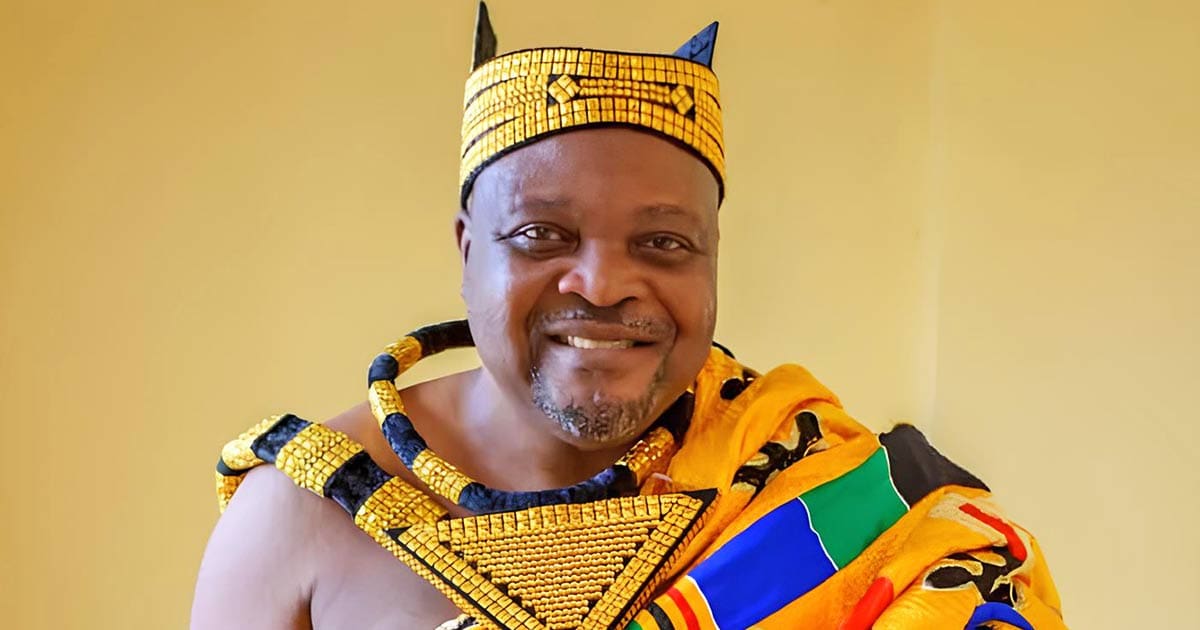
Across West Africa, the climate for LGBTIQ people is rapidly deteriorating. Countries such as Burkina Faso and Mali recently enacted anti-LGBTIQ legislation, embedding fear, criminalisation, and persecution into law. Ghana is also set to pass a sweeping anti-LGBTIQ law that would further criminalise same-sex intimacy and outlaw simply identifying as LGBTIQ or as an ally. In this opinion piece, queer spiritual leader and chief, Davis Mac-Iyalla challenges the myth that queerness is un-African, arguing instead that LGBTIQ identities are deeply rooted in West African spiritual and cultural traditions.
Spirituality in West Africa is not a borrowed garment. It is the drumbeat beneath our feet, the whisper of our ancestors, the breath of the land that shaped us.
Long before foreign ships arrived on our shores, our people lived in harmony with a universe that recognised many ways of being. Yet today, LGBTIQ Africans are told that our identities are un‑African, ungodly, or unnatural. This lie has been repeated so often that some have mistaken it for truth.
I write as a son of this soil, as an activist, and as a keeper of memory. Our liberation begins with remembering who we were before we were told who to fear.
Indigenous Spirituality: A Home for All Our Spirits
Across West Africa, our ancestors understood that the human spirit is vast. In many traditions:
- Gender‑diverse priests and mediums served as bridges between the physical and spiritual worlds.
- Deities with fluid or dual genders were honoured, not questioned.
- Same‑sex bonds and partnerships existed without shame or criminalisation.
These truths are not myths. They are part of our cultural DNA. When we reclaim them, we reclaim ourselves.
Colonial Religion and the Weaponisation of Fear
The violence against LGBTIQ people in West Africa did not begin with us. It began with:
- Colonial laws that criminalised African bodies.
- Missionaries who demonised Indigenous practices.
- Political leaders who used religion to control and divide.
Homophobia is the foreign import — not queerness. Our ancestors did not need prisons or pulpits to understand human diversity. They understood balance, community, and the sacredness of every life.
The LGBTIQ African Spirit: Unbroken and Rising
Despite violence, rejection, and exile, LGBTIQ Africans continue to rise. Our resilience is not accidental; it is ancestral. We carry the same fire that fueled our foremothers and forefathers who resisted colonial domination.
Today, we are:
- Reclaiming Indigenous spiritual practices that honour our identities.
- Building affirming faith communities across the region.
- Challenging harmful religious narratives with truth and courage.
- Creating new rituals and spaces where our spirits can breathe freely.
We are not asking for permission to exist. We are asserting our birthright.
Spirituality as Resistance
To be an LGBTIQ African who refuses shame is an act of resistance. To pray in your own skin is an act of resistance. To love openly is an act of resistance. Our spirituality is not passive — it is a weapon against erasure.
When we gather in circles, when we pour libation, when we call the names of our ancestors, we are declaring:
We are part of this land. We are part of this story. We are not going anywhere.
A Call to Action
If West Africa is to heal, we must confront the systems that harm our people. This means:
- Abolishing colonial-era anti-LGBTIQ laws.
- Educating our communities about Indigenous gender histories.
- Supporting spiritual leaders who preach inclusion.
- Protecting LGBTIQ people from violence and discrimination.
- Honoring the sacredness of every African body.
Our struggle is not only political. It is spiritual. It is cultural. It is ancestral.
Conclusion: We Are the Continuation of Our Ancestors’ Dreams
LGBTIQ Africans are not outsiders to West African spirituality — we are its living proof. We carry the wisdom of those who walked before us and the courage of those yet to come. When we stand tall in our identities, we honour the ancestors who knew that the spirit cannot be caged.
Our liberation will come not from rejecting our culture, but from reclaiming it.
And so I say: Let the drums speak. Let the ancestors rise. Let every LGBTIQ African know — you are sacred.