
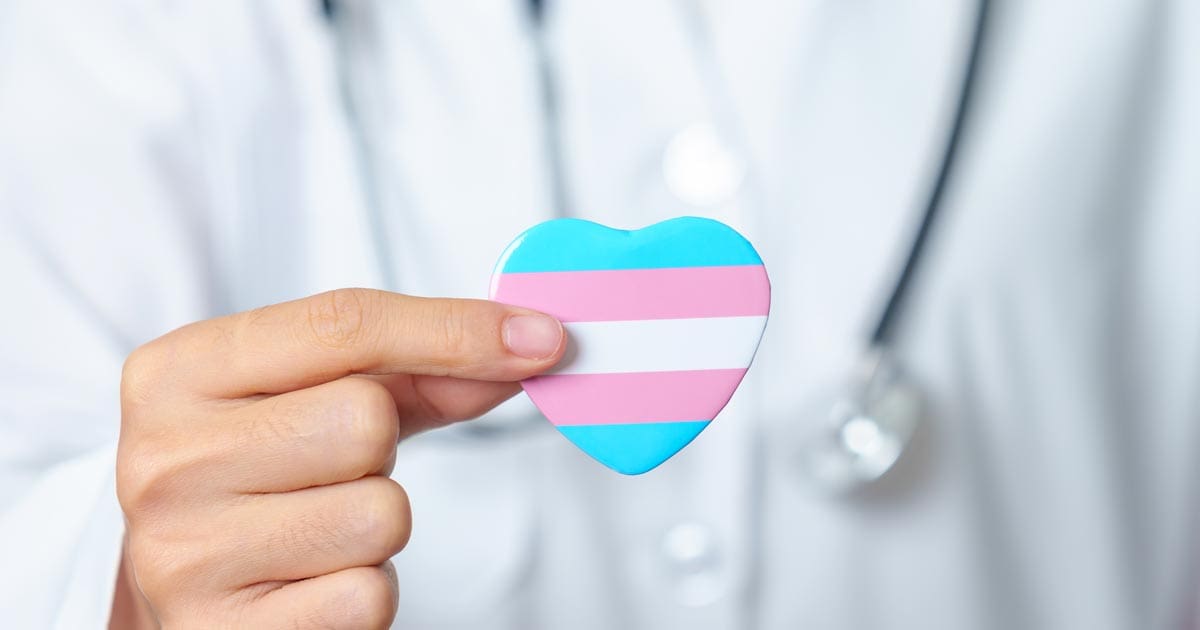
A new study by the Desmond Tutu Health Foundation (DTHF) has revealed stark and persistent gaps in access to gender-affirming healthcare for transgender and gender diverse people in South Africa, underscoring the urgent need for inclusive, integrated health services nationwide.
The research, led by Lynn Bust of the DTHF and recently published in the South African Medical Journal, draws on survey data from 150 transgender and gender diverse adults in the Western and Eastern Cape.
Its findings paint a sobering picture of unmet healthcare needs shaped by structural exclusion, socioeconomic vulnerability and an overstretched public health system.
“Gender-affirming care is not a luxury. It is essential healthcare,” says Bust. “This research highlights the profound gap between need and access, and it calls for urgent reform across all levels of the health system.”
Widespread vulnerability, limited access
The study found that two-thirds of respondents were unemployed, while nearly one in five experienced housing insecurity. These realities directly affect people’s ability to access healthcare, particularly specialised services that are scarce, centralised or costly.
While almost all respondents (99%) had socially transitioned and the majority had engaged in non-medical gender-affirming practices such as binding or tucking, access to medical interventions was strikingly low. Only one-third had accessed hormone therapy, and just four respondents had undergone any form of gender-affirming surgery.
The demand for these services, however, is clear. Among participants who had not accessed hormone therapy, 69% said they wanted to. The same proportion of those who had not accessed surgery expressed a desire for surgical care. Long waiting periods compound the problem, with public-sector gender-affirming surgeries reportedly facing delays of up to 15 to 20 years.
In the absence of accessible care, some people are pushed into risky alternatives. Alarmingly, 9% of respondents reported turning to unapproved or black-market treatments.
“These gaps represent more than just health system failures,” Bust explains. “They reflect broader social exclusion and systemic neglect of transgender and gender diverse people.”
Legal recognition remains out of reach
Beyond healthcare, the study highlights major barriers to legal gender recognition. Only 4% of respondents had been able to update their gender markers on official identity documents, despite the majority expressing a strong desire to do so.
This lack of legal recognition has cascading effects, creating obstacles in employment, housing, education and healthcare. Mismatched documents can expose people to discrimination and violence, and often deter them from seeking services altogether.
The researchers argue that streamlined, integrated pathways between healthcare providers and the Department of Home Affairs are essential to addressing this gap.
Including overlooked voices
Importantly, this is one of the few South African studies to include transgender men and non-binary people alongside transgender women, offering a more comprehensive picture of the community’s diverse experiences and needs.
“When communities are absent from health research, they are often absent from the interventions and policies that follow,” says Abongile Savuka Matyila of the DTHF, a co-author of the study. “By centring lived experience, this research clearly shows where systems must change.”
Despite the barriers documented, the study also found that satisfaction levels were high among those who had managed to access gender-affirming care, reinforcing the positive impact these services have on health and wellbeing.
A call for systemic reform
The researchers stress that gender-affirming healthcare should not exist in isolation, but be integrated into broader health services, including HIV prevention and treatment, within inclusive and affirming systems.
To achieve this, the study makes several key recommendations, including:
- Expanding access to legal gender transition through coordinated healthcare and administrative processes
- Ensuring psychosocial support is accessible without being pathologising or used as a gatekeeping tool
- Increasing surgical capacity through strengthened referral networks and multidisciplinary teams, and advocating for coverage by medical schemes
- Prioritising gender-affirming care at primary healthcare level
- Improving provider training and standardising education on transgender and gender diverse health
- Addressing socioeconomic barriers that prevent access to care
“This is an urgent call for a national response that is evidence-based and grounded in the realities of transgender and gender diverse people’s lives,” says Bust. “Inclusive health systems save lives.”
As South Africa grapples with deep inequalities in health access, the study serves as a reminder that universal healthcare cannot be achieved while entire communities remain excluded from essential services.
The full study is available in the South African Medical Journal.





One Response
I know that every trans person in this country is under a financial burden for basic health care
Our biggest private medical aid, Discovery, only allow HRT on their highest plan. As a woman I can buy estrogen and progesterone and medical aid will pay for it. As a trans woman, they refuse and I have to pay totally. There is absolutely no way that I will ever be able to afford any surgeries. I thought we are protected under the constitution, but its ok for medical aid to discriminate?