
As South Africa debates its White Paper on Citizenship, Immigration and Refugee Protection, the human stakes risk being lost in policy language. Sikhander Coopoo argues that for LGBTIQA+ refugees, asylum seekers, and migrants, safety, dignity and survival cannot be reduced to points systems and border lines.
Borders on our continent were not drawn by our grandmothers. They were carved by colonial powers that split communities, redirected trade routes, and controlled the movement of Black bodies for labour and profit. Those lines were enforced with violence, dressed up as order, and sold as civilisation.
Today, the language has changed. We hear about management, efficiency, and modern systems, but the question remains: Who is allowed to move with dignity, and who must suffer to prove they deserve to live?
In South Africa’s migration debates, the Points-Based System and the First Safe Country Principle are discussed. Yet for poor African migrants and LGBTQIA+ refugees, especially queer women and gender-diverse people, these tools feel like weapons; they sort human beings into categories of value and disposability.
South Africa’s geography is often used to justify a defensive posture, as though being at the southern tip entitles us to pull up the ladder.
Expecting other African countries to assume responsibility first, while we design selection systems rooted in Eurocentric ideas of skill and worth, does not move us toward freedom.
It repeats colonial logic by making it easier for migrants from Europe and North America to qualify, while tightening the gate against Africans fleeing violence, poverty, and instability. This is not decolonisation. It is a colonial hierarchy in a new suit.
This is not just about paperwork. It is about whose humanity counts.
When a Life Becomes a Score
The Points-Based System reduces people to numbers. Education, formal job skills, income level, age, language ability, and investment potential are translated into points. If you reach the threshold, you are welcomed as an asset. If you fall short, you are quietly marked as a burden.
The system claims objectivity, yet it rests on assumptions about which forms of labour matter.
Across Africa, survival has long depended on labour that rarely comes with certificates. Women raise children who are not only their own, nurse the sick, cook for extended families, and hold communities together when states collapse. Migrants sell food on the streets, braid hair, repair phones, care for elders, and clean homes. This work sustains cities daily, yet it is dismissed as low-skilled or invisible s.
Consider a poor lesbian from the Democratic Republic of Congo who has spent years doing domestic work and supporting younger relatives. She may have extraordinary resilience, caregiving skills, and community knowledge, but none of this easily converts into points. By contrast, a digital nomad from a wealthy European country may pass the threshold with ease, despite little connection to local realities.
Access to higher education, stable currencies, and formal job markets is shaped by histories of colonisation, debt, and exploitation. Countries that were plundered are now judged as producing low-value migrants, while those that benefited from centuries of extraction produce high-scoring applicants. The score sheet calls this merit.
For queer and trans people, this injustice is deeper. Many are pushed out of school by violence. Many are excluded from formal employment by discrimination. Survival often depends on informal work, sex work, or community-based livelihoods that are criminalised or stigmatised. The system then punishes them for not fitting into the very structures that rejected them.
A points system built on these assumptions does not simply manage migration. It ranks human beings according to their usefulness to capital.
The Straight Line That Queer Life Cannot Follow
The First Safe Country Principle rests on a simple story. A queer person flees danger, enters another country, and, if that country is considered safe, should ask for protection there. On paper, the map looks tidy, and the journey appears linear. But queer survival rarely follows a straight line.
Safety is not just about whether a country is officially at war. It is about whether you can live without constant fear. How police treat you, how communities see you, and whether there are networks to support you if you are attacked or thrown out of your home.
A country may not criminalise same-sex relationships and still be deeply unsafe in daily life. Social stigma, family control, religious hostility, and police harassment can make existence unbearable. For LGBTQIA+ refugees, especially poor women, danger often comes from intimate spaces as much as from the state.
When policy assumes that safety is the same for everyone, it erases these realities. It imagines that protection automatically follows once a border is crossed. It ignores how trauma works and how fear and shame shape when and where someone can seek help.
What the Journey Really Looks Like
Picture a queer woman fleeing a country where her sexuality could mean arrest, forced marriage, or mob violence. She leaves in a rush, with little money and no plan beyond staying alive. On her way, she may pass through Rwanda, Tanzania, and Mozambique before finally reaching South Africa.
On paper, officials might say she should have claimed asylum earlier. But in each transit country, she may face isolation, hostility, poverty, or the absence of queer support networks. Legal protections mean little without accessible services or community.
By the time she reaches South Africa, she has finally come to a place where there are visible queer organisations, shelters, and communities that recognise and understand her experience. She is further from those who harmed her, with a greater chance to disappear into the anonymity of a city. From the outside, her path looks like a long chain of border crossings. From within her own life, it is a careful movement toward the first place that feels even slightly possible.
A rigid First Safe Country rule fails to see this journey as a search for safety. It reduces it to a procedural misstep.
Imagining Safety Differently
If we are serious about African solidarity, safety must be measured in lived realities. Are there organisations that support LGBTQIA+ communities? Are there reliable services for survivors of violence? Do police protect or harass? Can someone secure work and housing without constant abuse?
Regional cooperation should focus on sharing responsibility according to each country’s capacity to protect, rather than relying on geography alone. Civil society, especially queer and feminist organisations, know where real support networks function. Their knowledge should guide how protection pathways are identified and built.
Healing from persecution requires stability and community. Safety means more than avoiding arrest. It means being able to rebuild a life.
A Different Story About Worth and Movement
Both the Points-Based System and the First Safe Country Principle send a stark message to poor Africans and, in particular, LGBTQIA+ refugees and women. You are economically insignificant. Your survival knowledge does not count.
A different African vision recognises that movement across this continent predates the borders that try to contain it. It sees care work, informal economies, and community networks as real forms of wealth. It refuses to reduce human worth to a score or a stamp.
Borders will not vanish overnight, but they can still be governed with humanity rather than suspicion. They can become places where protection begins, not where hope is turned away. That choice is political, and it is also moral.
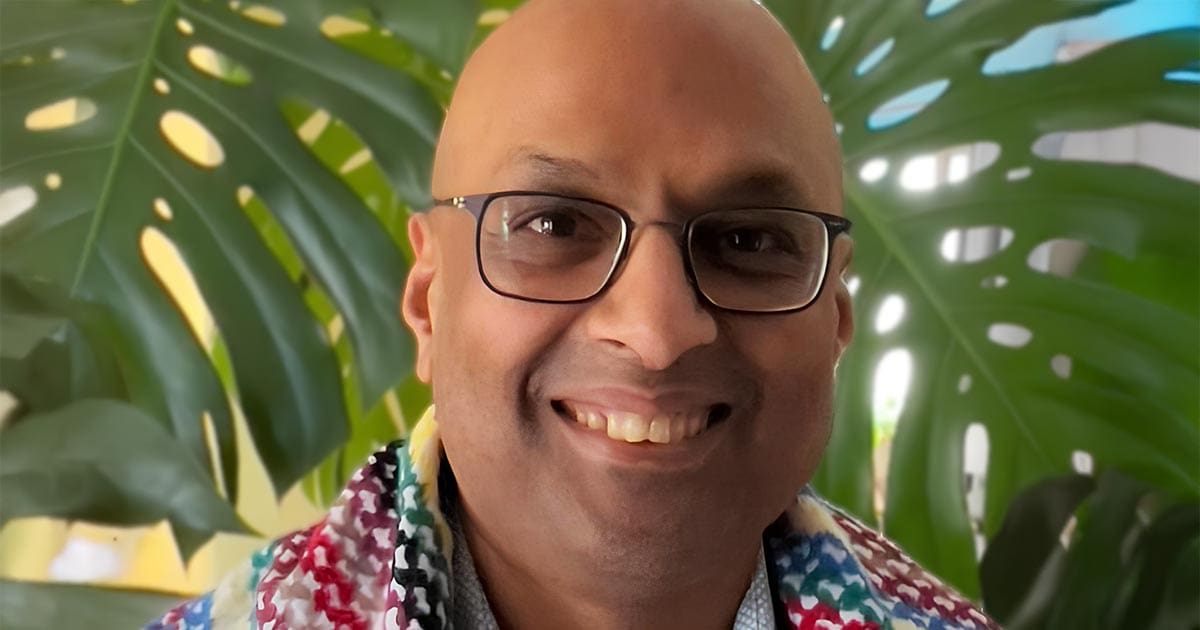
Sikhander Coopoo is a human rights defender based in KuGompo, Eastern Cape. A Black, queer, Muslim intersectional feminist, his work spans gender justice, adult education, and local governance. He serves on the Gender and Sexuality Alliance and writes in his personal capacity, advocating for queer, feminist, and pro-poor African futures.
Submissions to the Department of Home Affairs Draft Revised White Paper on Citizenship, Immigration and Refugee Protection must be made by 15 February 2026 to whitepaper@dha.gov.za.