

South Africa’s LGBTQIA+ sector has taken a decisive step forward in shaping its role within the country’s evolving National Dialogue, hosting a landmark community report-back session that underscored transparency, inclusion, and collective ownership of the process.
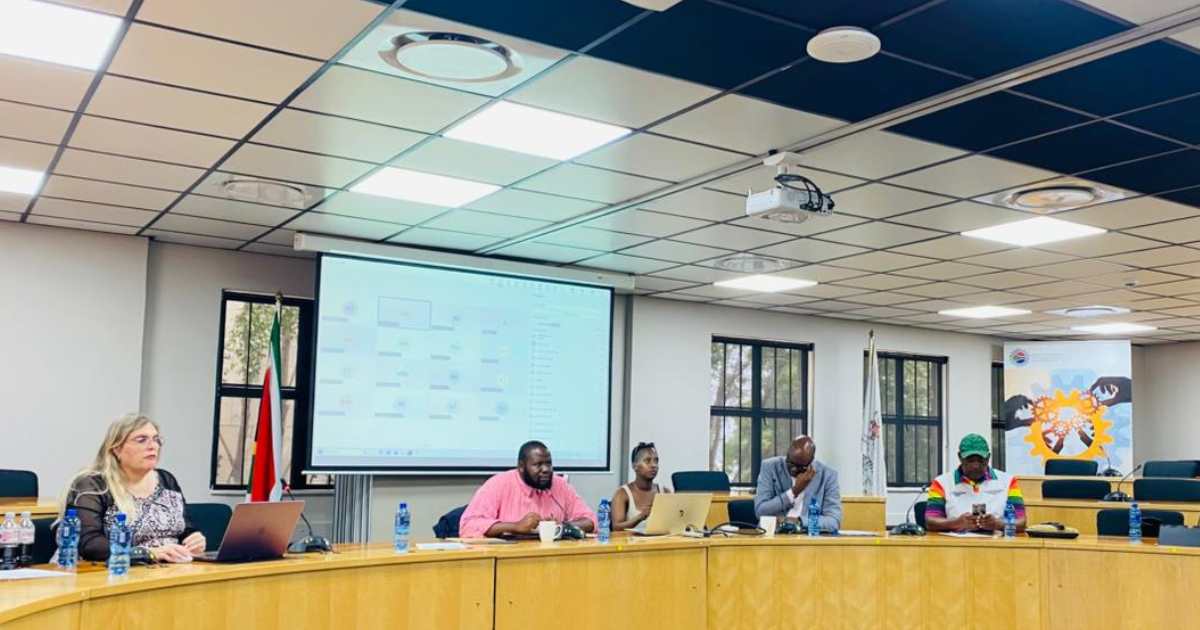
Held on 26 March 2026, the hybrid engagement brought together 104 participants, 82 of whom joined online and 22 of whom attended in person at NEDLAC House, marking a significant moment in ensuring that LGBTQIA+ voices are not only heard but actively embedded in the country’s democratic future.
A Dialogue Built With the Community, Not For It
At the heart of the session was a clear and deliberate message: the National Dialogue is not a top-down exercise. It is a participatory process shaped by the lived realities of those it seeks to represent.
Project Lead Edgar Mabothe reinforced this principle, emphasising that inclusion is non-negotiable.
“Now the core principles of the National Dialogue are inclusivity, so nobody must be left out or left behind. Everybody must be included,” he said.
Mabothe explained that inclusivity must be matched by openness and responsibility from those leading the process. “There must be transparency as a second principle and accountability because citizens need to also have the confidence to say this process is here to enable us to participate.”
He added that meaningful participation depends on trust, something that can only be built when communities feel heard and respected. “People need to be heard, people need to feel that the people who are also driving this process are accountable, any question that emerges is answered and answered fully.
He further stressed the importance of independence in safeguarding the credibility of the process, noting that it remains a critical pillar of the National Dialogue.
Expanding the Circle
A central focus of the discussions was how to broaden and deepen participation across the LGBTQIA+ spectrum. Stakeholders committed to a process that is more inclusive, more responsive, and more reflective of diverse lived experiences.
Mabothe pointed out that responsiveness will be key as the dialogue progresses. “As the dialogues unfold there will be intervention that may be necessary and that will need to be addressed at a particular point in time,” he said.
He noted that visible action in response to community concerns is essential to sustaining trust. “When people have their concerns and they can also see that there is action that is taken then it builds the confidence in the trust.”
From Conversation to Action
The session also situated the LGBTQIA+ sector within the wider framework of the National Dialogue’s impact goals: advancing structural reform, responding rapidly to urgent issues, and contributing to national healing.
These pillars are not abstract ideals. They speak directly to the realities many LGBTQIA+ South Africans face, systemic inequality, social exclusion, and the lingering effects of trauma. Translating dialogue into tangible outcomes will be key to maintaining trust and momentum.
The Numbers Behind the Vision
Beyond principles, Mabothe outlined the scale of the National Dialogue’s ambitions, highlighting both direct and indirect engagement strategies.
“Now there is a standard talk to the numbers in terms of what the numbers are, how many dialogues need to be heard and how many people must be reached,” he said.
He explained that direct engagement will form the backbone of the process. “We are planning to have 13,500 ward-based dialogues… in every ward there will be on average three dialogues.”
This approach is expected to create space for widespread public participation. “This means that 1.3 million South Africans will then have an opportunity to engage in a dialogue process of a public nature,” Mabothe added.
Alongside these in-person engagements, indirect participation, through media, digital platforms, and broader outreach, will extend the Dialogue’s reach to millions more.
Recognising the Hands Behind the Work
The sector acknowledged the contributions of key partners and individuals who have supported the process, including the National Dialogue Secretariat, coordination teams, and early contributors who helped lay the groundwork.
Leadership representation on the National Dialogue Steering Committee remains a critical channel for ensuring that LGBTQIA+ perspectives influence national priorities. Representatives continue to carry the responsibility of bridging community voices with broader policy discussions.
The Road Ahead: Gauteng Dialogue
Attention now turns to the next phase: an in-person community dialogue in Gauteng. This upcoming engagement will focus on themes central to LGBTQIA+ lived experiences, including healing from trauma, social inclusion, and gender identity.
These conversations are expected to generate structured inputs that will feed directly into the national process, turning personal narratives into policy-shaping insights.
A Shared Responsibility
As the National Dialogue gathers pace, the LGBTQIA+ sector is positioning itself as an active participant in shaping South Africa’s future.
The path forward demands honesty, care, and sustained collaboration between leadership, community members, and partners. It also requires a process that is visibly inclusive, accountable, and responsive, principles that, as Mabothe made clear, are not optional extras but the very foundation of the Dialogue itself.
In this unfolding national conversation, the message is clear: inclusion is not symbolic. It is structural. And the LGBTQIA+ sector intends to ensure it remains that way.