

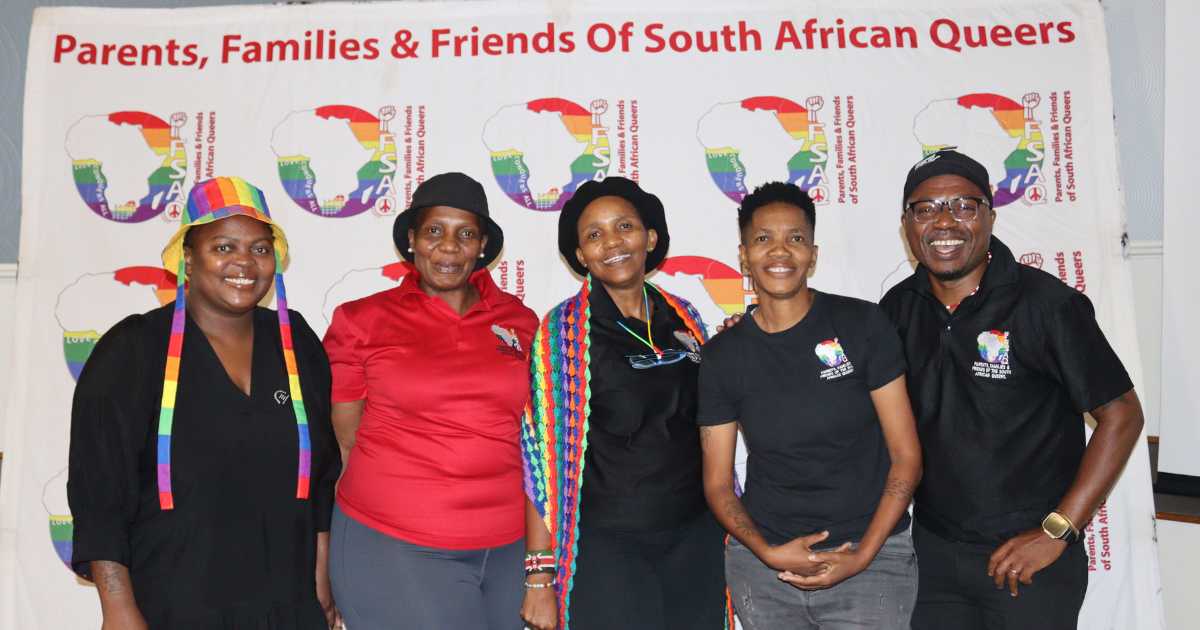
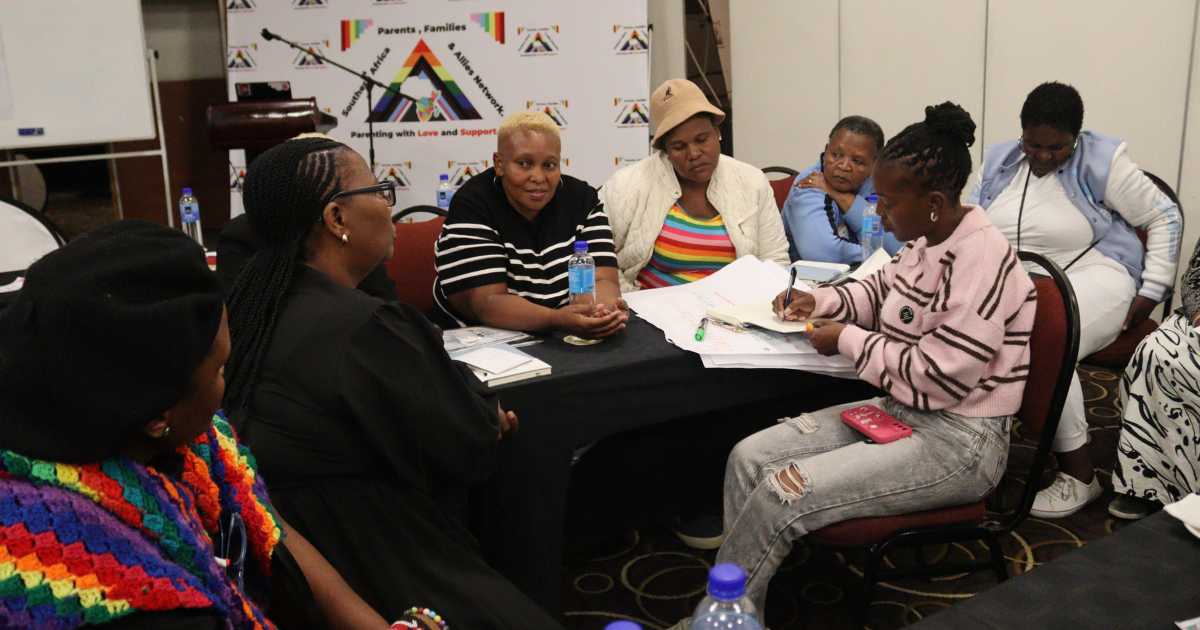
Parents and allies from across South Africa gathered at the Parktonia Hotel in Braamfontein, Johannesburg, on Thursday, 26 March, as Parents, Families and Friends of South African Queers (PFSAQ) hosted a country consultation feeding into the regional Southern Africa Parents, Families and Allies Network (SAPFAN).
From the outset, the tone was intentional. Founder Virginia Magwaza, affectionately known as Njinji, didn’t ease the room into the discussion.
“Why are you here?” she asked.
What followed was not a routine round of introductions but a raw unpacking. Parents spoke of confusion, of learning curves, and, in several cases, of violence their LGBTQIA+ children had endured because of who they are.
Among them was Sihle Khumalo, who brought a distinctly gendered lens to the conversation.
“I am here to plead with men to educate themselves,” he said. “There is still a lot of misunderstanding and if men don’t learn about these things, then the world is never going to change.”
His contribution framed one of the day’s underlying tensions: that acceptance often stalls where masculinity remains unchallenged.
Unpacking the “fix it mentality”
As the session moved into a breakdown of LGBTQIA+ identities, parents were encouraged to voice what they didn’t understand. It was here that intersex experiences took centre stage.
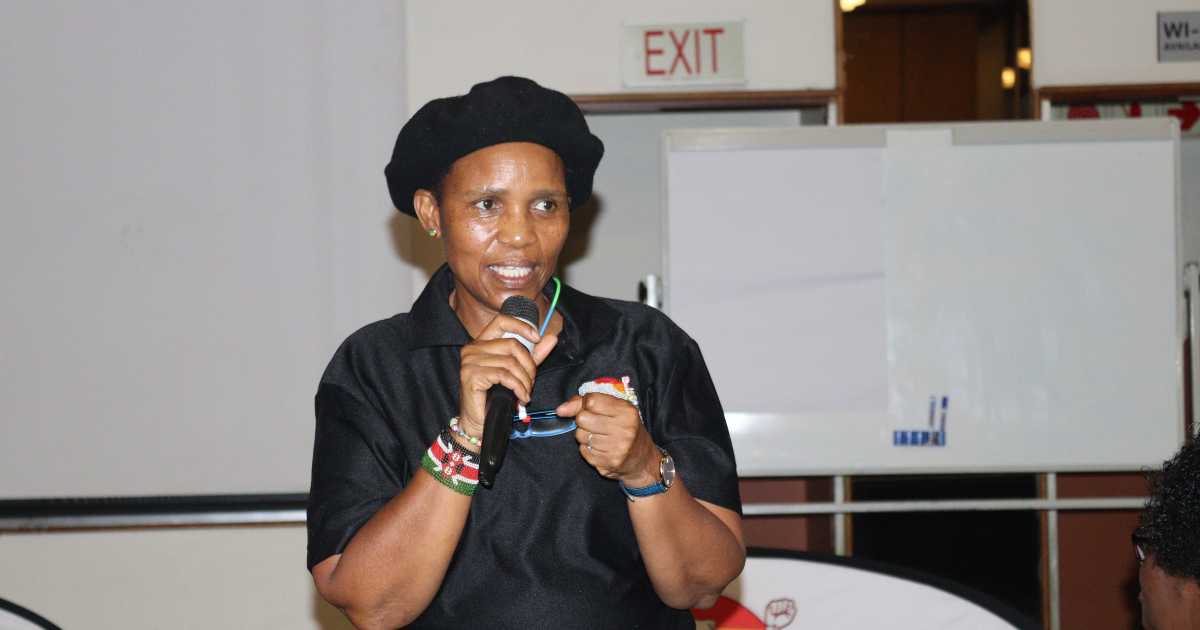
Njinji expanded on what she described as the medical sector’s “fix it mentality”.
“When a child is born intersex, there’s panic,” she explained. “Doctors want to ‘correct’ the body immediately, and parents feel pressured to choose a gender before the child has even had a chance to exist as themselves.”
She urged parents to resist that urgency.
“Most of the time, the gender chosen for the child is not who they grow up to be. And then the child must live with decisions that were never theirs.”
Her intervention reframed intersex not as a problem to solve, but as a reality to understand.
That perspective was brought into sharp, painful focus by Peaceworth Maquba, Founder of Intersexions South Africa, who shared a lived example that left the room visibly shaken.
“I’m going to tell you something that it’s very traumatising,” Maquba began. “But it’s important.”
They described a case of a child born with a variation in genital anatomy.
“The child could pee,” Maquba explained. “The only difference was that the pee hole wasn’t where people expected it to be.”
Doctors intervened.
“They closed the original opening and created another one so that the child could pee ‘normally’. But it wasn’t necessary.”
What followed was devastating.
“The new opening closed because it wasn’t natural. The original one was already closed. What happens then? The bladder has nowhere to release. It exploded.”
Maquba paused.
“Now you have no child.”
The story cut through theory, grounding the discussion in the real and irreversible consequences of medical intervention driven by conformity.
Building SAPFAN: A regional strategy
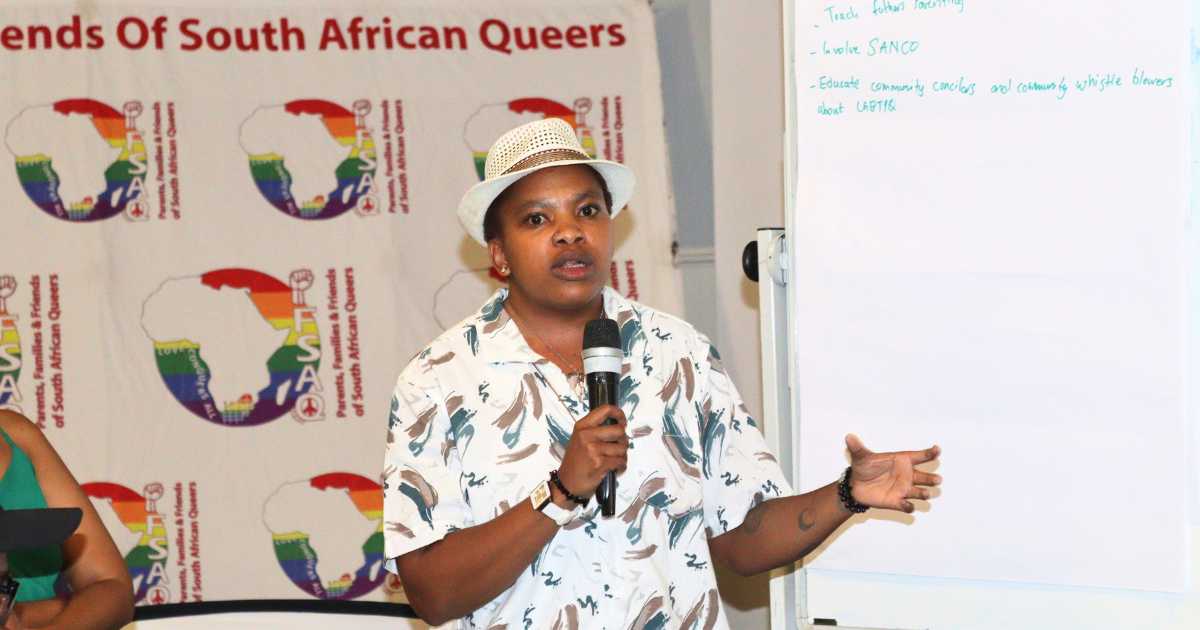
Beyond the personal, the consultation was also about scale. Bonginkosi Mthembu, Regional Coordinator of SAPFAN laid out the organisation’s broader ambition: to organise parents across Southern Africa into a unified advocacy force.
“SAPFAN was formed so that parents can be advocates for change in their own countries,” he said.
The network currently spans South Africa, Eswatini, Botswana, Zimbabwe, Namibia, Malawi, Mozambique and Lesotho, with plans to expand further.
“In many of these countries, there is no organised network of parents,” Mthembu said. “Yet we know that without parents, queer people are left exposed.”
He positioned South Africa as both a resource and a responsibility.
“We have laws that protect queer people. Others don’t. So the question becomes: how do we take what we have here and use it to support others across the region?”
Part of that vision includes coordinated solidarity actions, where South African parents can mobilise in response to arrests or violence in neighbouring countries.
“If something happens in Zimbabwe, we may not be able to act there directly,” he explained. “But we can protest at embassies here. We can raise our voices as a region.”
Advocacy under pressure
Mthembu’s account of SAPFAN’s work across borders revealed the uneven terrain of LGBTQIA+ advocacy in Southern Africa.
“In Zimbabwe, we had to hide,” he said. “Even at the airport, we were nearly arrested.”
Gatherings were monitored. Symbols associated with LGBTQIA+ identity, including rainbow colours, had to be concealed. Even singing at meetings felt risky.
“It was quiet,” he recalled. “People were afraid. One mistake, and you could be arrested.”
In some cases, contingency plans included legal teams on standby in case activists were detained.
This is the reality beyond South Africa’s constitutional protections: visibility can carry immediate danger.
Yet there were also moments of progress. In Mozambique, parents expressed interest in hosting a Pride event centred on families. In Lesotho, traditional leaders publicly supported inclusion and condemned hate crimes.
“It’s not the same everywhere,” Mthembu said. “But there are openings. And that’s where parents come in.”
“Not with our children”
If there was a unifying thread throughout the day, it was a call for parents to move from passive acceptance to active defence.
“We want parents who are going to say, ‘Not with my child,’” Mthembu said.
It’s a shift from private support to public advocacy, from quiet understanding to visible solidarity.
And in a region where rights remain uneven and, in some places, fragile, that shift may prove to be one of the most powerful tools available.