
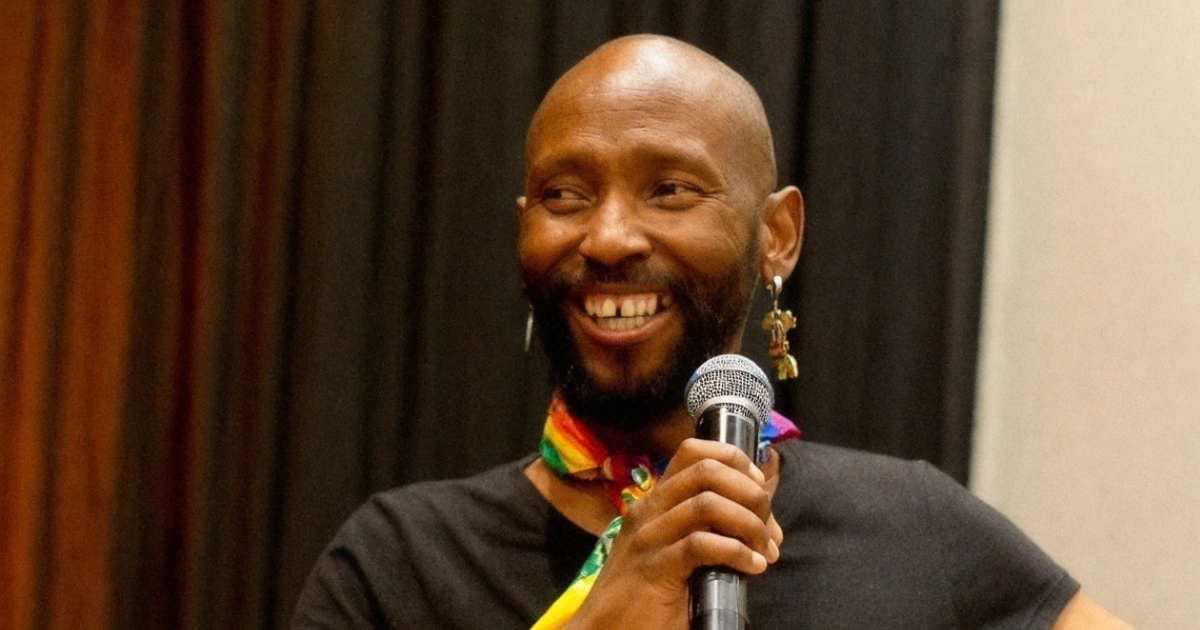
In this opinion piece, Bokang Beekay Bane reflects on the South African Workplace Equality Index (SAWEI) 2026 from the perspective of Lesotho. It explores how the absence of reliable data, legal gender recognition and strong implementation mechanisms leaves many queer Basotho economically invisible, despite recent progress such as the 2024 Labour Act and the 2026 census.
I came across the South African Workplace Equality Index 2026 National Report the way you sometimes encounter a document that feels simultaneously like a mirror and a window: a mirror because it reflects frameworks and thinking that have shaped your own work, and a window because it shows you a world your own context has not yet made possible.
Full disclosure: Queer WorX’s founding was inspired, in part, by The Other Foundation’s work on the economic value of LGBTIQ+ inclusion, including the Pink Rand and Size Matters reports, research that put a number to what exclusion actually costs an economy. SAWEI, published by the South African LGBT+ Management Forum, sits in that same intellectual tradition. It is rigorous, honest about its limitations, and asks important questions. Reading it from Maseru, however, produces a different kind of reckoning.
This is not a critique of SAWEI. It is a meditation on distance: the distance between South Africa and Lesotho, and what that distance reveals about the work that remains in the region.
What SAWEI measures, and what it assumes
SAWEI measures the gap between inclusion infrastructure and its activation in day-to-day organisational practice. It asks whether policies translate into systems, whether systems translate into lived experience, and whether that experience is consistent across the spectrum of LGBT+ identity.
The 2026 framework expanded from 17 to 110 questions. It demands evidence, not declarations, and introduced independent auditing. It is, by any measure, a serious instrument.
But SAWEI operates inside a set of assumptions that represent the floor, not the ceiling, of what Lesotho has built.
South Africa’s Constitution has protected sexual orientation since 1996. The Civil Union Act recognised same-sex partnerships in 2006, while legislation provides a legal mechanism for transgender people to change identity documents. SAWEI measures organisations against that legal infrastructure. It assumes the floor exists. In Lesotho, we are still building it brick by brick.
The Lesotho paradox: protected, invisible, and counted
Last year, Queer WorX published an op-ed in Newsday titled Is Leaving No One Behind Just Folklore? in response to the 2024 Lesotho Labour Force Survey. Our argument was direct: a 172-page national survey, methodologically rigorous and disaggregated by sex, age, district, marital status and education, contained not a single question about SOGIESC identity.
A working-age population of over 1.5 million Basotho, including 373,313 active youth in the labour force, counted in full, except for those whose identities do not fit male or female. Statistically invisible. Economically unaddressed.
That invisibility is not a technical oversight. It has economic consequences. You cannot design unemployment programmes for people you haven’t counted. You cannot address workplace discrimination for workers whose identities are not recognised in the data systems that drive policy.
And yet, the 2026 Population and Housing Census, currently underway, does touch on gender identity. It names trans men and women, non-binary and intersex identities. For the first time, Basotho whose gender identities fall outside the binary will be invited to be counted.
This is meaningful. It should be acknowledged.
But being counted in the census while being unable to update your identity document is not inclusion. It is a more sophisticated form of the same contradiction.
Transgender Basotho cannot amend sex markers on their national identity cards through any clear, formal administrative pathway. The census will ask who you are. The system will not accommodate what you answer.
The Labour Act: a door without a house
In 2024, Lesotho enacted the Labour Act No. 3, which explicitly lists sexual orientation and gender identity among the grounds on which discrimination in employment is prohibited.
This is a significant development. Until 2024, there were no formal employment protections for LGBTIQ+ people in Lesotho.
But SAWEI’s most consistent finding is that the activation of inclusion infrastructure remains uneven. The gap between what a policy says and what an employee experiences on an ordinary Monday morning is the defining challenge of the field.
If that is the challenge inside South Africa’s most developed organisations, what does it mean to have a law without the transformation architecture to enforce it? Without SOGIESC-disaggregated labour data to measure whether it is working? Without legal gender recognition to ensure that the very workers it protects can present their identity without legal risk?
The sentence that stopped me
One observation in the SAWEI report stayed with me longer than any other. Writing about LGBT+ women in the workplace, the report notes that inclusion is shaped by whether an organisation can hold both gender and sexual orientation at the same time, whether it can see the whole person without forcing a choice between identity categories.
In Lesotho, that is not an organisational capability question. It is a survival question.
A Mosotho lesbian woman in Leribe navigates a labour market with 30% unemployment, a legal framework that protects her in employment but cannot recognise her partnership, a healthcare system where LGBTQ+ women report delaying or avoiding care due to prior mistreatment, and a banking system whose identity verification processes were not designed for her reality.
The organisation that can hold both her gender and her sexual orientation simultaneously is not performing inclusion. It is doing the minimum that her full humanity requires.
From folklore to infrastructure and back to people
“Leaving no one behind” is one of the most repeated promises in development language. SAWEI’s opening observation is that the distance between constitutional promise and lived experience remains measurable, and what is measurable is capable of being closed.
In Lesotho, parts of that distance are not yet measurable because the instruments were not designed to see us. The 2026 census is a step. The Labour Act is a step. Building an evidence base where the state has left a vacuum is a step.
But steps toward what? Not toward being seen for the first time. Toward being seen accurately, for what the community already is: economically present, civically engaged, and entirely unwilling to be treated as a problem to be solved rather than a population to be served.
I read the SAWEI report not as a benchmark Lesotho is failing to reach, but as a map of the institutional work ahead, and as a reminder that even inside the most developed inclusion environments, infrastructure does not automatically become lived experience.
The livelihoods of LGBTIQ+ people are not a footnote to advocacy. They are its material core.
Economic justice does not ask whether institutions are willing to accommodate us. It asks why systems that allocate work, credit, land, procurement and opportunity were built in ways that exclude us, and insists on their redesign.
This is not a diversity gap to be managed; it is a denial of economic rights that needs to be remedied. Rights are not charity. Participation is not a favour.
Queer WorX exists to hold that insistence in Lesotho, alongside a region that is learning to hold it together. Not on behalf of a community that needs rescuing, but on behalf of a community that is already here, building, participating, contributing, and refusing, with everything it has, to be folklore.
Bokang Beekay Bane is a pharmacist and Founding Executive Director of Queer WorX, a Lesotho-based non-profit organisation working to advance LGBTIQ+ economic and social inclusion by promoting an equitable environment that enables queer Basotho to thrive.