
Anti-LGBTQI+ disinformation is not simply a battle over facts on social media. Across Southern Africa, increasingly coordinated narratives are shaping public opinion, influencing political debate and contributing to an environment in which LGBTQI+ people can face harassment, discrimination, exclusion and violence.
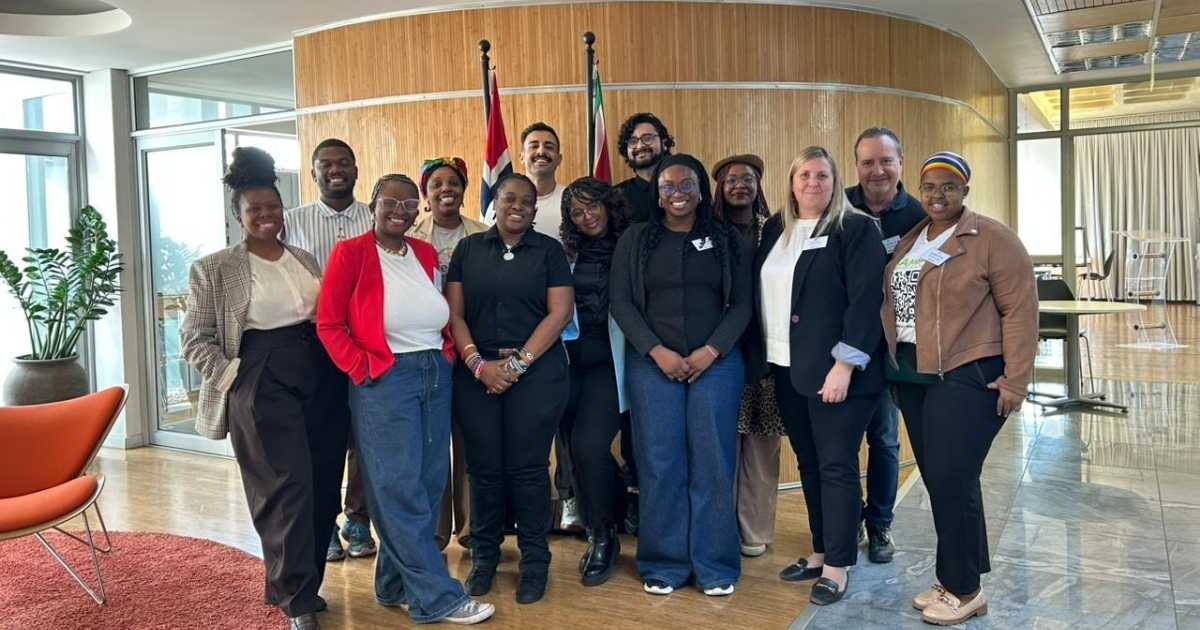
That was the focus of a stakeholder roundtable, “From Online Lies to Offline Harm: Mapping and Countering Anti-LGBTQI+ Disinformation in Southern Africa,” held at the Royal Norwegian Embassy in Pretoria, South Africa on Thursday.
The gathering brought together LGBTQI+ rights organisations, legal and litigation partners, independent media, fact-checking organisations, researchers, and diplomatic partners to examine how harmful narratives move between digital and physical spaces and to identify practical ways to respond.
Opening the discussion, Norwegian Ambassador Anne Beathe Kristiansen warned that disinformation campaigns are becoming increasingly common.
“Across Southern Africa and indeed across the world, we’re witnessing a growing power of disinformation that shapes public attitudes, influences political debate, deepens social divisions,” she said.
Kristiansen said that disinformation campaigns “don’t just target facts but also people and communities, including those whose rights are already contested,” adding that “LGBTQI+ people are a frequent target.”
The narratives behind the hate
A presentation by Anita Igbine, Senior Investigative Analyst within the iLAB team at Code for Africa, explored some of the recurring narratives being used against LGBTQI+ communities across the continent.
Igbine’s work focuses on investigating disinformation campaigns, influence operations and coordinated inauthentic behaviour. She is also leading research examining disinformation narratives relating to climate change and LGBTQI+ communities across Africa.
One of the most persistent narratives identified by Code for Africa is the claim that LGBTQI+ identities are “not African”.
According to the organisation’s research, this cultural essentialism is repeatedly used to portray LGBTQI+ people as threats to authentic African traditions, positioning queer people as culturally illegitimate, “un-African” or corrupting influences.
Another recurring tactic is religious and moral panic, in which LGBTQI+ people are presented as evidence of societal decline, lost values or moral corruption.
Igbine said the narratives are often deliberately designed to exploit existing social and political sentiments.
“We’re not looking for people who are just spreading false information, but we’re looking at those who are trying to use sentiments of people to attack LGBTQI+ rights,” she explained.
Other narratives identified in the research include claims that LGBTQI+ rights are being imposed through foreign funding and forms of biological and gender essentialism used to delegitimise transgender people.
The presentation also highlighted how sexual orientation can be weaponised against political or public figures, with LGBTQI+ identities presented as evidence of moral corruption or as a reason someone is supposedly unfit to lead.
From a viral post to real-world consequences
The danger, speakers stressed, lies in what happens after these narratives leave the screen.
Ambassador Kristiansen noted that false information can legitimise prejudice and reinforce stigma, while contributing to harassment, discrimination, violence and exclusion.
“What makes this challenge especially concerning is that online disinformation, it rarely remains online,” she said. “The connection between digital narratives and real-world consequences is becoming increasingly clear.”
She added that harmful narratives can influence policy debates and create an environment where restrictions on rights become easier to justify.
“In other words, online lies can produce online harm,” Kristiansen said.
The Code for Africa presentation demonstrated this crossover through examples from across the region.
In Botswana, for example, anti-LGBTQI+ messaging circulated around an organised religious march, with online coordination helping mobilise people offline. Igbine said the campaign coincided with a policy debate and contributed to the policy being halted.
The tactics used to amplify such narratives range from clickbait and manipulated or AI-generated content to “copypasta”, where the same messaging is repeatedly posted across accounts and platforms.
Repeated exposure can create the impression that a particular claim is widely accepted or true, particularly when people do not independently fact-check what they see.
Two South African cases under the microscope
During the roundtable, participants broke into groups to examine real-world cases and consider how disinformation and harmful narratives operate, how they spread and what interventions might have prevented or limited their impact.
One of the cases examined was the controversy surrounding South African media personality Ngizwe Mchunu.
Mchunu was blocked from entering Johannesburg’s Kwa Mai-Mai market after the South African Human Rights Commission ruled that remarks he made about LGBTQI+ people constituted hate speech and ordered him to apologise.
A viral podcast video featuring Mchunu attracted more than one million views. In it, he claimed that Zulu regalia “excludes” LGBTQI+ people.
The case offered participants an opportunity to consider the relationship between influential personalities, viral content, identity-based rhetoric and the amplification of hostile narratives.
The second case focused on the backlash following Cape Town Pride’s successful bid to host WorldPride in 2028.
The Code for Africa research found that the announcement triggered multiple anti-LGBTQI+ campaigns. The Democratic Alliance, the party governing Cape Town that supported the bid, was accused of imposing foreign values and bringing “moral decay” and “Satanism” to the city.
Christian and Muslim communities were called upon to unite against what was described as a “troubling omen”, while voters were encouraged to consider conservative alternatives including the Freedom Front Plus and the African Christian Democratic Party.
For participants, the case illustrated how LGBTQI+ issues can become politically weaponised, with queer communities positioned as symbols of foreign influence, cultural threat or moral decline.
Who is behind the narratives?
An important part of the discussion was moving beyond individual social media posts to examine the actors and systems responsible for producing and amplifying them.
Code for Africa’s framework identifies potential actors ranging from individuals and media platforms to political actors, non-state organisations and foreign state actors. These actors can operate directly or through affiliated groups and proxies.
The tactics can also be sophisticated.
Igbine highlighted the use of coordinated posting, recycled content, manipulated images, AI-generated material and identity-based harassment. Some harmful messaging is deliberately produced in local languages, which can make it harder for platform-based detection systems to identify.
Igbine said the problem is particularly serious because these campaigns can exploit existing political and social tensions.
“Politicians have seen [it] work, and so they will obviously keep doing it,” she said, describing how LGBTQI+ people can be used as a political tool by those seeking to present themselves as defenders of African or religious values.
Building a response
The discussion was not only about documenting the problem. Participants also explored how organisations, journalists, researchers and platforms can respond more effectively.
Code for Africa’s proposed approaches include maintaining watchlists of actors and terminology, monitoring mainstream media, tracking social media conversations and analysing internet search trends to identify emerging narratives.
The organisation also highlighted the importance of collaboration with technology platforms and the use of platform tools to build evidence around coordinated networks and potentially support takedowns of malicious accounts and networks.
For LGBTQI+ media, this work carries a particular significance.
Queer journalists and media organisations are often reporting on the very communities being targeted by these narratives, while simultaneously operating in an information environment where sensational anti-LGBTQI+ content can travel faster and further than careful reporting.
The challenge is therefore not simply to debunk individual false claims, but to understand the networks, narratives and emotional triggers that allow them to spread in the first place.
Ambassador Kristiansen stressed that the response cannot come from one sector alone.
“Addressing it requires collaboration across sectors, across borders, and no single organization of government can solve this alone,” she said. “We need a deeper understanding of the incentives that drive the creation and amplification of harmful narratives. And we also need some practical solutions.”