

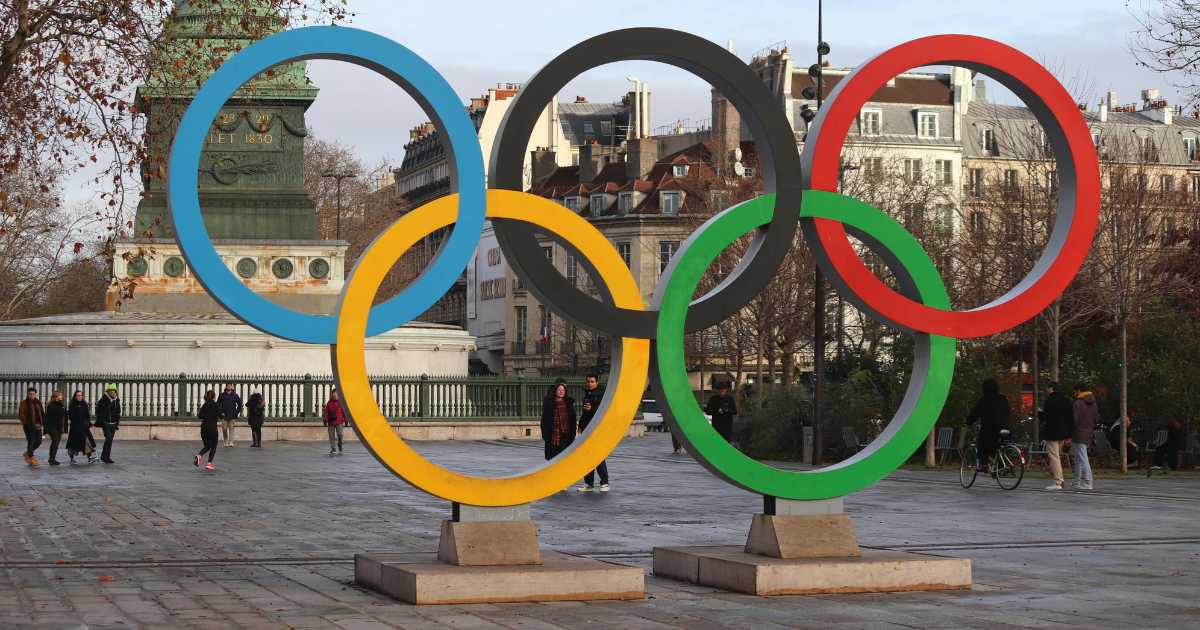
The International Olympic Committee (IOC) has announced an updated policy that will ban transgender women from competing in women’s events at the Olympic Games, igniting outrage across the global LGBTQ+ community and raising alarm among human rights experts.
The decision, which also introduces mandatory genetic sex testing for female athletes, marks one of the most significant rollbacks of inclusion in elite sport in recent years.
Ahead of the 2028 Olympic Games in Los Angeles, the new policy is conveniently in line with Donald Trump’s targeting of the trans community, despite evidence that suggests trans women’s athletic performance tends to match or be at a disadvantage to that of cis women.
IOC president Kirsty Coventry said the policy was the result of a review led by medical experts.
“At the Olympic Games, even the smallest margins can be the difference between victory and defeat,” she said.
She continued: “So, it is absolutely clear that it would not be fair for biological males to compete in the female category. In addition, in some sports it would simply not be safe.”
Prior to this declaration, the IOC did not adopt a universal approach to sex eligibility restrictions; instead, it deferred to the governing bodies of particular sports.
A dramatic policy reversal
The IOC’s move represents a sharp shift from its previous approach, which allowed international federations to set their own eligibility rules for transgender athletes.
Under the new framework, only athletes classified as “biological females” through genetic testing will be permitted to compete in women’s events.
Critics say the decision targets an already marginalised group. Transgender athletes have historically made up only a tiny fraction of Olympic competitors, yet they have become the focal point of an increasingly politicised debate around gender and sport.
The return of sex testing
At the centre of the new policy is the reintroduction of genetic sex verification, including testing for markers such as the SRY gene.
Human rights organisations warn that this revives a discredited practice abandoned decades ago due to its scientific flaws and harmful consequences.
According to advocacy groups, sex testing has historically led to the policing of women’s bodies, disproportionately impacting athletes from the Global South and those with natural variations in sex characteristics.
Legal experts have also cautioned that such measures may violate international human rights protections, including the rights to privacy, dignity, and non-discrimination.
Queer voices speak out
For LGBTQ+ organisations, the IOC’s decision is not just about sport, it is about bodily autonomy, dignity, and the right to exist without scrutiny. Members of ILGA World shared their thoughts about the effects of this decision.
Lily Dong Li Rosengard, ILGA World Senior Specialist on Gender Identity and Gender Expression, pushed back against the IOC’s justification of “fairness”:
“We agree, women deserve to compete safely. And this starts with addressing real issues for women’s sports like unequal funding, pay disparities, access to training and facilities, gender-based violence, and male dominance of coaching and leadership roles. Subjecting the bodies of all women and girl athletes to further scrutiny, on the other hand, will only cause more harm and drive more women away from the sports they love.”
Gurchaten Sandhu, ILGA World Director of Programmes, highlighted the IOC’s reversal of its own past commitments:
“Reintroducing sex testing brings the IOC back to policy that it had discontinued exactly thirty years ago. Back then, they rightfully concluded that sex testing was scientifically inconclusive and caused considerable harm to athletes. Then, in 2021, they approved a Framework on Fairness, Inclusion and Non-Discrimination to best support trans athletes and athletes with sex variations. Now, they are retreating from their own decisions and ignoring the recommendations of various UN bodies, the World Medical Association, and athletes worldwide.”
Sandhu added:
“But the evidence is clear: sex testing exposes women and girls to privacy violations, public humiliation, and abuse. And it is profoundly discriminatory, too. No one is asking men and boys to undergo these tests. Women and girls shouldn’t either.”
In an interview with BBC, South African Olympian Caster Semenya criticized the IOC’s ruling. “If the IOC had truly listened — if President Coventry had done what evidence-based policy demands — this policy would not exist. It does not smell of science. It smells of stigma. It was not born from care for athletes. It was born from political pressure. As a woman from Africa, I had hoped President Coventry would be different. I had hoped she would listen to all of us — not just the powerful, not just the comfortable. She had the chance. She failed us.”
LGBTQ+ charity Stonewall told BBC that the decision taken by IOC will worsen an increasingly global divide. “Sport has a unique power to bring people together, and the Olympics is always the epitome of this. Today’s decision will be one that stokes further division in our increasingly polarised world. Considerations of safety and fairness should always sit at the heart of sporting competition; but there will undoubtedly be an unintended ripple effect across community and grassroot sports, where many trans people, young and old, will hear the message they are unwelcome and that sport is not a place for them.”
Olympic nonbinary runner Nikki Hiltz turned to Instagram Stories to express her outrage at the IOC’s decision. “Attacks on trans people have consistently led to more policing and regulation of ALL women’s bodies,” they wrote in the post. “Y’all already know where I stand on this but this policy is so fucking stupid and is not solving a problem that exists,” they said.
Harrison Browne, who made history as the first transgender professional hockey player, blasted the IOC’s new policy in an Instagram video.
“It really seems like trans women participating in the Olympics is a non-issue, because it is,” Browne said. “What is an issue is the policing of women’s bodies, and the surveillance, and the whistle-blowing effect, and now this moral panic around trans athletes.”
Chris Mosier, a triathlete and trans rights activist, posted an Instagram video saying that news about trans women being barred from competing in the Olympics are a distraction from the ways in which the reinstatement of DNA testing will harm all female athletes.
“Only one trans woman has actually competed with women at the Games, but a lot more women athletes are participating in the Olympics each year,” Mosier said. “Every single one of them moving forward is going to be subjected to invasive testing where their personal and private biomedical information is going to be taken and then stored somewhere for who knows whom to see. This is a huge, huge violation of women’s rights, and that should be the headline.”
A broader human rights concern
More than 130 human rights and sports organisations have already condemned the move, warning that increased scrutiny of athletes’ bodies will ultimately harm all women, not just transgender competitors.
They argue that the policy risks normalising invasive surveillance and reinforcing narrow, outdated definitions of womanhood.
A deeply divided future for sport
Supporters of the ban claim that it protects fairness in women’s competition. But for many in the queer community, the decision signals something far more troubling: a growing willingness to exclude under the banner of fairness and unsupported science.
As the Olympic movement prepares for the 2028 Games, the debate is no longer just about who gets to compete. It is about who gets to belong.




One Comment
What about Trans- men? why the silence?