

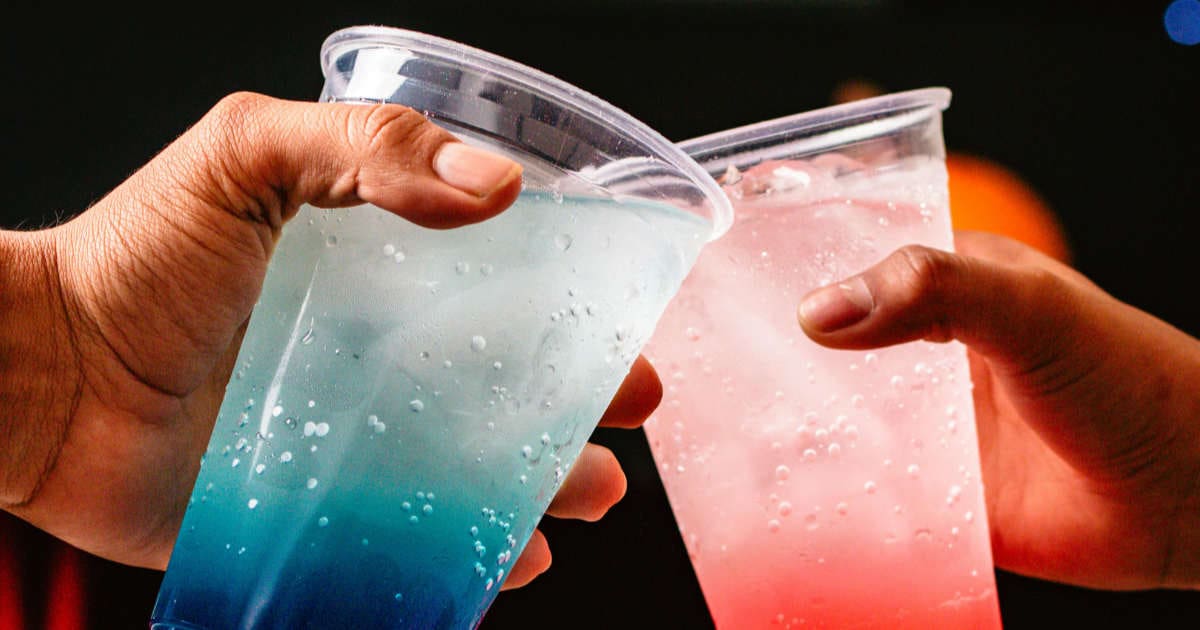
I learned about drink spiking the hard way.
As a young drama student, I was at Bronx – the then popular gay nightclub in Cape Town – when a barman handed me a complimentary glass of wine from a “secret admirer”. Flattering, right? I shared it with a girlfriend who was with me. Within a short time, something felt very wrong. We made it home, somehow. The next day, around midday, we finally pieced it together. The drink had been spiked.
To this day, I still do not know what that person intended. That is the most chilling part.
Years later, it happened again. After a cabaret performance in Table View, my housemate and I each had a single glass of red wine at the bar. Both of us were seasoned drinkers at the time so it wasn’t like we were lightweights. In fact, my housemate was a big guy and could easily put a bottle or two of wine away without even getting all that tipsy.
Shortly afterwards, everything went sideways. I was driving at a snail’s pace in the wrong lane when the police pulled me over. They assumed I was drunk. In our foggy state we tried to explain, but we were so disoriented that it took hours at the station before they understood we had likely been drugged. We were so fortunate that they believed us.
Two incidents. Two lucky escapes.
And yet, until recently, I still thought of drink spiking as something that happened occasionally, mostly in nightlife settings, and mostly involving alcohol.
I was wrong.
A walk in the park that left me shook!
During a walk in nature over the weekend, a friend told me something that genuinely shocked me.
He had recently been at a club in Berlin. He met someone on the dance floor. There was chemistry. They decided to hook up. Nothing unusual there. For those who do not know, many clubs, bathhouses and venues catering to men who have sex with men offer spaces where consensual casual encounters are part of the culture.
My friend had brought his own lubricant. However, his new “friend” preferred to use his own. No biggie, right?
They had a good time. About ten to fifteen minutes later, my friend started to feel strange. Not tipsy. Not tired. Drugged. The kind of shift in your body that tells you something is very wrong.
He had only been drinking water from a sealed bottle all night.
It dawned on him that the only possible source was the lubricant.
Fortunately, he was not alone, and his friends got him home safely.
He gave me permission to share this story, anonymously, because he wants people to know.
Initially, I assumed this was something happening in Europe.
I was wrong again.
When I warned a few local friends (without mentioning names), one of them told me it had already happened to him in South Africa about a year ago.
Same pattern. Same outcome. Thankfully, he too had friends who looked out for him.
Not everyone is that lucky.
What the data actually says
Drink spiking is not rare, and it is not limited to one group.
Research from the UK Home Office and Drinkaware suggests that up to 1 in 10 people report either having their drink spiked or knowing someone who has. Women are the most common victims but men are affected too, with studies indicating that roughly a quarter to a third of reported victims are male.
In South Africa, precise statistics are harder to come by due to underreporting, but SAPS and medical professionals consistently warn that cases are rising, particularly in nightlife districts.
Common substances include:
- Alcohol added to non-alcoholic drinks
- Sedatives such as benzodiazepines
- GHB, often referred to as a “date rape drug”
- Ketamine
These substances can cause confusion, memory loss, loss of motor control, and in some cases unconsciousness. Effects can begin within minutes.
Now add a new vector. Contaminated lubricant or other products used in intimate settings.
It is not widely documented yet, but anecdotal evidence suggests it is happening, as also reported in this BuzzFeed article. And it is dangerous.
Why this matters in MSM spaces
There is a particular vulnerability in spaces where:
- People meet quickly and act on attraction
- Trust is built in minutes, not hours
- Alcohol, sex, and anonymity intersect
These are not inherently unsafe environments. They are spaces of freedom and expression. But they can also be exploited.
The assumption that “it will not happen to me” is exactly what perpetrators rely on.
How to protect yourself
No advice is foolproof, but there are practical steps that reduce risk:
- Never accept drinks from strangers unless you see them prepared
- Avoid leaving drinks unattended
- Be cautious of sharing drinks or containers
- In intimate situations, use products you brought yourself where possible
- If a partner insists on using their own lubricant or substances, pause and assess
- Stay with friends and look out for each other
- Trust your instincts. If something feels off, leave
And most importantly:
If someone in your group suddenly becomes unusually intoxicated, disoriented, or unresponsive, treat it as a potential medical emergency. Some of these substances, particularly GHB, can be dangerous or even fatal, especially when combined with alcohol or taken in unknown doses.
If it happens to you
If you suspect your drink or anything else has been tampered with:
- Stay with someone you trust
- Seek medical attention immediately
- Report the incident to venue staff and SAPS
- Try to preserve any remaining drink or substance as evidence
Support is available:
- SAPS Emergency: 10111
- Triangle Project: 021 712 6699
- SADAG: 0800 567 567 or SMS 31393
- Lifeline South Africa: 0861 322 322
- OUT LGBT Well-being: 012 430 3272
Even if no crime ultimately occurred, the experience itself can be traumatic. Speaking to a trained counsellor can make a real difference.
The legal reality
Spiking someone’s drink or deliberately drugging them, in any form, is a serious criminal offence in South Africa. Depending on intent and outcome, it can lead to charges ranging from assault to robbery to rape.
Convictions can carry severe prison sentences.
Venue owners also have a responsibility to ensure the safety of patrons. Staff training, surveillance, and rapid response protocols are not optional extras. They are essential.
A community responsibility
The most consistent thread in every story I have heard is this. The people who got home safely did not do so alone.
Friends noticed. Friends intervened. Friends stayed.
If you take nothing else from this, take that.
Look out for each other.
Because whether it is a drink, a bottle of water, or even something as unexpected as lubricant, the methods may evolve. The risk is real. And awareness is the first line of defence.