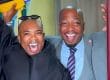


In a landmark LGBTQ+ rights victory, the Johannesburg High Court, sitting as the Equality Court, has found controversial public figure and cultural leader Ngizwe Mchunu guilty of hate speech, harassment and unfair discrimination against LGBTQ+ people.
The court ordered Mchunu to pay R250,000 and granted all the relief sought by the complainants, including a permanent prohibition against further discriminatory online content, a public apology, legal cost payments and mandatory human rights sensitisation training.
The judgment represents a significant victory for LGBTQ+ activists who argued that Mchunu’s public statements and actions contributed to a climate of hatred and discrimination against queer people.
Court Confirms Mchunu’s Statements Were Hate Speech
The case was first filed by the organisation, TransHope. The Hate Crimes Working Group (HCWG) later joined the application in support, followed by the South African Human Rights Commission (SAHRC).
The matter centred on a series of statements and queerphobic slurs made by Mchunu in social media videos in September and October 2025, which the complainants argued incited hatred against the LGBTQ+ community.
In a judgment issued on Friday, the court found that Mchunu’s statements were “quite obviously, hate speech, harassment and unfair discrimination under sections 10, 11 and 6 of the Promotion of Equality and Prevention of Unfair Discrimination Act 4 of 2000.”
Judge Wright further found that Mchunu “acted against the Constitution and he has insulted and threatened persons who enjoy Constitutional rights.”
The court permanently prohibited Mchunu from publishing any further material on any online platform that directly or indirectly discriminates against LGBTQIA+ people or communities.
Court Orders Apology, Training and Financial Penalty
Addressing the anti-LGBTQ+ march organised by Mchunu on 5 October 2025 to KwaMai-Mai in Johannesburg, the court found that the gathering “constituted harassment and unfair discrimination against gay and lesbian people, in contravention of sections 11 and 6 of the Act.”
Mchunu must publish an unconditional apology to LGBTQ+ people on his Facebook page within five days. The apology must remain pinned as the top post on his page for three months.
His actions will also carry a significant financial consequence. Judge Wright ordered Mchunu to pay R250,000 to one of the two primary complainants in the case, either TransHope or the HCWG. He must also cover the complainants’ legal costs.
In addition, Mchunu has 120 days to complete 20 hours of human rights sensitisation training conducted by the SAHRC or an institution nominated by it.
Ruling Sends a “Powerful Message”
In a statement, HCWG welcomed the judgment as a victory “for every LGBTQIA+ person who has ever been told they are less deserving of dignity, respect or equal treatment under the law.”
The organisation said the ruling sends a powerful message “that constitutional rights are not optional, and that minority communities cannot be treated as targets for hatred and division.”
HCWG thanked Lawyers for Human Rights (LHR) for litigating the case and helping secure the outcome.
“Hate speech fuels prejudice. Prejudice fuels discrimination. Discrimination fuels violence,” asserted HCWG. “In a country where LGBTQIA+ people continue to face harassment, exclusion and hate crimes, words have consequences. This judgment decisively affirms that reality!”
The SAHRC said it was encouraged by the court’s use of both corrective and restorative remedies, including public apology and human rights education. “This approach contributes not only to accountability but also to transformation and social cohesion,” said the commission.
The commission also reiterated that public figures bear a heightened responsibility to uphold constitutional values.
Mchunu’s Anti-LGBTQ+ Campaign Sparked by Same-Sex Wedding Images
Mchunu’s anti-LGBTQ+ campaign began after viral images circulated online showing a same-sex wedding where the couple, Crosby Jodwana and Sean Nhlapo, wore traditional attire.
Mchunu went on to attack LGBTQ+ people, arguing that queer identities were incompatible with traditional culture and values. He claimed that traditional Zulu attire was “off limits” to queer people.
He used derogatory language to refer to LGBTQ+ people and described them as disgusting and dogs who deserved jail and death. He also accused gay and lesbian people of grooming children, acting against God and corrupting Zulu culture.
He later gathered a group of men carrying beer bottles, sjamboks (leather whips) and knobkerries (traditional Zulu fighting sticks) and descended on KwaMai-Mai, a popular shisa nyama venue in Johannesburg, where he sought to confront queer patrons. Police refused the group entry and dispersed the gathering.
Mchunu Faces Further Controversy
Mchunu has recently been in the news for leading a high-profile anti-immigrant campaign that many have described as xenophobic. He has further been accused of making “racist” anti-Indian statements.
He was also recently taken to court by EFF leader Julius Malema over defamatory remarks.