

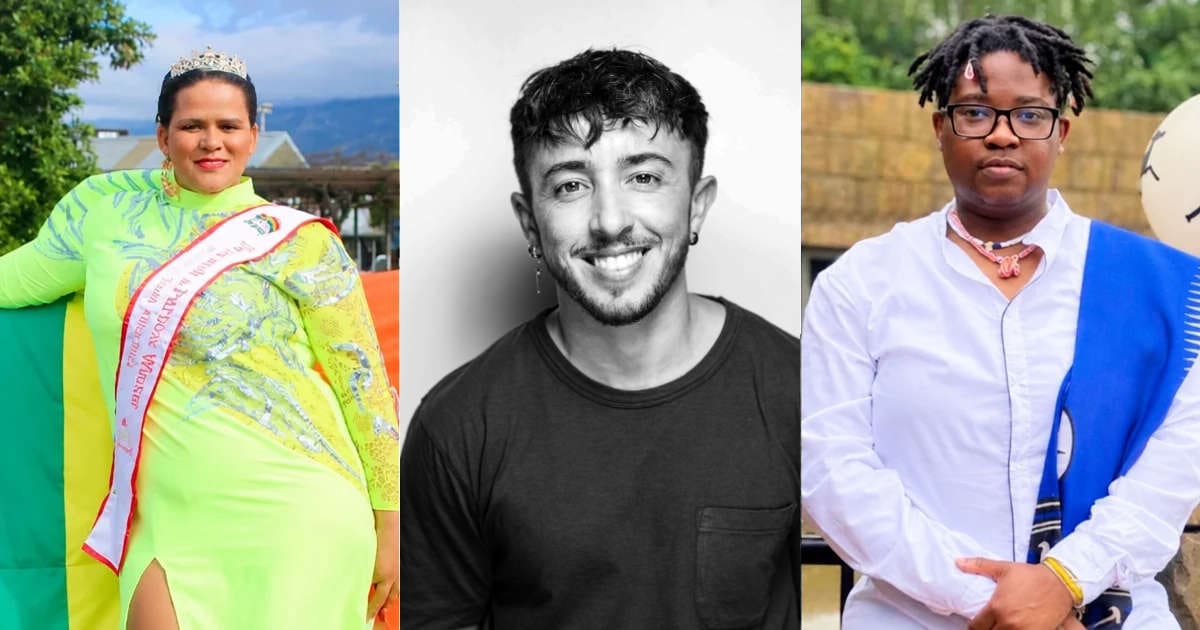
As South Africa observes Trans Awareness and Remembrance Month, transgender people are calling for a broader understanding of their lives – one that remembers those lost, honours those who paved the way and celebrates the people creating a future beyond survival.
Too often, transgender stories are told through violence, discrimination and rejection. While these realities must not be ignored, they are not the entirety of trans life. Across Cape Town, conversations about identity are also conversations about love, culture, spirituality, family and the freedom to live authentically.
For Miss Jackye Majawie, Executive Director of Majawie Safe Space, understanding the present requires recognising the struggles and achievements of earlier generations.
She describes South Africa’s trans movement as having evolved from grassroots resistance and isolated community networks into a more organised civil society movement.
Legal protections, including the Constitution’s equality provisions and the Alteration of Sex Description and Sex Status Act, alongside the establishment of trans-led organisations, have helped advance recognition and advocacy.
However, she cautions that progress has not reached everyone equally. Resources and leadership opportunities remain concentrated in major cities, while grassroots organisations and trans people in rural and peri-urban communities continue to face significant barriers.
Majawie believes that building a stronger future requires intergenerational solidarity, better-resourced community organisations and meaningful representation of diverse trans experiences.
“Honour local oral histories and elders,” is among the lessons she emphasises, arguing that movements must share leadership and avoid leaving younger generations to rebuild what previous generations fought to establish.
For filmmaker Gabe Gabriel, trans joy is found in the moments when community makes it possible to feel completely at home.
One such moment came in 2019, during a ballroom experience at a trans healthcare clinic in Bellville. Having been on hormone therapy for approximately three months, Gabriel was invited by Mother Kirvan Le Cap to walk the Realness category.
With a painted beard and bound chest, Gabriel entered a room where trans expression was not treated as an exception or spectacle, but as something celebrated.
The experience offered a sense of freedom and normality.
Today, Gabriel finds joy in filmmaking, creativity, cooking, books, music and everyday life with loved ones. Chosen family has also played an important role, providing support and belonging.
Gabriel believes media representation must move beyond stories that demand trauma or intimate explanations of trans identity.
“Trans people do not get enough opportunities to tell stories about happiness, success and ordinary life,” Gabriel reflects.
The question of belonging takes on another dimension for Bonani Wenzile Khumalo, known as Wenz, a transgender man, Indigenous healer, researcher and social justice organiser based in Cape Town.
For Wenz, being transgender and embracing African cultural identity are not opposing experiences. His understanding of himself has developed through family, spirituality, study and community.
He sees culture as something living and evolving, rather than a fixed set of rules that excludes people who do not fit conventional gender expectations. His ancestral and spiritual practices have helped him understand identity through lineage, responsibility and belonging.
“Being a trans African is an act of rootedness, not rebellion against my heritage,” he says.
Wenz also challenges the assumption that transgender identities are foreign to African societies, calling for conversations led by trans Africans and grounded in local languages, histories and lived experiences.
He believes families and cultural leaders do not need to understand every aspect of transgender identity to offer dignity, safety and love.
Together, these perspectives remind us that remembrance must extend beyond mourning. It must also recognise the lives, contributions and futures of transgender people who are here today.
For Cape Town and South Africa, the work ahead is not simply about increasing visibility. It is about creating communities where trans people can access healthcare, housing, education and employment, participate in cultural life and build families without having to justify their existence.
A future beyond survival is one in which transgender people are not merely remembered for what they endured, but celebrated for everything they are and everything they continue to create.