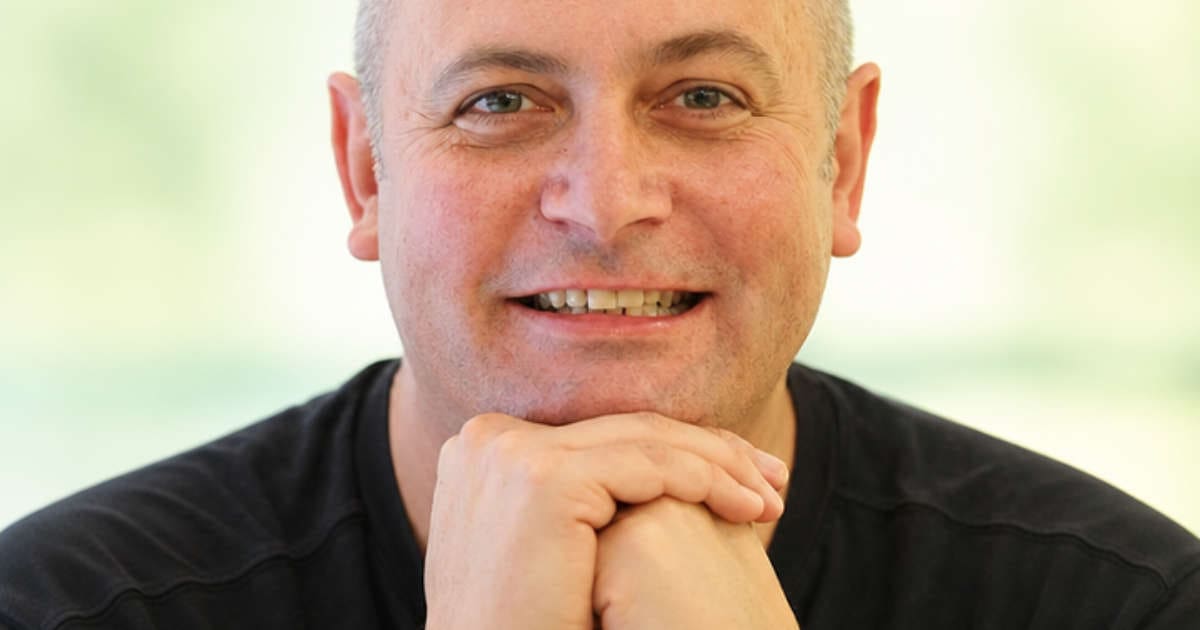


Ahead of World AIDS Day on 1 December, Herman Lategan remembers the friends he lost, the rooms they died in, and the grim statistics that came afterwards. He also remembers the hundreds of thousands of South Africans who died while our government delayed treatment.
A panel stood at the Theatre on the Bay in Camps Bay, covered in names. We came across it one evening after a performance, when we had been invited upstairs for drinks. I wasn’t prepared for what I saw.
Names of those who had died of AIDS-related diseases. So many names. I walked towards the panel and began to read. Some belonged to people I knew. Others belonged to people I hadn’t known were dead. I touched a few with my fingertips, in case something of the person remained in the lettering.
I turned to Graham, my partner. “Can it be true?” I asked. “These times we are living in? We are young, and one friend after another is dying around us. It isn’t supposed to happen now. Later in our lives, yes. Not now.
That was in the early Nineties. I was in my twenties and we had learnt the signs: the sudden weight loss, lesions, discoloured skin, friends who stopped answering the telephone.
I have been thinking about that panel again. South Africa went on to suffer one of the worst HIV/AIDS epidemics in the world. The numbers defy comprehension. What stays with me are the individuals: the rooms they died in, the people who abandoned them, the people who stayed. We understood almost nothing when it began.
***
On Wednesday, 2 October 1985, I sat in Backstage, a restaurant in a side street in Cape Town where the demimonde had found a home. Actors, directors, fashion designers, struggelistas, and a few rogues gathered there. The clientele was multiracial, despite the partial state of emergency and P.W. Botha’s wagging finger.
Shaleen Surtie-Richards might be at one table, Peter Butler and Marthinus Basson at another. On Saturday nights a young man with bare feet and curly hair went from table to table writing poems you could buy if you liked them.
The place had the air of a backstreet Parisian cabaret with a hint of Weimar decadence: cheap wine, smoky rooms, velvet curtains and lipstick on cigarette holders.
I was twenty-one. A television in the corner had been switched on, which was unusual. Nobody paid it much attention. It was generally reserved for Dallas on Tuesday evenings.
Then Rock Hudson’s face filled the screen. He had died of a disease South Africa knew almost nothing about. A gay cancer, people whispered. Something transmitted through sex, the supposed consequence of promiscuity. God’s punishment for the filthy faggots. The koffiemoffies, the airline stewards, were said to have brought it here.
The room went quiet. A drag queen dressed as Marlene Dietrich performed that night, in a white satin evening gown, theatrical jewellery, spotlight earrings and a pearl necklace. She began to sing Sag mir, wo die Blumen sind (Where Have All the Flowers Gone).
Beside me sat Casper Schmidt, an Afrikaans psychiatrist and poet with an Andy Warhol doppelgänger face. He was visiting from New York, where he had moved into a flat overlooking the Hudson River.
“It’s nonsense,” he said. He had come across the disease in America and believed that AIDS was psychosomatic, an outbreak of mass hysteria. Schmidt belonged to a fringe group of psychiatrists known as psychohistorians, who studied the shadow-like and collective fears and psychological needs behind politicians, social movements and historical events.
He believed that the rise of right-wing ideology in America after Ronald Reagan’s election in 1980 had produced an unconscious psychodrama. Conservative Christians were attacking gay rights, and gay men had become figures of shame and contamination. In his reading, patients were, in some sense, thinking themselves ill.
I was puzzled and didn’t know what to make of it. Years later, Schmidt himself would die of AIDS.
***
The first reports came through friends of friends. Someone had lost far too much weight. Another person had spots on his face. A man who had been at a party a few weeks earlier was in hospital.
Most of the heterosexual population looked away. This was a gay disease, they said, and none of their business. Queer sex was still stigmatised, and if you fell ill, you had brought it on yourself.
We knew little about safe sex. There were no dating apps. You met people in pubs, parks, on beaches, at dinner parties. The laws and prejudices of the country had already pushed us underground, and now even that world seemed dangerous.
Could you touch someone? Share a toilet seat? Kiss? Nobody knew. Information was scarce and misinformation plentiful.
In my youth, I worked for spare cash at Die Kaapse Tafel, a restaurant in Queen Victoria Street. St Martini Gardens, a block of flats, stood next door. One day the owner asked me to take a plate of food to a man who lived there.
He took a long time to answer the door. When it opened, I saw a thin man with spots across his face, unsteady on his feet, his hands flecked and curled into claws.
He took the plate, thanked me and looked away. For about a month I brought him food. Each time he looked worse. Eventually the owner told me to stop. He gave no reason. I never learnt the man’s name or what became of him.
That is what I remember most from those years: how often people disappeared and nobody knew how to speak of it.
***
A neighbour had rented a house beside the sea in Plettenberg Bay, and my partner Graham and I drove out to join the party. Two other guests, John and Christopher, were expected. When they arrived, we could see they were sick.
On the last evening, John talked at length about the moving pavements he intended to build in Plettenberg Bay. They would be escalators, he explained, taking domestic workers to the homes of the wealthy white people whose houses they cleaned. He would draw up the plans as soon as he got home.
In retrospect, he was delirious. It was their last holiday. Both men died soon afterwards.
John’s funeral took place in a church in Rosebank. The church was packed. Patricia Sulcas Kreiner, then mayor of Cape Town, arrived dressed in black and walked down the aisle.
Until then we had felt almost invisible in our grief. Her presence mattered. It was the first time we felt that someone in authority had noticed what was happening to our community.
By then the virus had spread through white, coloured and black communities. We recognised people in the congregation who had been affected. The bells rang and the service began.
***
Peter, a ship’s captain, lived around the corner from us in Green Point. A big, butch man, he understood the sea and its moods. We called him Moon by day and La Luna by night.
When he was ashore, he cooked for us: boiled vegetables, a baked potato, a piece of fish. None of it was good. His wine was wonderful. His swearing was inventive and his stories were better than his cooking.
After dinner he had a habit of taking out his schlong and swinging it around. It resembled a mushroom.
“Oh no, it’s ugly, put it away,” we would say.
He laughed. Newcomers to the table were usually horrified. No dinner party was complete without the performance. Then, one evening, he told me to take some of his best wines. Other things followed. He began giving away possessions without explanation. The big man started to wilt. His mood darkened, and the party trick came to an end.
We knew and said nothing. Peter sold his flat and moved to a house at Marina da Gama, where a lagoon reached almost to the door. A man of the sea, he wanted to be near water. His boyfriend, Connel, took over the nursing.
Towards the end, Peter invited his close friends to the house. We understood it was a farewell. Michael Franks was playing Popsicle Toes, one of Peter’s favourites. Platters of food went around. We drank champagne and laughed. A woman I didn’t know arrived, undressed and walked into the lagoon, where she swam in circles.
For a moment the scene resembled a Fellini film: people standing around, indigo water, music, laughter and a sapphire sky. I visited Peter once more. He lay on a large purple settee, gaunt, unable to lift his arms, looking out over the water where he wanted to die.
Black spots covered his face. Beside him, I took his stained hand, one of those enormous sea captain’s hands, and stroked his arm. Then I began to cry.
“I don’t want to die,” he whispered. Shortly afterwards he died, screaming in agony.
***
Helmie and I had been at school together. A boarder from a farm, he went to New York after matric to study fashion design and stayed about ten years, far from the narrow life of the platteland.
Back in Cape Town, he bought a cottage in Clifton that was always full of people. He had made money in New York and spent it on everyone who came. We went there to dance, drink, sunbathe and listen to Nina Hagen. Expensive art hung on his walls, including a Keith Haring.
He drove a red, two-door Alfa Spider. We raced through Cape Town with the roof down, sometimes over Kloof Nek to Hout Bay and back, Shirley Bassey singing Goldfinger at full volume and a bottle of champagne in someone’s hand.
One night he arrived at his own party by helicopter. People went wild. We danced until the sun came up. We were young, with money, time and the feeling that life would go on indefinitely. Looking back, I see the privilege of it.
Helmie began to decline. At first it was barely noticeable. Then he was admitted to the seventh floor of Somerset Hospital, known in those days as the AIDS floor.
People whispered about it. He was on the seventh floor. That was all you needed to know. When I visited, he was lying in his own vomit. The nurses did what they could, but the wards were full and the staff were frightened too. Nobody knew whether touching a patient could transmit the disease.
Later he was moved to a hospice in Gardens. Graham and I visited on Saturdays with a bottle of wine. Not one of the many people who had enjoyed his hospitality came. The parties had been crowded; the hospice visits were not.
His family came for him. For about a month we heard nothing. Then, on a cold, wet winter night, our doorbell rang. Two enormous, butch-looking men stood outside. In Afrikaans, they told us to come down to their car.
Helmie lay on the back seat of a large Mercedes-Benz, paralysed and gasping for breath. The street lamp lit the car as in a Fifties film noir. “Take him!” his brother shouted. “We don’t want to look at him, he brought it on himself! We don’t want to catch the bastard’s fucking disease! Just take him away!”
Our friend Stephanie lived nearby in Sea Point and had a spare bed. I ran upstairs to telephone her. This was before cellphones. She was frightened, with reason, but agreed they could bring him.
They left Helmie with her as if he were damaged furniture. Then they drove away. For a few days we did what we could. None of us was trained to nurse someone so ill.
A cancer associated with AIDS had paralysed his tongue and spread to his throat. He could no longer speak or eat.
Somehow, he ended up at Karl Bremer Hospital. Before we could visit, Stephanie telephoned to say he had died during the night.
His funeral service took place in a small chapel inside the hospital. Four of us attended: Stephanie, Graham, me and the priest. Nobody from his family came. None of the people who had once filled his house came either. We drove home to Green Point in silence.
***
The disease killed in many ways. Some men took their own lives. One drove over the cliffs at Chapman’s Peak. When rescuers reached his body, there was blood everywhere. He had left a note.
The following day, newspapers reported that he had exposed emergency workers to the dreaded disease. Another man gassed himself beside a road near Table View. There was a note, and another front-page report. The public response was often as cruel as the disease. Even in death, these men were treated as scum.
***
Casper Schmidt had returned to New York. I heard later that he died alone in his smart flat on 14 May 1994. Before that he had visited the Cape again and given me two Judith Mason sketches, among other gifts. I suspected nothing. The man who had once dismissed AIDS as nonsense had died of it himself.
I sometimes wonder who saw him last. What happened to E.T., his cat? What did he think as he lay there with nobody to soothe his brow or take his hand?
Koos Prinsloo, a writer friend and master of the short story, also died. He came to Cape Town with his new companion, Andrew, and Graham and I collected them from the airport. They stayed at a guesthouse around the corner from us.
One evening we ate on the stoep. We drank and laughed about the literary establishment and the people who complained about swearing in plays. It was spring. Across the candles I noticed a lesion on Koos’s face, and how thin he had become.
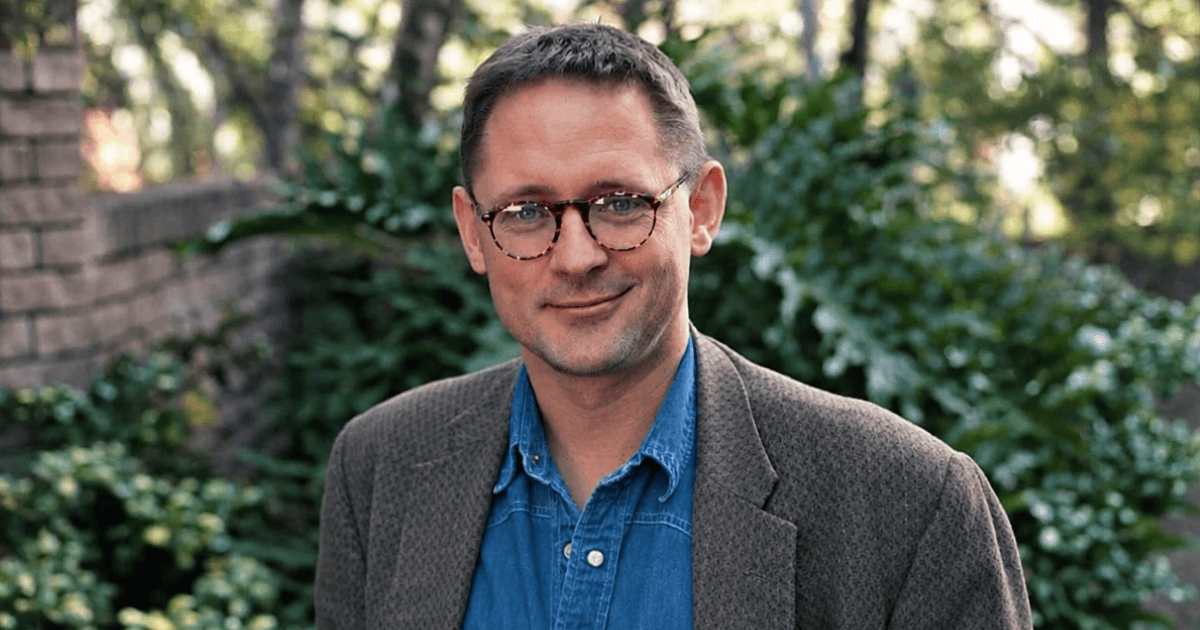
At the old D.F. Malan airport, when we saw them off, he said: “That you should have to see me like this.” He died in his flat in Berea on 4 March 1994. Later Andrew died too.
Another friend, Lisle Estment, lived in the same block of flats as Koos. For a while we heard nothing from him. One day I telephoned and a stranger answered.
“Oh, I’m afraid the previous tenant has died,” he said, without much interest. “We are busy fumigating; I must go.” He hung up.
Kevin Ayliff, a good, down-to-earth friend, had to leave his job in Johannesburg and return to his father in the Eastern Cape. He died in his arms. His mother wanted nothing to do with him. We couldn’t get to the funeral, so we lit a candle.
***
By 1994, the deaths had become part of everyday life. Graham and I went to New York for two weeks and saw Angels in America, Show Boat, Sunset Boulevard, Hello, Dolly! and Carole King. Almost every day we went to a play or musical.
Something happened at the end of each performance. After the applause, the leading actor or singer came back on stage and raised a hand. The auditorium fell silent. A minute’s silence was observed in memory of those who had died.
We saw this at every performance. I was thirty that year. Many people my age were already dead.
Liberace died in 1987. I had once seen him perform live, arriving on stage in a large Rolls-Royce while his handsome chauffeur opened the door. A fur coat, dyed and set hair, a diamond ring on every finger.
He stretched out his hands to the audience. “Do you like these?”
“Yes!” they shouted. “Well, darlings, you paid for them.”
The audience roared. He swept his fur across the stage, sat down at a golden grand piano and began to play.
Keith Haring, whose work had hung on Helmie’s wall, died in 1990. News kept arriving from New York. The art world was being emptied out. Actors, painters, designers, dancers, writers. People who had seemed to live in a world of endless possibility were disappearing.
***
Then came 1999, and Thabo Mbeki became president.
By then South Africa’s HIV epidemic was severe and growing. The years that followed brought a national tragedy, made worse by the government’s refusal to act on the scientific evidence and its delays in making antiretroviral treatment widely available.
I won’t recount the whole political history here. Others have documented it. But the numbers matter. During Mbeki’s presidency an estimated 1.5 to 2 million South Africans died of AIDS-related causes. The overwhelming majority were black.
Many deaths were recorded as tuberculosis, pneumonia, diarrhoea or other illnesses. The way deaths were classified, and the lack of reliable information, obscured the full toll.
Researchers have estimated that between 330,000 and 365,000 deaths could have been prevented had antiretroviral treatment arrived earlier. These deaths were avoidable. Those people might have lived.
Children lost parents. Parents buried children. Grandparents were left to raise grandchildren. Communities lost teachers, nurses, workers, neighbours and friends. The consequences did not end when the worst years passed.
I think about those figures whenever I remember the names on the wall at the Theatre on the Bay. There is a difference between saying that hundreds of thousands of people died and understanding what that means. A statistic cannot tell you about a man in a doorway, unable to meet your eye, or a ship’s captain who wanted to die beside the water, or a fashion designer dumped outside a friend’s home by his own family. It says nothing of a hospital chapel with four people in it, or a mother with her dying son in her arms in the Eastern Cape.
Nor can it say how many names might have been added to that wall had treatment not been delayed. I remember touching those names, and turning to Graham to ask how long we could last.
He said he didn’t know. Neither did I.
Herman Lategan is a journalist and author based in Cape Town, South Africa. He writes creative nonfiction and essays, with a focus on observational, personal and often ironic storytelling. His work has appeared in numerous local and international publications. He is the author of four books.