

South Africa is on the precipice of a major public health crisis, activists have again warned, following devastating cuts to international HIV funding.
Clinics that once provided essential HIV treatment and care are shuttering or scaling back, leaving vulnerable key populations—such as sex workers, men who have sex with men (MSM), trans people, and youth—without access to life-saving services.
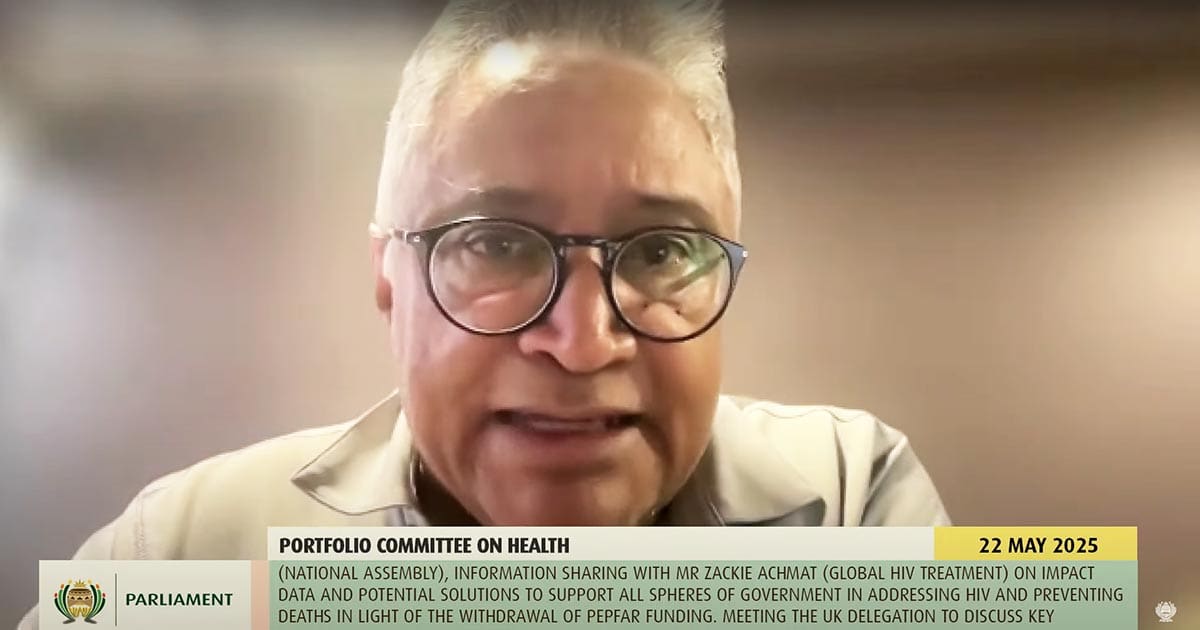
On Thursday, members of the Global HIV Treatment Coalition addressed the Portfolio Committee on Health in Parliament, calling for urgent government intervention to mitigate the impact of the United States’ termination of the President’s Emergency Plan for AIDS Relief (PEPFAR) funding. The meeting followed a disruption by activists the previous week, demanding that Parliament respond to a letter outlining their growing concerns.
Since the US pulled billions in funding earlier this year, the consequences have been dire. “We are scared for our lives on the ground, and this is not a political issue. This is an issue of human life,” said Sibongile Tshabalala, chairperson of the Treatment Action Campaign (TAC). She described mounting waiting times at clinics, patients being turned away without referral letters, and a reduction in the quantity of medication dispensed.
A Lifeline Cut
The abrupt withdrawal of PEPFAR funding has gutted community-led HIV programmes across the country. Nomsa Mercy, Direct Services Manager at the Sex Workers Education and Advocacy Taskforce (SWEAT), described the collapse of sex worker-friendly services.
“Ever since our friendly clinics—clinics that were assigned to key populations—were closed, some of the sex workers didn’t have time to go get medication. They didn’t even get referral letters to go to other institutions,” she said.
The consequences are chilling: “People are going to default, and there will be a big breakout for sex workers defaulting,” Mercy warned. Mobile clinics that once brought medication directly to hotspots have disappeared, and many sex workers, particularly migrant and undocumented ones, are now unable to access care. “Some… don’t have cell phones whereby we can reach them to inform them about all this that is happening.”
A System Teetering on Collapse
Renowned HIV activist Zackie Achmat, who has been on antiretroviral treatment since 2003, painted a grim picture of the broader national landscape. “We’ve lost PEPFAR, but we’re also going to lose Global Fund money,” he cautioned, adding that the U.S. Centers for Disease Control (CDC) programme is set to end in September.
Achmat warned of a devastating resurgence in HIV transmission: “If we have treatment interruptions, our viral load will rise rapidly. People will start becoming sick. More importantly, we become infectious again, and we transmit the virus.”
He criticised the lack of transparency around provincial rescue plans. “None of us have seen those plans… and it is critical that people who work directly with communities are aware of what is in them,” he said. Achmat urged Parliament to demand full disclosure and inclusive consultation, stressing that the crisis could reverse decades of progress.
Gauteng: A Harbinger of What’s to Come
Clinician researcher Francois Venter described the dramatic collapse of community HIV testing and key population programmes in Gauteng—South Africa’s most populous province and the largest PEPFAR recipient.
“The sex worker program… has essentially just stopped. We’re finding HIV increasingly at symptomatic stages in clinics and hospitals, which is a disaster,” he warned. Venter also raised alarms over inaccurate government claims of increased treatment initiation, stating bluntly: “I’m not seeing evidence of a plan.”
Without intervention, Venter predicts “a very large wave of illness hitting our hospitals” before year-end.
The Human Toll of PEPFAR Cuts
Beyond the data and funding gaps, the impact is being felt acutely by patients like Cynathia Mamulindi, who questioned the government’s sluggish response: “The government is taking its own time while the clinics are being closed down… Where is the money? The government is supposed to be coming directly to the people with the answers.”
Committee chair Dr Sibongiseni Dhlomo acknowledged the urgency, promising to escalate the matter to the Minister of Health and arrange further engagements with activists. But for many, these actions may come too late.
A Call to Action
The coalition of activists is urging Parliament to push for a contingency rescue package, transparency on provincial plans, and immediate action to restore community-based services. “We want to help you and ourselves to help the Minister,” said Achmat. “But the clock is ticking.”
As key populations like sex workers, MSM and trans people face renewed uncertainty, the stark warning rings loud: without urgent action, South Africa could see a resurgence of one of the world’s deadliest epidemics.