
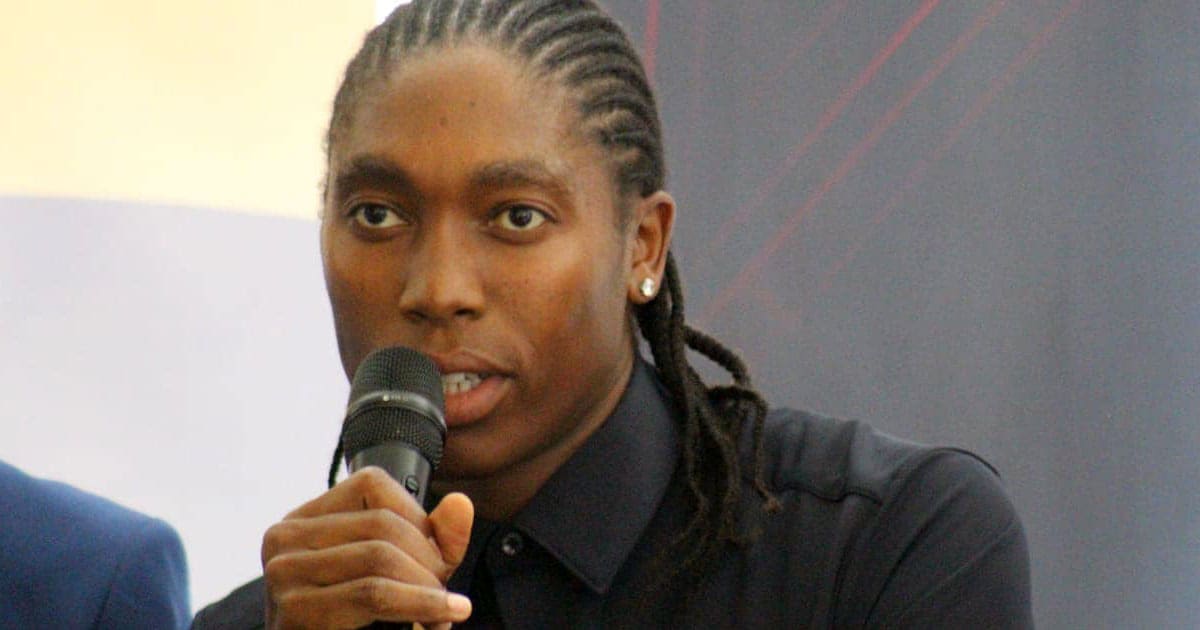
Queer two-time Olympic champion Caster Semenya says her partial victory in the European Court of Human Rights (ECHR) marks a step forward in recognising and respecting the rights of all female athletes.
On Thursday, the ECHR ruled that Semenya had not received a fair hearing in Switzerland in her long-standing battle against World Athletics over its regulations that restrict female athletes with naturally high testosterone levels from competing.
Switzerland Ordered to Pay Costs
The court found that “the review carried out by the [Swiss] Federal Supreme Court had not reached the required level of rigour.” Switzerland was also ordered to pay Semenya €80,000 in costs and expenses.
“I have waited 15 long years for this judgment,” said Semenya in a statement.
“Today, my patience in this journey has been rewarded with a result that will pave the way for all athletes’ human rights to be protected. I have given up what I wanted in the hope that others may have what they need. I hope this victory will inspire young women to be and to accept themselves in all their diversity.”
A Win for Equality and Bodily Autonomy
Gregory Nott of Norton Rose Fulbright South Africa, who is Semenya’s lead counsel, hailed the ruling as “a resounding victory not only for Caster but for the principles of equality, fairness, and bodily autonomy in international sport.”
He said the decision highlighted the imbalance athletes like Semenya face when taking on powerful sporting bodies.
“It is a reminder that all sportspeople are entitled to fundamental human rights, and those rights must be protected,” he added.
Some Claims Dismissed
However, the court dismissed Semenya’s other claims — including the right to respect for private life, the right to an effective remedy, and the prohibition of discrimination — ruling they were inadmissible as she does not fall within Switzerland’s jurisdiction.
The decision does not directly address the substance of Semenya’s case or overturn World Athletics’ current regulations and will not impact her competitive career, as she is now focusing on coaching.
It remains unclear if Semenya will take her case back to the Swiss courts.
A Precedent for Human Rights in Sport
Nott believes the judgment sets an important precedent for athletes’ rights globally, particularly where the governance of sport intersects with international human rights obligations.
Caster Semenya has consistently stated that her fight is not for personal gain but for the dignity, equality, and rights of women in sport.
The Controversial Regulations
World Athletics’ 2018 policy requires athletes with differences of sexual development (DSD) — such as Semenya — to artificially suppress their naturally high testosterone levels to compete in certain events.
Semenya’s refusal to comply with these regulations resulted in her being barred from international competition.
International human rights organisations, including the South African Human Rights Commission, have criticised the rules as discriminatory and harmful, arguing they violate the human rights of affected female athletes.
✊🏿✊🏿✊🏿 pic.twitter.com/wSlfqhiNHz
— Caster Semenya (@MightyCaster) July 10, 2025