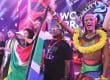


In this opinion piece, Itumeleng Lets’oala examines how Pride in South Africa has evolved. Drawing from history and personal encounters, she argues that township Prides like Soweto Pride remain vital spaces of protest, remembrance, and survival for Black queer communities.
In October 1990, Simon Nkoli and Beverley Ditsie led South Africa’s first Lesbian and Gay Pride March through the streets of Johannesburg.
It was not a parade of floats and confetti. It was a defiant act of survival and solidarity, a coming together of bodies who understood that queerness in South Africa could never be divorced from race, class, or politics.
“I am Black and I am gay. I cannot separate the two parts into secondary and primary struggles.” — Simon Nkoli, Johannesburg, 1990.
Nkoli’s refusal to rank his queerness beneath his Blackness laid the foundation for what true intersectional struggle should look like. But as the years went on, and the rainbow became an emblem of post-apartheid freedom, Pride began to fracture.
Mainstream Prides, once radical and defiant, became glossy and commercial, drawing corporate sponsors and affluent urban crowds. Many queers who lived in the townships and faced homophobic violence, poverty, and daily erasure, could no longer see themselves in those spaces.
Pride, it seemed, had left us behind – resulting in the birth of Soweto Pride in 2004. The Forum for the Empowerment of Women (FEW) began a homegrown act of resistance. It was not about sequins or slogans. It was about visibility in a place where being seen could cost you your life.
A Pride That Speaks to Our Realities
“Soweto Pride was established to address the specific issues faced by black queer individuals, including widespread homophobic violence and gender-based violence, a concern that remains central to the community,” Jade Madingwane, Director of FEW.
Township Prides like Soweto’s highlight that queerness is not only urban or middle-class. They make visible the lives of Black lesbian, bisexual, trans, intersex and non-binary people who face layered oppressions: racism, misogyny, poverty, and gender-based violence.
These spaces matter because they turn grief into action. Every year, Soweto Pride honours those we’ve lost to “corrective” rape, hate crimes, and silence. It demands accountability from police, clinics, and communities, asserting that the township, with all its histories of struggle, belongs to us too.
And beyond resistance, there’s a celebration of survival, chosen families, and joy in defiance. Soweto Pride insists that queerness is African, that it has always existed in our heritage and our streets.
Mahlatse’s Story: The Cost of Visibility
A few years ago, I met Mahlatse, a transgender woman from Soweto, while writing a feature about trans visibility in the workplace. She told me how exhausting it was to exist authentically in a world that refused to see her.
She had begun her transition in 2016, but her community made visibility dangerous. She avoided public transport and gatherings, moved through familiar streets with her head down, fearful of stares and slurs.
“There comes a layer of social well-being for people who are transitioning or even in the process of questioning because they are othered, ” said the late Mahlatse.
In a Global Citizen piece, I wrote about her courage, how she showed up to work every day despite misgendering and the humiliation of being told to use men’s bathrooms. While the world around her constantly reminded her that her identity was “too much”, she found safety and community online.
Her recent passing brought my timeline to a standstill, as we all had lost one of the best people we’d ever met on the internet. Months later, I found myself back in Soweto, marching in her honour at Pride. It was a full-circle moment: from documenting her fight for dignity to walking the streets she once feared to walk freely.
For people like Mahlatse, township Pride isn’t symbolic, it’s the difference between erasure and existence, isolation and community.
The Politics of Pride: Still a Protest
This past September marked 21 years of Soweto Pride. Under the theme “iSango le Nkululeko / The Key to Empowerment,” organisers returned to the roots of Pride, separating the political march from the celebratory gathering, to ensure that activism remains at its core. FEW has made it clear: visibility without justice is not liberation.
Globally, Pride has too often been pinkwashed – commodified by corporate sponsors, paraded as proof of progress, while queer people in marginalised communities still face daily violence and economic exclusion.
Soweto Pride stands as an antidote to that. It refuses the neat narrative of equality and insists that freedom must be felt in every community, not just those in “the richest square mile in Africa”.
This 21st celebration carried the key to empowerment but also to memory, a reminder that until every queer person can walk their own street safely, none of us are safe.
Itumeleng Lets’oala is a feminist communicator and traditional health practitioner specialising in sexual and reproductive health. She believes in the power of storytelling to impact social change.