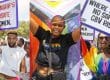


For the first time in G20 history, LGBTQIA+ activists delivered a sweeping, Africa-led set of demands directly into the Civil Society 20 (C20) process, insisting that global governance cannot continue to overlook queer people while claiming to champion inclusion.
The C20, held ahead of the G20 meeting later this month, aims “to ensure that world leaders pay attention to the recommendations and demands of organised civil society” in order “to promote environmental protection, boost social and economic development and ensure human rights.”
A special LGBTQIA+ session in Johannesburg on 13 November, led by activist and National Task Team Co-Chair Sibonelo Trower Ncanana, marked a historic moment for the continent. It culminated in the formal presentation of the Queer 20 (Q20) Declaration, a comprehensive policy intervention crafted by global LGBTQIA+ organisations and allies.
“We, the undersigned organisations present this Q20 Declaration as a critical input into the 2025 C20 Policy Pack,” the declaration reads. “The Draft Policy Briefs remain strong in their commitment to sustainable development but contain glaring gaps in their inclusion of LGBTIQA+ persons.”
It warns that “the principle of leaving no one behind is rendered meaningless” if LGBTQIA+ people continue to be erased from data, policy language, and national development strategies.
Queerness is not new to this continent
One of the most compelling voices of the day came from Lusanda Mamba, Programme Manager for the Marang Southern Africa LGBTQI Fund, a regional initiative spanning Botswana, Lesotho, Namibia, Madagascar, and Mauritius.
Mamba began with an unflinching reclaiming of African queer history: “Before I speak to the Q20 Declaration, it is vital that we begin with the truth Africa must say without hesitation: queerness is not new to this continent.”
She noted that many Bantu languages, Setswana, Sesotho, Kiswahili, Xhosa, Shangaan, among others, do not have gendered pronouns: “Our ancestors did not reduce people to rigid he or she categories. They did not fear fluidity. They did not erase complexity.”
She described pre-colonial African societies where gender-expansive people were healers, knowledge keepers, and respected community members: “Long before foreign laws invaded our societies, non-binary and gender-expansive Africans lived, loved, led, and thrived.”
And she grounded the Q20’s demands in the political reality of colonial harm: “Colonialism didn’t just take our land. It also took our language, cosmology, and autonomy. African queerness is indigenous. African homophobia is imported.”
Mamba said that African queer movements must be present in global governance spaces: “We refuse to be observers. We are here to ensure Africa is not spoken about in absence but heard from directly.”
On economic justice, Mamba noted: “You cannot criminalise people and then expect them to participate in the economy. Criminalisation forces queer Africans into informal and insecure economic spaces. Inclusive growth is impossible when queer youth are pushed out of schools and trans people cannot change their documents.”
She highlighted how Victorian-era laws continue to dominate African bodies: “Our bodies are regulated by laws rooted in Victorian morality, laws that were never born of African cultural systems.”
Discrimination Forces Invisibility, and Invisibility Destroys Policy
Tebogo Karabo Legodi, Interim Leader of the South Africa’s LGBTQIA+ National Dialogue, took the floor to unpack the Q20’s analysis of economic exclusion.
He described three major barriers:
- Lack of inclusion in economic programmes,
- Workplace discrimination and data invisibility,
- Criminalisation and informality.
“Despite global commitments to inclusion, this is not the lived reality. Economic programmes seldom consider the specific needs of LGBTQIA+ persons,” said Legodi.
“Companies and governments tell us they cannot plan for us because they ‘do not know the numbers.’ But this invisibility is created by policies that erase us.”
He pointed out that, “Across Africa, it is still a crime, sometimes punishable by death, to be LGBTQIA+. People do not feel safe coming out, which means we cannot collect data, which means we cannot make policy.”
Legodi reiterated the Q20’s key demands: “We call on G20 member states to integrate mandatory gender and social-equity assessments into all trade and financial agreements to ensure LGBTQIA+ persons are accounted for and become key policy informers.”
He also emphasised the need for self-identification options in employment systems, dedicated economic empowerment streams, and the decriminalisation of both sex work and LGBTQIA+ identities.
Migration, Education & Digital Rights: A Shared African Reality
Mamba expanded on the Declaration’s other thematic pillars:
On migration: “African queer people are displaced every day by violence justified through legal and cultural narratives that were never ours. Global governance must recognise African queer refugees as political exiles, not anomalies.”
On education: “Schools mirror the violence written in our laws. If the law does not affirm the child’s identity, the classroom won’t either.”
On digital safety: “For many, digital spaces are the only community we have, and yet those spaces remain dangerous.”
On decolonisation: “To decriminalise is not to imitate the West. It is to return to ourselves.”
Mamba further challenged the myth that LGBTQIA+ rights are a Western import: “Our languages, our histories, our spiritual systems all show fluidity existed long before Europe came here. It is the colonial legal code, not African culture, that turned us into criminals.”
Her final message was a powerful call for shared leadership:
“Do not speak for us, stand beside us. Do not design frameworks for us, co-create them with us. Do not include us symbolically, include us structurally. Because until African queer people are free, the continent is not free, and global justice remains incomplete.”
A Turning Point in Global Governance?
The C20 will now decide how fully the Q20’s recommendations are integrated into its official policy package for the G20 Heads of State Summit.
But one thing is clear: African queer voices have entered the G20 process with clarity, courage, and political precision.