
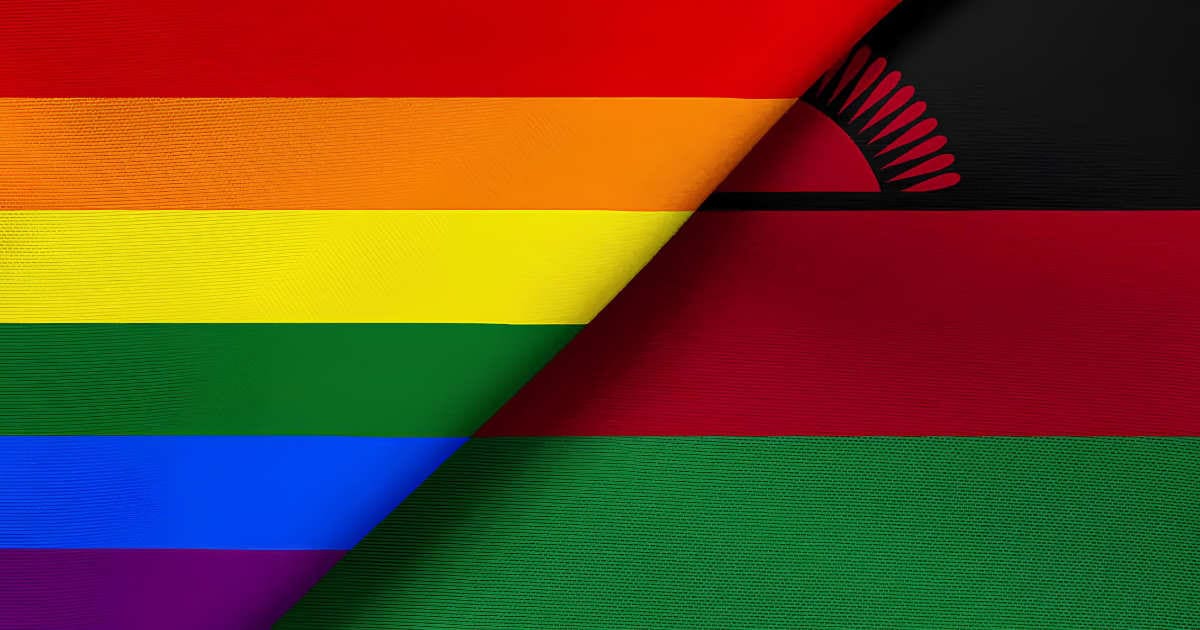
The government of Malawi has rejected claims that it intends to decriminalise homosexuality, calling the assertions “malicious” and “fake news”.
The controversy erupted after a document began circulating on social media that appeared to be an undated press release attributed to Mary Navicha, the Minister of Gender, Children, Disability and Social Welfare.
The document claimed “that the government of Malawi is taking significant steps towards promoting inclusivity and protecting the rights of all citizens, including minority groups such as the LGBTIQ+ community.”
It also asserted that “this includes efforts to repeal or amend laws that criminalise same-sex relationships, increase awareness and advocacy for LGBTIQ+ rights, and engage with international organisations and donor communities to promote human rights and inclusivity.”
Official Response Labels the Claims as Fake
On 10 November, the Ministry of Gender, Children, Disability and Social Welfare issued a formal statement dismissing the document and clarifying the government’s position.
“The contents of the release are fake and malicious, aimed at discrediting the Ministry and Government. There are no efforts to repeal and amend laws that criminalise same sex relationships. The Ministry, therefore, disowns the press release and its contents,” said the ministry.
It urged “members of the public to disregard the press release, and to refrain from spreading unverified and fake information” while condemning “ill minded people who spread fake information for selfish and malevolent motives.”
Context: Malawi’s Universal Periodic Review
The uproar followed Malawi’s fourth Universal Periodic Review (UPR) at the UN Human Rights Council (UNHRC) earlier in November. During the session, several countries urged Malawi to decriminalise consensual same-sex relations and to protect its LGBTIQ+ citizens from discrimination and abuse.
According to human rights group REDRESS, the Malawian delegation “affirmed the government’s commitment to engage in national discourse [about the criminalisation of same-sex acts] and to remain attentive to the development of jurisprudence in other countries.”
The delegation also reportedly “reiterated Malawi’s condemnation of all forms of violence or discrimination, emphasising that essential services like healthcare are available to all, regardless of sexual orientation.”
Anti-LGBTQ+ Laws Remain in Place
Malawi continues to criminalise homosexuality under laws that impose harsh penalties, including prison sentences of up to 14 years. Even when these laws are not actively enforced, they fuel an environment of fear, discrimination, stigma and marginalisation.
The High Court of Malawi ruled in June 2024 that the ban on same-sex intimacy is constitutional, a significant blow to the rights of LGBTIQ+ people in the country.
In August, REDRESS, the Centre for Development of People (CEDEP) and nine Malawian organisations wrote to the UNHRC to “highlight the issue of discriminatory violence, including torture, affecting individuals who identify as or are perceived to be LGBTIQ+ in Malawi.”
The submission criticised the “Government’s failure to uphold its international obligations under the UN Convention against Torture (UNCAT) and other human rights treaties to effectively protect LGBTIQ+ persons from torture and other forms of violence, as well as to ensure equality and non-discrimination.”