

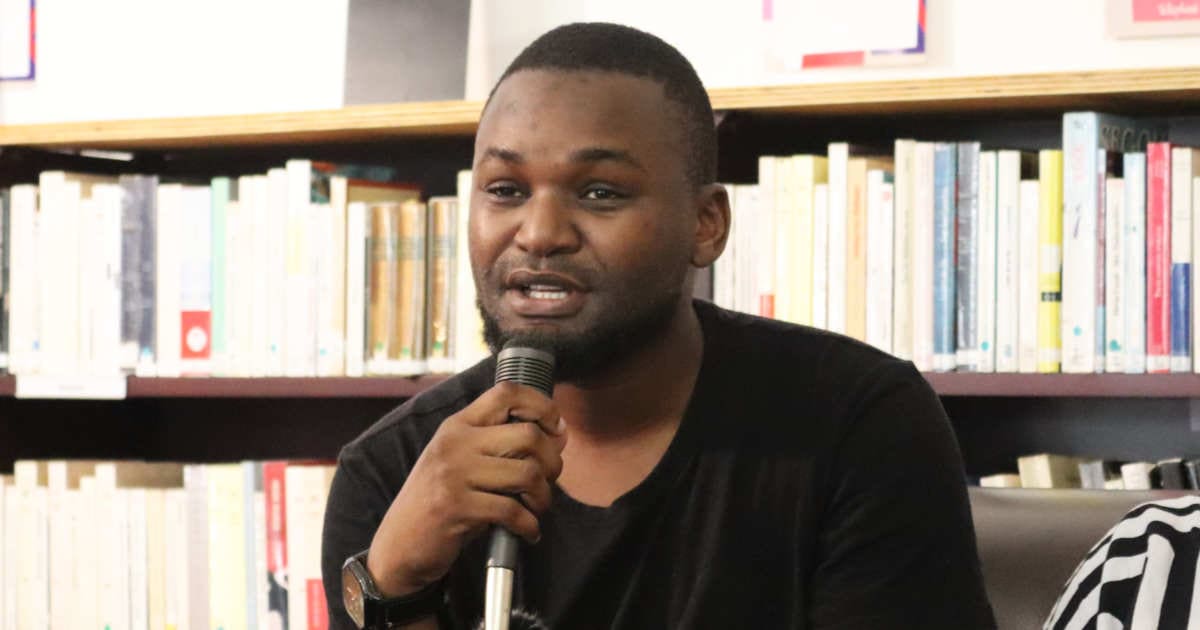
On Thursday, 12 February, activists, healthcare leaders and community voices gathered in Johannesburg, at Dibuka, the French Institute of South Africa’s francophone multimedia library in Braamfontein, to reflect on the impact of the 2025 HIV funding cuts.
Hosted in partnership with the GALA Queer Archive, the panel discussion titled “One Year Later: The Effects of the 2025 HIV Funding Cuts” reflected on a moment that reshaped South Africa’s HIV response and continues to reverberate through LGBTQIA+ communities.
GALA Director Keval Harie opened with a reminder of just how sudden and unexpected the US government’s decision was to cut off funding to South Africa, and around the world.
“It essentially meant that access to healthcare, specifically ARVs, for LGBTQI communities was ended almost overnight. And it was difficult at that time to even provide a coherent response because the funding cuts had happened so quickly and with such precision. And so, it is helpful for us to be having this conversation now to reflect on what has happened since those funding cuts.”
That “precision” translated into closed programmes, unanswered phones, and thousands of people left uncertain about where to access lifesaving medication and prevention services.
“Very concrete consequences”
Jean Spiri, Director of the French Institute of South Africa (IFAS) and Vice President of the French HIV prevention group, Crips Ile-de-France, widened the lens to the global stage.
“The cuts in the US budget of cooperation had very concrete consequences in one year.”
He cited stark figures. In just twelve months, 2.5 million people who had previously accessed PrEP globally were left without it. Condom distribution dropped by 35%. In some countries, services for pregnant women and key populations were dramatically reduced. Projections published in The Lancet, he noted, estimated that up to 9.4 million additional deaths could occur by 2030 as a result of these cuts.
Spiri also referenced the political shift behind the decisions, pointing to the return of Donald Trump and the ideological direction of his administration. Policies hostile to diversity, equity and inclusion, and to sexual and gender minorities, have had direct consequences for global HIV cooperation funding. In some countries, he said, entire centres serving sex workers and LGBTQIA+ communities closed after losing PEPFAR support.
The consequences, he stressed, are measurable and immediate.

“It came unexpectedly”
Bringing the focus back to South Africa, Hlawulani Silidi from the Johannesburg Health District spoke candidly, noting that “The cut of the funding is something which came unexpectedly.”
She explained that much of the district’s HIV, AIDS, STI and TB work, known as the HAST programme, relied in part on US government funding. “So when the funding cut happened, honestly, it left a very devastating mark on the programme.”
Despite the blow, the Department of Health moved to stabilise services. Silidi highlighted prior investments in sensitising facilities to better serve key populations; a term used to describe groups particularly vulnerable to HIV, including men who have sex with men (MSM), sex workers, transgender people and people who inject drugs.
“We had identified, and we still have them, 15 facilities here in Johannesburg. And champions were trained, all members of the staff, from the security guard to the cleaner, the admin, the personnel, the clinicians, we made sure that we trained all of them on how to work with key populations and all the dynamics that are around key populations.”
In November 2025, the district launched a dedicated wellness centre for key populations at 159 Rahima Moosa Street in the Johannesburg CBD. The facility offers a comprehensive package of care, including HIV testing, ARVs, PrEP, STI services and mental health support.
When partner organisations that served key populations were forced to close due to the funding cuts, they handed over thousands of client files to the health department.
“We had quite a huge number of files that we collected from our partners. We tried tracing [clients] to say, come back, we want to link you to the services, we want you to come back and get the services. Particularly the transgender community.”
The Johannesburg CBD clinic has since seen strong uptake, and referral pathways have been strengthened to ensure continuity of care, including for gender affirming services.

“We were just given the stop order”
Lunga Sithole from OUT LGBT Well-being described the disruption experienced by civil society organisations, including the organisation’s own Engage Men’s Health service.
“We were just given the stop order; cease all operations.” There was no time to prepare clients. In Johannesburg alone, he said, approximately 13,000 people were on PrEP and 6,000 on ARVs through supported programmes.
“Imagine letting those people go without proper explanation and a plan B for them,” said Sithole.
Clients accustomed to affirming, specialised services suddenly had to navigate mainstream public health facilities, often facing uncomfortable or stigmatising questioning.
Since then, OUT has focused on recovery, working closely with the Department of Health to integrate former clients into sensitised public health facilities.
“Not just services, but also community”
Luiz De Barros, founder of MambaOnline, spoke from a dual vantage point. At the time of the cuts, he was also working at OUT LGBT Well-being in a strategic communications role.
“We were simply told to stop. We had no idea of what would happen next.” Initially, the organisation and its staff were left without clear guidance. Community members flooded inboxes and phone lines asking where to access services.
“We were getting emails from people asking us questions, where can I get services, where can I get PrEP, where can I get condoms? And, you know, we didn’t know the answer to that.”
He stressed that the services that have since shuttered not only offered biomedical services, but were also important queer community hubs, and provided safety, empowerment, affirmation, and opportunities to connect.
The end of American funding further saw HIV and sexual health education and awareness campaigns tailored to the realities of queer people ending. In the year before the cuts, De Barros revealed that OUT’s social media campaigns had reached 1.2 million people with sexual health information.
The subsequent silence on queer sexual health education and empowerment, he said, was another quiet cost of the funding cuts that would have long-term consequences, especially for young people.
A national commitment to Lenacapavir
While the panel examined the damage of the past year, it also pointed toward new prevention tools. President Cyril Ramaphosa, in his 2026 State of the Nation Address, signalled government’s commitment to advancing HIV prevention:
“In support of our programmes to prevent and ultimately eliminate HIV, we will be undertaking a massive rollout of Lenacapavir, a 6-monthly injection that has proven highly effective in preventing transmission of HIV,” he said.
Lenacapavir, a long-acting injectable form of PrEP administered twice a year, is widely seen as a potential game changer. Silidi confirmed that facilities in Johannesburg have been trained and are preparing for rollout.
Many clients, she said, have expressed reluctance to take daily oral PrEP due to stigma and adherence challenges. An injection every six months removes the burden of daily dosing and the visibility of pill bottles that can be mistaken for ARVs.
For key populations navigating stigma, unstable housing or demanding work conditions, a twice-yearly injection could significantly strengthen prevention efforts.
One year later, the conversation at Dibuka was both sobering and resolute. Funding instability has consequences measured not just in numbers, but in trust, continuity and community. Yet amid disruption, some new clinics have opened, partnerships have deepened and biomedical advances offer renewed hope.
The path toward ending HIV in South Africa remains complex. But as the panel made clear, communities are not standing still.