

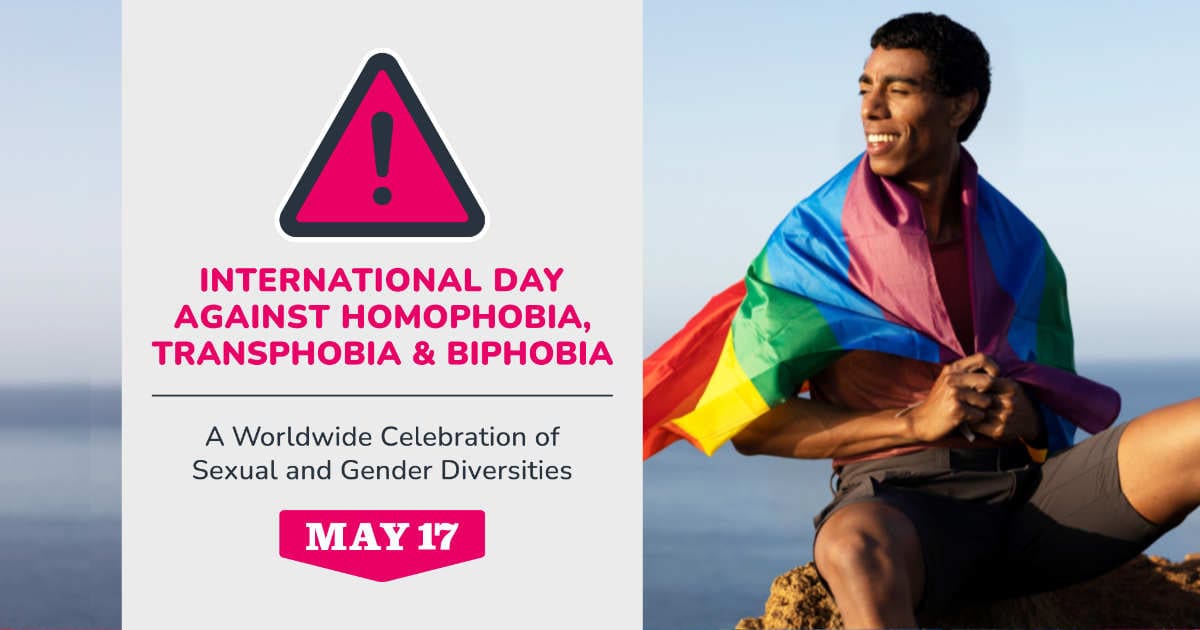
Every year on 17 May, people around the world mark IDAHOBIT – the International Day Against Homophobia, Biphobia, Interphobia, and Transphobia. But what is its significance, and why is it important?
IDAHOBIT is dedicated to raising awareness about discrimination and violence faced by LGBTQIA+ people, while also celebrating progress and visibility and pushing for equal rights and inclusion.
Why 17 May?
The first IDAHOBIT was observed on 17 May 2005, but the significance of the date goes back further, aiming to commemorate a significant historical anniversary.
On 17 May 1990, the World Health Organization removed homosexuality from its list of mental disorders — a major milestone in the fight for LGBTQIA+ equality. It confirmed, once and for all, that same-sex attraction was not an illness or a disorder, but a natural part of human sexuality.
The day has grown into a global movement, now recognised in more than 130 countries, including many where LGBTQIA+ identities are still criminalised.
What Happens on IDAHOBIT?
IDAHOBIT is marked in many different ways, depending on the country and community. Activities can include:
- Public marches, exhibitions and pride events
- Educational workshops and panel discussions
- Media campaigns and storytelling initiatives
- Social media activism using hashtags like #IDAHOBIT
- Community gatherings that celebrate LGBTQIA+ identities
- Statements of LGBTQIA+ support and allyship to raise awareness
Some organisations and institutions also use the day and the days surrounding the date to release reports, announce policy commitments, or highlight ongoing human rights issues.
Why Does IDAHOBIT Matter?
At its core, IDAHOBIT is about visibility, awareness, and action. It shines a spotlight on the realities many LGBTQIA+ people face — from discrimination in healthcare and employment to violence and exclusion.
It also creates space for conversations that challenge harmful attitudes and promote understanding. For allies, it’s an opportunity to show support. For LGBTQIA+ people, it can be a powerful reminder that they are not alone.
Why It’s Especially Important in Africa
In many African countries, LGBTQIA+ people continue to face legal, social, and cultural barriers. Same-sex relationships are criminalised in several nations, and stigma often limits access to healthcare, education, and economic opportunities.
That’s why IDAHOBIT holds particular significance on the continent. It offers a platform to:
- Amplify African LGBTQIA+ voices and stories
- Highlight human rights violations and push for accountability
- Advocate for inclusive laws and policies
- Build solidarity across borders and communities
At the same time, it’s important to recognise that Africa is not a single story. There are also spaces of resistance, resilience, and progress — from community-led organisations to legal victories in countries like South Africa.
More Than Just a Day
While IDAHOBIT is marked on one day, its message goes far beyond 17 May. It’s a reminder that the fight for equality continues — and that change happens through visibility, advocacy, and collective action.
Whether it’s attending an event, sharing information, or simply having a conversation, everyone has a role to play in creating a more inclusive world.