

As South Africa’s migration debates intensify, LGBTQI+ asylum seekers and refugees say they are increasingly caught in the crossfire of political anger and public frustration, even as many are simply trying to survive.
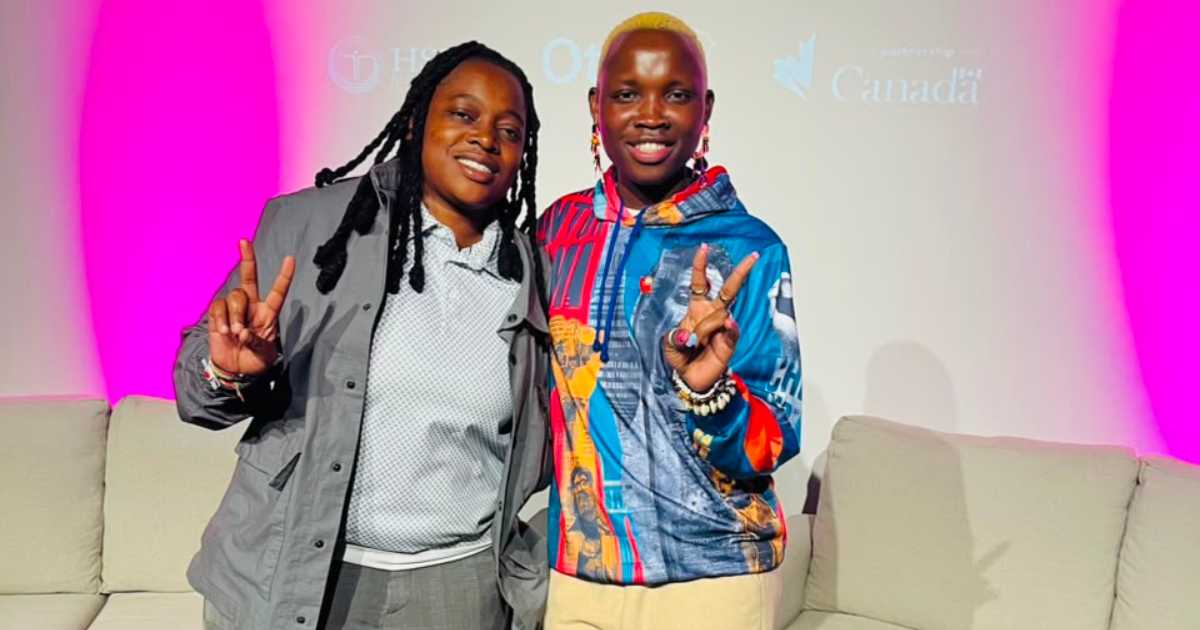
Two voices cut through the noise with particular urgency: transgender Ugandan activist Mandy Jovial, and Zimbabwean LGBTQI+ activist Nyasha “Masi” Zhakata (they/them), founder and executive director of the Pachedu LGBTQI+ Collective.
Both are speaking from lived experience inside South Africa’s asylum system, where legal protections exist on paper, but often collapse under the weight of bureaucracy, misunderstanding and hostility.
Legal protection exists but is not always felt
South Africa’s constitutional and refugee framework remains one of the most progressive on the continent.
Mandy points to the Constitution’s explicit protection of sexual orientation, alongside international obligations such as the 1951 Refugee Convention and its 1967 Protocol, which prohibit returning people to countries where they face persecution.
She also highlights the Refugees Act of 1998, which enshrines the principle of non-refoulement, meaning no refugee should be forced back into danger.
A further legal safeguard is found in Section 27(g) of the Refugees Act, which grants recognised refugees access to essential rights and services, including healthcare and other protections necessary for dignity and survival.
Yet both activists say the gap between law and lived reality is widening.
“Sending us back is sending us to death”
For Mandy, the consequences of anti-immigrant rhetoric are not abstract.
“When people say, ‘foreigners must leave,’ they forget that sending us back is sending us to death,” she says.
“If you tell a transgender refugee to return to Uganda or Ghana, you are telling her to walk into violence,” she adds.
She emphasises that LGBTQI+ people fleeing countries such as Uganda and Ghana are escaping criminalisation, imprisonment, and targeted violence simply for living authentically.
Mandy also challenges the idea that South Africa is merely one option among many.
“South Africa is seen as a beacon of hope. It is the only country in Africa where the law protects LGBTQI+ people,” she says. “That promise must not be betrayed.”
A system stretched beyond its promises
Despite these protections, Mandy describes an asylum system marked by delays, corruption and exhaustion.
“These asylum seekers queue for documents on a daily basis at the Department yet still they are turned away leaving most of them undocumented,” she explains.
She adds that her own journey through the system reflects wider structural failure.
“The process which was meant to take me six months for me to either get or not get status took me 2 years,” she says.
“Yet only section 22…” she continues, referring to temporary asylum documentation.
At the heart of her concern is what she sees as a misdiagnosis of the crisis.
“At this point I feel convinced that we are not addressing the root causes, we are addressing the symptoms,” Mandy says.
“It’s now South Africans versus foreigners and refugees fighting each other.”
“I did not leave home because I stopped loving my country”
For Masi Zhakata (they/them), originally from Zimbabwe, the emotional toll of uncertainty is constant.
“I did not leave home because I stopped loving my country,” they say.
“I left because I wanted the chance to live authentically, safely and with dignity.”
Their reflection continues as a plea for South Africa not to lose sight of its constitutional promise:
“My hope is that South Africa never loses sight of the values that made so many of us believe we could find refuge here.”
“Until every LGBTQI+ migrant and refugee can live free from fear, our work is not done.”
“Our liberation has never been about borders; it has always been about our shared humanity.”
Between frustration and fear
Both activists acknowledge rising frustration among South Africans over unemployment, crime and service delivery failures, as well as legitimate concerns about migration management.
But they caution against collapsing all migrants into a single category.
In Mandy’s words, the danger is that legal distinctions disappear in public discourse, leaving asylum seekers, refugees and undocumented migrants equally exposed to hostility.
Masi similarly warns that the current climate is reshaping what South Africa represents to those seeking protection.
Fear, they say, is becoming part of daily life even after escape.
A call for accountability and solidarity
Mandy calls for urgent improvements to the asylum system, including tackling corruption and reducing administrative backlogs at Home Affairs so that those in need can access documentation without years of delay.
She also urges media and civil society to confront misinformation that portrays LGBTQI+ refugees as threats rather than survivors.
Masi, meanwhile, frames the issue as a test of collective values.
South Africa, they suggest, cannot separate its constitutional ideals from how it treats those who arrive seeking safety.
A shared conclusion
Despite different paths, both voices converge on a single point: survival should never be conditional on nationality.
As Mandy puts it, returning LGBTQI+ refugees to hostile environments is not a policy debate, it is a matter of life and death.
And as Masi reminds us, the question is not only who belongs, but what kind of country South Africa chooses to be when vulnerable people arrive at its borders.
In that choice lies the measure of its commitment to dignity, equality and human rights for all.




4 Comments
We would love to go back home, but what is a home when you can’t be your true self there?
Please do something about the LGBTQI+ refugees and asylum seekers.
We are scared!
You value your life , so why is it not just as important to value every life. No matter religion, culture, race . My heart goes out to you .
Being immigrants and queers in South Africa is hectic right now. We are living in fear, we would like the immigration to kindly help with papers.
Being immigrants and queers in South Africa is hectic, we are living in fear, we would like the immigration to help us with papers.