
A landmark new report has revealed that approximately 2.39 million people in South Africa identify as lesbian, gay, bisexual, transgender, gender-diverse or intersex.
This updated figure appears in Admission Reserved, a report outlining the findings of a major survey, released by The Other Foundation in partnership with the Human Sciences Research Council (HSRC).
Based on nationally representative data collected through the HSRC’s annual South African Social Attitudes Survey (SASAS) from 3,285 respondents across South Africa, the report also tracks changes in public attitudes towards homosexuality and gender identity between 2015 and 2025.
The research serves as a 10-year follow-up to Progressive Prudes, the first in-depth study of public attitudes towards homosexuality and gender non-conformity in South Africa, published by The Other Foundation in 2016.
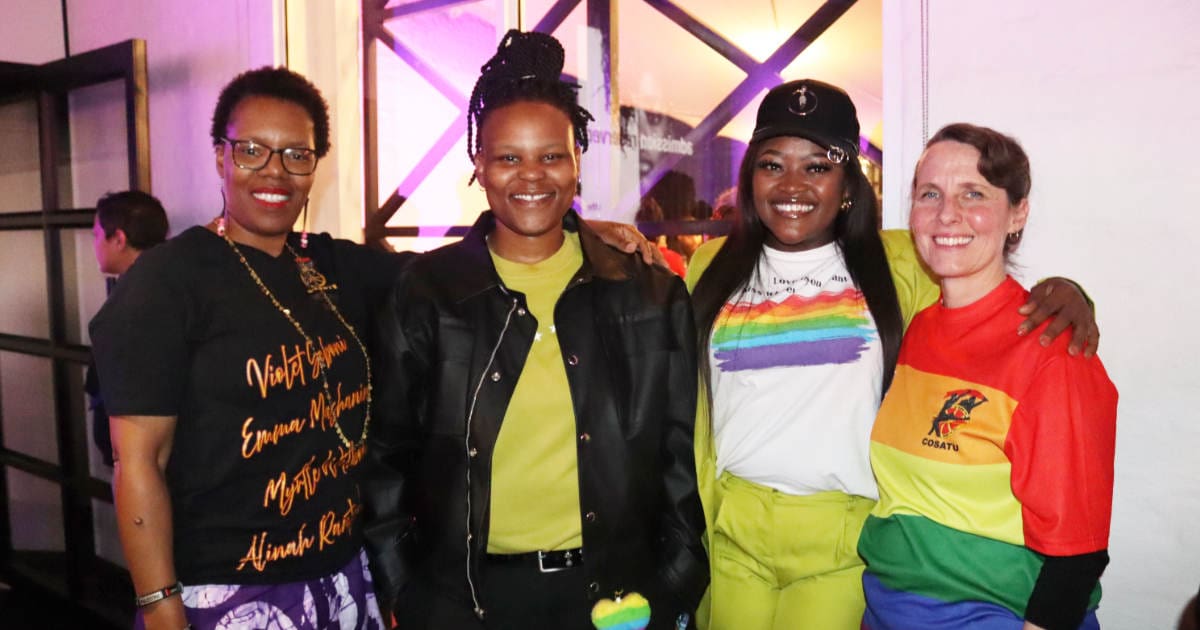
The new report was launched at a ceremony attended by activists, politicians, media and community leaders at The Other Foundation in Johannesburg on Friday night.
High-level guests included James Christoff, the High Commissioner for Canada in South Africa, Graeme Reid, the United Nations Independent Expert on LGBTI violence and discrimination, and Constitutional Court Justice Jody Kollapen.
How Many South Africans Are LGBTI?
According to the authors, Admission Reserved is the first nationally representative survey to include measures of transgender and intersex status, providing a more reliable estimate of South Africa’s LGBTI population.
The report found that 5.3% of South Africans aged 16 and older identify as lesbian, gay, bisexual, transgender, gender-diverse or intersex — approximately 2.39 million people.
This represents a significant update from the 2016 report, which estimated that around 530,000 South Africans identified as LGBTI at the time.
The new report estimates that 2.5% of South Africans identify as gay, lesbian or bisexual; 1.1% identify as transgender or non-binary; and 2.7% identify as intersex, although some people identify with more than one of these groups.
Public Attitudes Towards LGBTI People Have Generally Improved
Encouragingly, the Admission Reserved report shows that South Africa has become more accepting of LGBTI people over the past decade, although the authors note that acceptance remains “uneven, conditional and incomplete”.
Support for same-sex marriage has increased from 37% to 45%, while the proportion of South Africans who believe sexual relations between two adults of the same sex are “always wrong” has declined from 66% in 2015 to 52% in 2025.
A majority of South Africans (60%) now agree that gay and lesbian people deserve the same rights as everyone else. Support is also recorded for bisexual and transgender people (57%) and intersex people (68%).
The report further found that 39% of South African have at least one friend or family member who is a member of the LGBT community.

Where Change Remains Slowest
The report also highlights areas where progress has been limited, particularly regarding family and cultural acceptance.
Around half of South Africans say they would accept an LGBTI family member, while a similar proportion say they would welcome an LGBTI person within their culture and traditions.
These figures are largely unchanged from the 2016 report, highlighting family and cultural acceptance as areas where further advocacy, support and social change interventions remain needed.
Awareness of anti-LGBTI violence and harassment also remains low, with around half of South Africans saying they do not believe LGBTI people face violence or harassment in their communities.
Understanding LGBTI Allies in South Africa
The report provides a detailed profile of public attitudes towards LGBTI inclusion.
It suggests that 9% of the population are committed champions of LGBTI inclusion, while 32% show broad support for LGBTI people and 29% hold mixed views.
The remaining groups are described as “the principled conservative” — 22% of the population who show low levels of acceptance but believe LGBTI people should not be harmed — and the “uncompromising hardline”, representing 7% of the population who are least likely to change their views.

Where Laws Fail to Reach
Speaking at the launch, Constitutional Court Justice Jody Kollapen acknowledged that laws alone cannot guarantee equality and inclusion, saying the deeper challenge lies in changing hearts and minds.
He said that despite the post-apartheid transformation of South Africa, fault lines remained in society, “placed there by years of conditioning, by years of socialisation, by distortions of religion and distortions of culture.”
Justice Kollapen continued: “We prided ourselves on being a rules-based society, and a society where the law would be supreme, and yet the law can’t penetrate the recesses of our minds and the years of how those fault lines were constructed.”
He called for renewed focus on affirming the values of equality and social justice that should underpin society, rather than relying solely on laws and rules.
Why the Report Matters
Neville Gabriel, CEO of The Other Foundation, highlighted in a statement that with a growing backlash against rights on the continent and around the world, progress cannot be taken for granted.
“This research matters because it shows how much has changed, but also how much remains at stake,” said Gabriel.
“At a time when rights and protections are under attack in many parts of the world, civil society must remain vigilant. The gains reflected in this report were won through organising, advocacy and everyday acts of courage. We must continue to defend them with the same determination today.”