

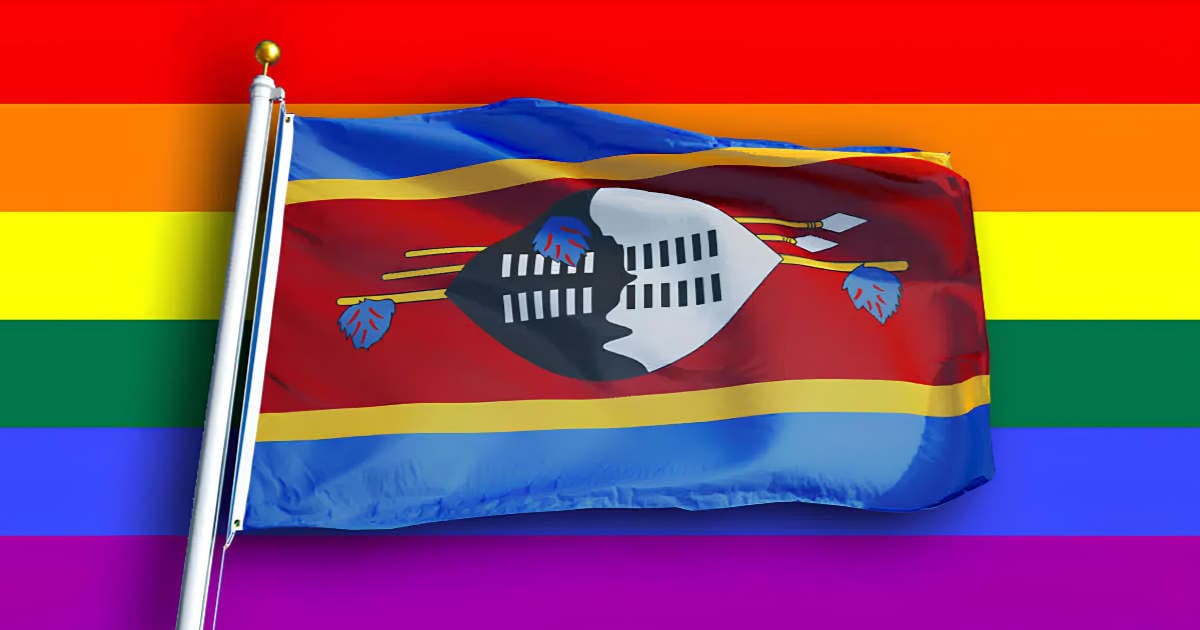
Eswatini’s leading LGBTQ+ rights organisation has taken another step in its years-long legal battle for official recognition after filing a reply in the High Court challenging the government’s continued refusal to register the group.
Eswatini Sexual and Gender Minorities (ESGM) announced on Thursday that it had submitted its replying affidavit in the case of Simelane (N.O.) & Others v Minister of Commerce, Industry and Trade & Others, paving the way for the matter to be set down for hearing.
The latest development comes despite a unanimous 2023 Supreme Court ruling that declared the original refusal to register ESGM unconstitutional and ordered the decision to be reconsidered.
Instead, the Minister of Commerce, Manqoba Khumalo, again rejected the application on the basis that, under the Companies Act, a “company may be registered for a lawful purpose only”, prompting the current court challenge.
Government claims ESGM’s purpose is unlawful
In court papers, Minister Khumalo defends the decision on the grounds that the law of Eswatini “prohibits such practices as sodomy and immoral acts,” and cites what he describes as ESGM’s “unlawful purpose, misleading or morally offensive name and immoral association.”
Khumalo further argues that ESGM’s activities include the “promotion” of homosexuality and same-sex relationships which, he states, are “against our customary law.”
ESGM rejects those arguments, describing the refusal as irrational and unrelated to the purpose of the Companies Act.
The organisation argues that it exists to promote and protect the rights of lesbian, gay, bisexual, transgender and intersex (LGBTI) people in Eswatini and notes that sexual orientation itself is not a criminal offence in the country.
According to the applicants, advocating for people who experience discrimination is entirely lawful, while customary law has no bearing on a constitutional right to form an association representing a shared community interest.
ESGM further argues that refusing registration reinforces stigma by signalling that LGBTQ+ people are not entitled to organise, advocate or express themselves on equal terms with other citizens.
“We are not asking for special treatment”
Melusi Simelane, founder and Board Chairperson of ESGM, said the organisation’s struggle has always been about equal constitutional rights rather than special privileges.
“When we founded ESGM, it was because LGBTI emaSwati had nowhere to turn — no organisation that could stand up for them openly and lawfully. Seven years and a unanimous Supreme Court judgment later, we are still being asked to justify our existence.”
He added:
“Our reply says, in plain terms, what we have said from the beginning: we are not asking for new rights or for special treatment. We are asking for what the Constitution already promises every liSwati — the right to associate, to organise, and to be recognised as full members of society. Those promises cannot mean less for some citizens than they do for others, and we have every confidence that the court will affirm them once again.”
ESGM highlights its community work
In its replying affidavit, ESGM also challenges the government’s portrayal of the organisation by detailing its work in communities across Eswatini.
The organisation says it creates opportunities for small businesses at community events, promotes locally made crafts at the Malkerns Centre flea market, organises clean-up campaigns and advocates for greater acceptance of LGBTQ+ people within families and communities.
“Our work has never been a secret and has never been a threat,” said Sisanda Mavimbela, ESGM’s Co-Director of Advocacy and Programmes.
“We create space for small businesses at community events, we promote local handmade crafts, we run clean-up campaigns, and we advocate for families and communities to embrace their own children. That is the work the Minister says cannot be registered.”
Mavimbela added that every year ESGM remains unregistered sends a damaging message to LGBTQ+ people.
“Every year that registration is denied is another year LGBTI emaSwati are told that their lives, their health and their interests do not count. Registration will not change who we are — it will simply allow us to serve our community openly, lawfully and without fear, and to keep building an Eswatini in which no one is excluded from the life of their own country.”
Legal battle unfolds amid hostile political climate
The case comes at a time of increasing anti-LGBTQ+ rhetoric in Eswatini.
In April, King Mswati III declared in his Easter message that LGBTQ+ people would “never” be welcome in the country while he remained on the throne, describing homosexuality as “an evil act” associated with the biblical story of Sodom and Gomorrah.
Earlier this year, Education Minister Owen Nxumalo also claimed that learners were being “coerced” into homosexuality and insisted that same-sex relationships had no place in schools because they conflicted with religious beliefs and cultural traditions.
Eswatini remains one of the world’s last absolute monarchies and continues to face criticism over its human rights record. While same-sex intimacy is rarely prosecuted, colonial-era laws remain in place and men suspected of sodomy can still be arrested under the Criminal Procedure Act of 1938.
ESGM is represented by human rights lawyer Sibusiso Nhlabatsi of Motsa-Mavuso Attorneys, with support from the Southern Africa Litigation Centre (SALC). The High Court has not yet announced a hearing date.