

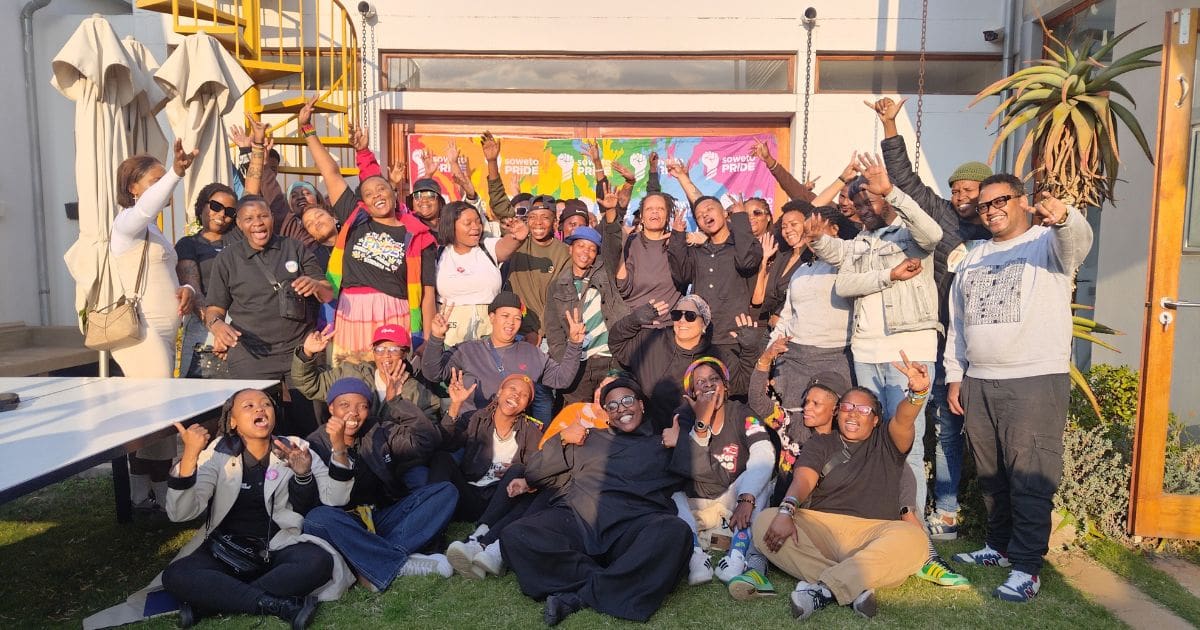
As the queer community prepared for the 22nd Soweto Pride, the Forum for the Empowerment of Women (FEW), together with House of Ditsie and Kasi 2 Kasi, created a space for healing, connection and storytelling through a Narrative Justice event in Johannesburg.
Held at the House of Iranti in Brixton on 19 September, the event brought together young queer people from the Vaal and East Rand for a day of relaxation, conversation, yoga and film screenings.
Jade Madingoane, executive director of FEW, said narrative justice is rooted in the lived experiences of queer people and the importance of allowing them to tell their own stories.
“It is very important to spark conversations around queer stories because as queer people, our stories are always told on our behalf and we never get to narrate our own stories the way we would like to,” Madingoane told MambaOnline.
Representation matters
The programme began with a yoga session led by Nicole from House of Ditsie, creating a relaxed atmosphere for attendees. The session also included tarot readings, offering participants an opportunity for reflection and spiritual connection.
This was followed by the screening of four films, two of which featured South African television producer, writer and actor Thishiwe Ziqubu, who was also in attendance.
One of the films screened was While You Were Not Looking, which follows the lives of queer individuals from different walks of life. Ziqubu plays the character Shado, whose appearance and performance drew laughter and admiration from the audience.
Speaking about the importance of queer representation, Ziqubu said showing up for spaces like Narrative Justice is particularly significant for marginalised communities.
“Marginalised societies need representation, we need to be seen, we need our voices to be heard,” Ziqubu told MambaOnline. “As a transgender non-binary man myself, I don’t get to see myself on screen, so when we see films like this and when we see filmmakers creating work like this, it gives us a voice and it makes us feel seen and heard.”
The power of collaboration
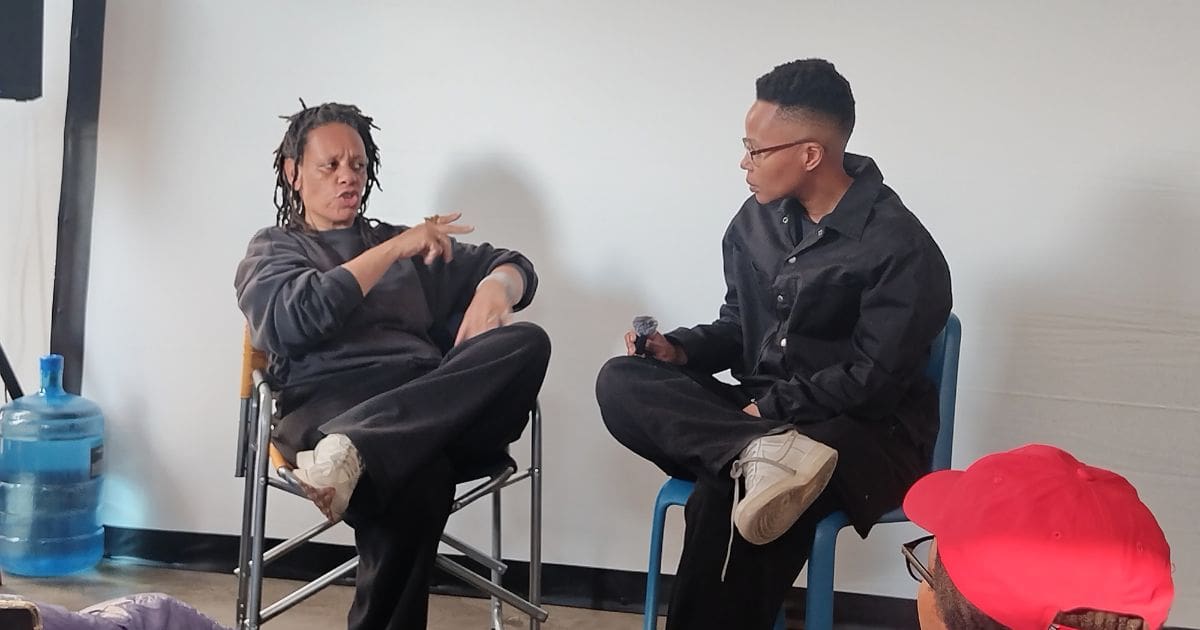
Following the final screening, Dr Beverly Ditsie sat down with Ziqubu for a conversation about the importance of queer storytelling. Audience members were also given an opportunity to engage with Ziqubu through questions and commentary.
For Ditsie, the event was also an example of what can happen when organisations move beyond working in isolation.
“We’ve been doing a lot of things in silos, and as individuals, yes, we are strong, those of us who have voices, but we also realise that we are a lot stronger when we collaborate with one another,” Ditsie said.
She said the partnership with FEW was particularly important as the community approaches another Soweto Pride. “It was really critical for us to team up as we run up to another Pride,” she said.
For those gathered at House of Iranti, Narrative Justice was more than a discussion about storytelling. It was a space centred on the ownership of queer narratives and the importance of creating opportunities for queer people to tell their stories in their own voices.
As Ziqubu put it, seeing queer people represented on screen can offer something fundamental: “It makes us feel seen and heard.”