
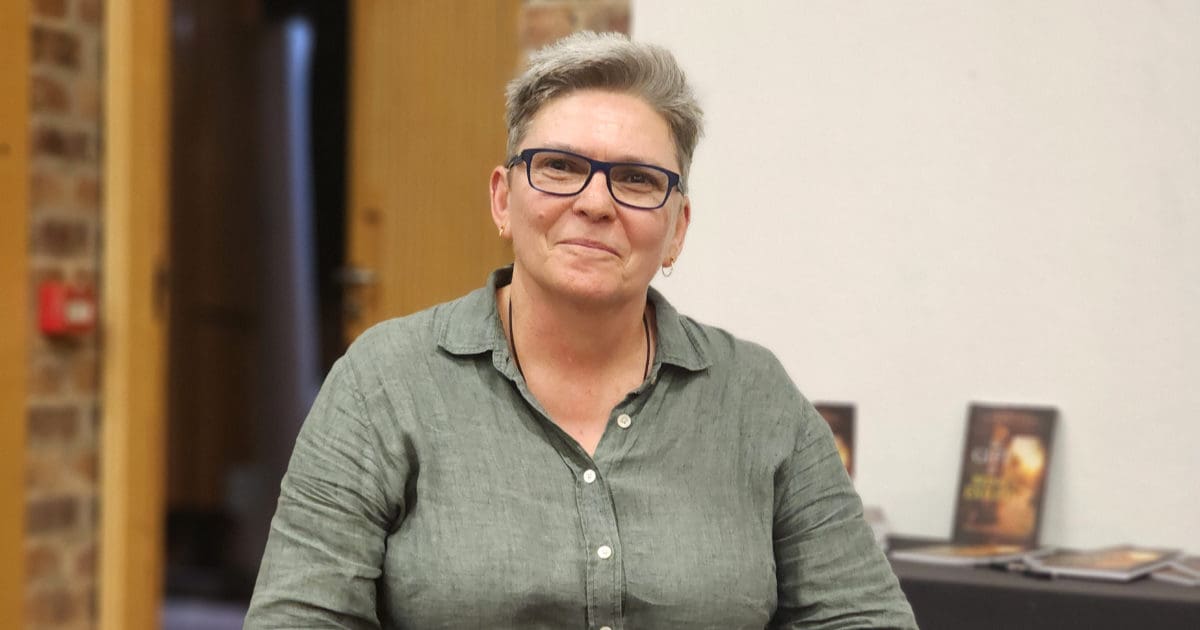
At the launch of her memoir, The Gift of Being Exiled, former Methodist minister Ecclesia de Lange reflected on queer identity, institutional hypocrisy, the pain of rejection and finding a deeper expression of faith beyond the church that cast her out.
De Lange has spent years confronting a difficult question: what happens when the institution that teaches you about love, acceptance and the unconditional grace of God refuses to accept you for who you are?
For de Lange, an ordained minister who was suspended by the Methodist Church of Southern Africa (MCSA) in 2010 after announcing her intention to marry her same-sex partner, the answer came at a profound personal cost.
The Gift of Being Exiled explores faith, conscience and institutional power through de Lange’s experience and the legal battle that went all the way to the Constitutional Court, which ultimately refused to rule on her case.
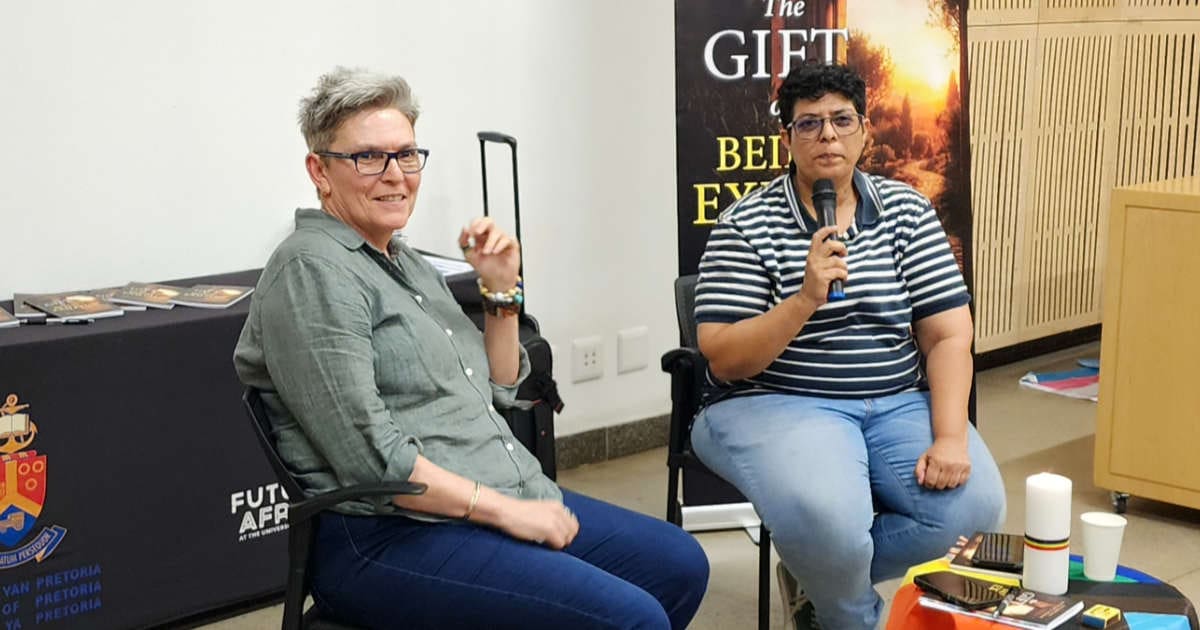
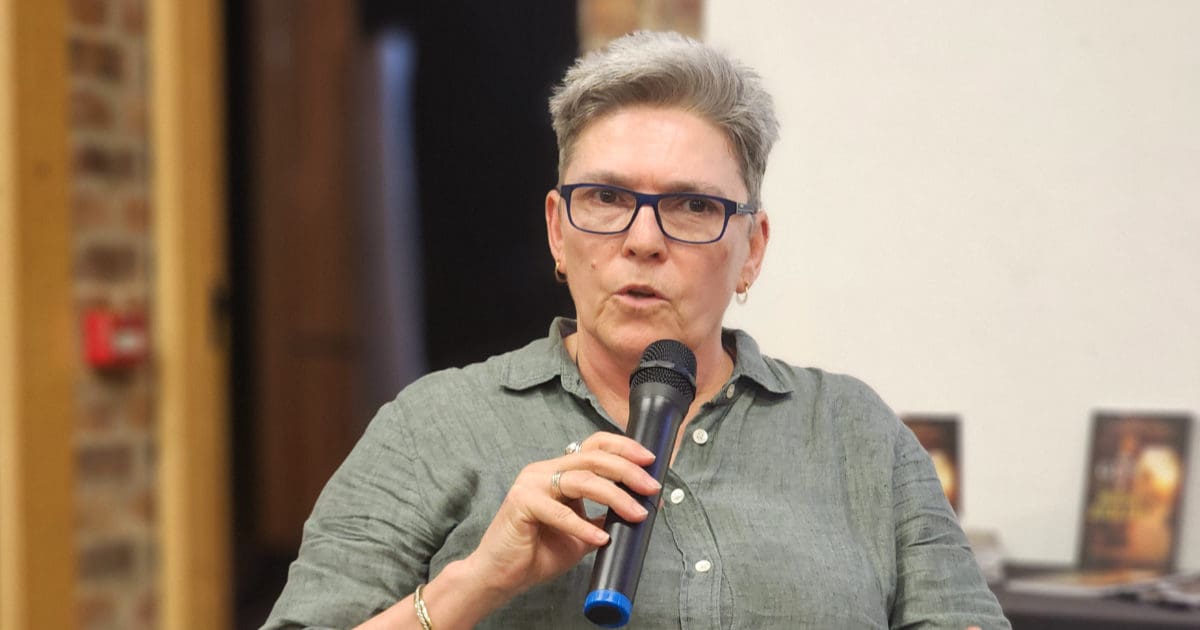
In conversation with Rev Lauren Matthew at the University of Pretoria on 13 October, de Lange looked back on her journey, the toll of hiding her sexuality, and the price people pay when institutions demand conformity in exchange for belonging.
‘From the start you learn to be silent’
De Lange’s experience of exclusion began long before her suspension.
During her theological training, she recalled, a church leader who had learned that she was a lesbian advised her “to keep my head down”
“From the start you learn to be silent,” she said.
That message became part of the unspoken culture she encountered as a queer person within the church: an expectation that LGBTQ+ clergy could continue serving, provided they kept their identities out of sight and did not challenge the institution’s boundaries.
But maintaining that silence became increasingly difficult. She eventually reached a point where she could no longer conceal her identity or preach a message of inclusion while remaining silent about those being excluded.
“It was a process of unmuting myself, I guess, and then knowing the moment comes where you just cannot [be silent any longer]. Either I was going to kill myself or be depressed for the rest of my life. And I wasn’t prepared to; I wanted to preach what I really believed and include people who I thought God was including.”
The decision to speak out was not simply about being open about her sexuality. It was about reconciling her life with her convictions and refusing to perpetuate a system in which some people were welcomed only if they concealed an essential part of themselves.
“There comes a point where you begin to become so uncomfortable in what you’re saying and what you preach,” she explained.
The gap between the church’s theology and its actions
At the heart of de Lange’s reflections is what she sees as a fundamental inconsistency within the MCSA: a church that can articulate progressive theological principles but struggles to translate them into acceptance and equality for LGBTQ+ people and women.
“What they were teaching at seminary and what they are implementing are two different things,” she said, “and that is a huge problem.”
In attempting to preserve institutional unity, she argued, the church has instead maintained a system in which some people must suppress their identities to remain part of the community.
“But there’s no unity; it’s false, it’s a farce. Because people can’t really be who they are. And many people erase themselves in order to belong, because belonging is such an enormous need for humans. We want to belong.”
The painful aftermath of exile
Although de Lange has come to see her departure from the church as a turning point, she was candid about the pain that followed.
“I went through depression. It wasn’t an easy walk in the park. It took me months to work through that absolute disappointment, and frustration and confusion of what now?”
Yet, alongside that grief, she began to recognise the possibilities that emerged from the experience.
“Realising that I don’t have to be silenced anymore. I could speak. And I think that was one of my major stepping stones towards healing and finding my way.”
Rather than allowing the church’s decision to define her relationship with faith, she began to explore what that relationship could look like beyond the institution that had rejected her.
Today, through her work with Inclusive and Affirming Ministries (IAM), de Lange supports efforts to foster more inclusive faith communities across Southern, East and West Africa. As IAM’s Director, she works with churches, faith leaders, theological institutions and civil society organisations to challenge exclusionary interpretations of religion and promote dignity and belonging.
She believes that the reason why so many queer people are called to faith and spiritual paths is that “queer people really wrestle with their relationship with God; are they valued, are they made in the image of God. So we have a peculiar gift with the church.”
For de Lange, that struggle can become a source of insight, challenging religious communities to confront difficult questions about who is considered worthy of acceptance and what it means to live out the values they profess.
What does it cost to belong?
One of the central questions de Lange raises in The Gift of Being Exiled applies to many other areas of life: how much of yourself are you prepared to sacrifice to remain accepted?
De Lange does not suggest that there is a single correct response for everyone facing this dilemma. Whether to remain within an exclusionary religious institution, challenge it from within or pursue a spiritual path elsewhere is, she said, a deeply personal decision.
“I just know from my experience, the cost of being silenced is enormous. And it’s not healthy for you because you embody that silence and it will make you sick. And this is not just in church settings, but it’s in corporate life. It’s in life, in family life. In relationships.”
Her reflections offer a challenge to institutions that pride themselves on unity while overlooking the people who must make themselves smaller to preserve it. They also speak to LGBTQ+ people who struggle to reconcile their sexuality or gender identity with their religious beliefs, particularly when their communities present the two as incompatible.
‘The church couldn’t take God away from me’
De Lange has come to regard her suspension and eventual discontinuation from the MCSA not only as a painful experience of exclusion but also the start of a life-changing journey.
“The church likes to think it has a monopoly on God… but I didn’t lose God. The church couldn’t take God away from me. It flipped my whole life in the sense that there was a new path that just opened to me and discovering who God is.”
De Lange realised that the institution that excluded her did not have the power to determine who she was, what she believed or how she could serve others.
“For me now, my faith is all about embodiment. If this is what I really believe, how do I start embodying it? And I don’t get it right every day. I fail many times. But it’s an interesting journey to be on… and a great gift. I know that I’m doing far more, or expressing my calling far more accurately than what I would have done in the church space.”
The Gift of Being Exiled is published by Naledi at the recommended retail price of R230.