

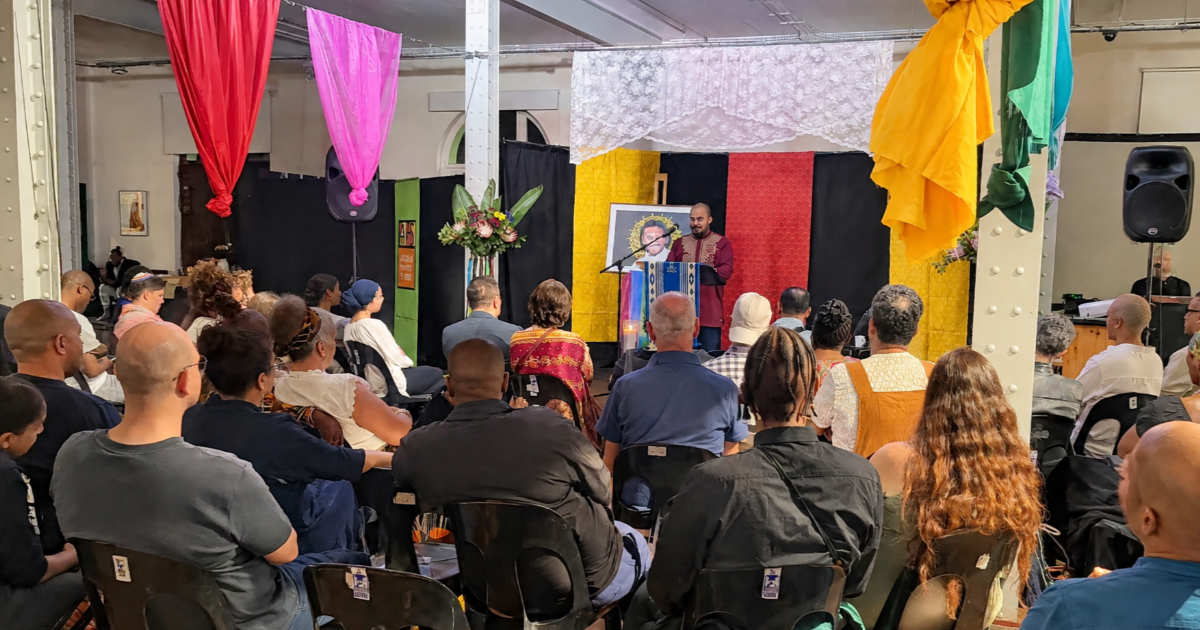
Remembering someone is one thing. Continuing the work they stood for is another. That was the message at the Second Annual Imam Muhsin Hendricks Memorial Lecture, held at Cape Town’s District Six Homecoming Centre on 10 November.
Under the theme Living Out the Prophetic: An Ethics of the Estranged, the gathering brought together activists, academics, artists and people of different faith traditions to reflect on queer belonging, religious exclusion and the unfinished struggle for justice.
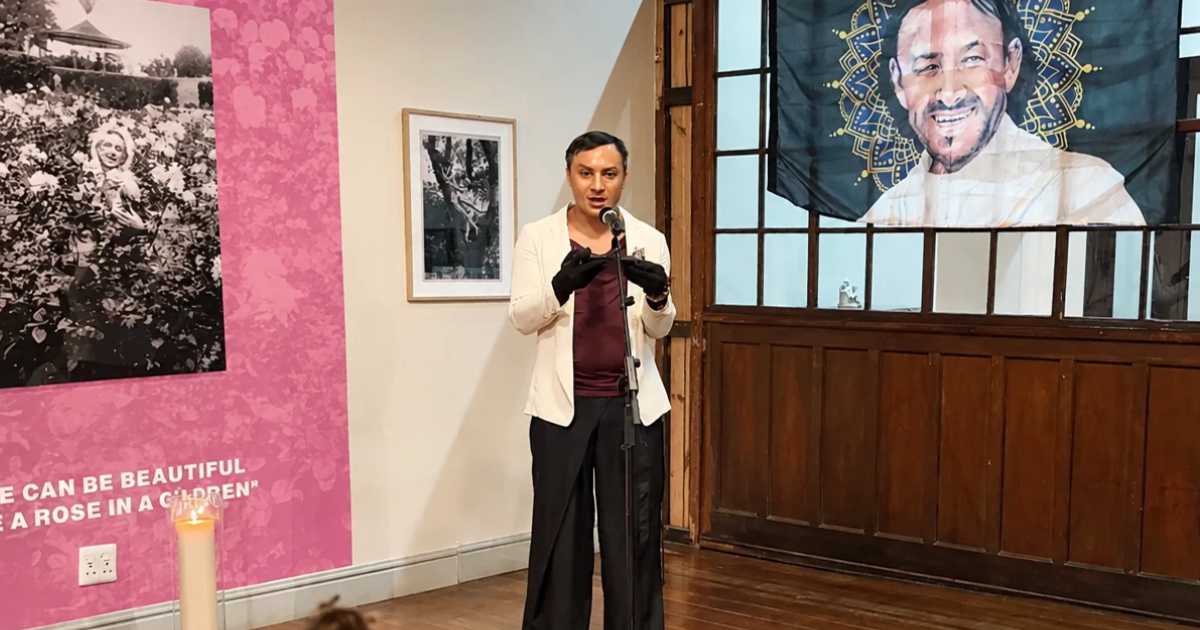
The venue carried particular significance. The District Six Homecoming Centre preserves the memory of a community devastated by apartheid forced removals. It also celebrates Kewpie (1941–2012), the legendary District Six hairdresser and performer whose photographs document an important chapter of Cape Town’s queer history.
Her legacy offered a powerful backdrop to an evening honouring another queer figure who challenged the boundaries of belonging.
Opening the programme, Marlow Valentine, Regional Programme Coordinator at Inclusive and Affirming Ministries (IAM), reminded attendees that remembrance must translate into action.
“Remembrance, in itself, is not enough,” Valentine said, calling for communities to confront injustice and build spaces where everyone can live, love, believe and belong with dignity.
Facilitator Xena Scullard, Programme Manager at the University of Cape Town’s African Gender Institute and a gender justice activist who knew Hendricks, described the gathering as both a celebration and an act of resistance.
“This is a moment where we gather in memorial, in celebration, in honour and in protest,” she said.
The programme included a handwashing ritual, interfaith prayers, music and spoken-word performances, reflecting the spiritual and cultural dimensions of Hendricks’ life and work.
Faith, identity and the struggle for belonging
The keynote address by Dr Mujahid Osman of UCT’s Department of African Feminist Studies explored Hendricks’ legacy through Islamic theology, queer scholarship and the politics of belonging.
Osman reflected on Hendricks beyond his public identity as an openly gay imam, remembering him as a family man, fashion designer, teacher and activist. He highlighted how Hendricks placed mercy, compassion and human dignity at the centre of his understanding of Islam.
“His very existence, his scholarship, his imamate, and his struggle for the possibility of queer Muslim life unsettled the boundaries of religious belonging,” Osman said.
He challenged religious institutions to examine how faith can be used to justify exclusion, delivering one of the evening’s strongest messages: “It is about refusing to allow sacred forms to bless the violence of exclusion.”
Osman also addressed Hendricks’ murder on 15 February 2025. At the time of the lecture, no suspects had been arrested. While the motive remained unknown, he situated the killing within wider concerns about violence and hostility directed at LGBTQIA+ communities.
A demand for justice, not silence
The memorial moved from reflection to accountability during the Call to Justice station, led by Ziyaad from the Al-Ghurbaah Foundation.
“We continue to ask questions, demand accountability and seek justice,” Ziyaad said, adding that he would continue contacting the Gqeberha police station for answers.
“We will not allow this case, or any other case of violence, to just disappear into silence,” he asserted.
Prayers led by Aaqielah, Nima, Thuli and Jacqui represented Muslim, Unitarian, African Christian, Quaker and Jewish traditions, reflecting the interfaith solidarity Hendricks championed through his involvement in the Cape Town Queer Interfaith Collective.
Music and spoken-word contributions by Jason Orpheus and Nic, followed by a closing performance from Ecclesia, brought the programme together.
Towards the end of his keynote, Osman shared a story about an ant travelling towards Mecca despite having a broken leg. When questioned about whether it could complete the journey, the ant’s response was simple: what mattered was being on the way.
At a venue preserving the histories of people who refused to disappear, the message was unmistakable: Hendricks’ legacy cannot survive through remembrance alone. It must be carried through accountability, solidarity and the continued fight for a world where nobody has to choose between their faith and their identity.