

The Equality Court in East London convened on Monday to hear arguments in a high-profile case brought by the South African Human Rights Commission (SAHRC) against Gqeberha shop owner Dawood Lagardien, who sought to bar LGBTQ+ people from his store.
The case follows a 2023 incident in which Lagardien displayed a sign outside his La Gardi packaging, spice, dairy, and baking business stating: “LGBTQ NOT WELCOME. SAVE OUR CHILDREN.”
The SAHRC argues that this act, along with his creation of a WhatsApp group used for homophobic and threatening messaging, constitutes a violation of the Promotion of Equality and Prevention of Unfair Discrimination Act (PEPUDA).
In a statement ahead of the hearing the SAHRC said the case centred on “the critical importance of fostering a society rooted in non-discrimination, while actively promoting and safeguarding the right to equality for all individuals, irrespective of their sexual orientation.”
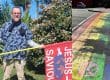
A contingent of queer activists and civil society organisations gathered outside the High Court sitting as the Equality Court in a show of solidarity. Tensions were high, with reports of individuals associated with the Lagardien security company present at the scene. Some attendees also alleged they were photographed by unknown individuals, raising concerns about potential intimidation.
Inside the courtroom, proceedings focused heavily on procedural arguments. Lagardien’s legal representatives maintained that the signage had since been removed and the WhatsApp group deleted, contending that the matter was now academic. They also claimed a lack of affidavits from individuals directly affected by the signage.
The businessman has also argued that as a devout Muslim, his right to freedom of religion justified his actions. He further stated that his decision to erect the discriminatory sign followed a visit to his shop by two men who he claims kissed and groped one another in front of other customers, including children. He also claims that when he asked them “politely” to leave, they told him they could do what they wanted because it was Pride month.
The SAHRC countered that the case was far from moot, pointing to the symbolic and real-world harm caused by such acts of exclusion and hate speech. They stressed that the complaint was not about religious freedom but about the constitutional right to equality and non-discrimination.
Judge Thandiwe Mahlangu, presiding over the matter, stated: “I want to hear everything, then make a decision. This matter must be settled once and for all.” The case was postponed to 28 July 2025.
“For every LGBTQIA+ person who has ever been told they are less than others, today was a step toward something better. It’s a commitment to ensuring that our struggles and pain are recognised and valued, not simply brushed aside as if they were just theoretical concerns,” said Sikhander Coopoo, an East London activist who attended the court hearing.
“This is an important reminder to politicians, preachers, and public figures that words carry weight and impact lives. When hate is incited, it will be met with challenge, and there will be consequences to face,” they added.
It’s significant to note that the hearing coincided with 100 days since the assassination of queer Imam Muhsin Hendricks in Gqeberha, the same city where Lagardien erected his hateful sign. Despite the murder being caught on a security camera, Police have still not publicly identified any suspects or effected any arrests.
“If this case was about religion and should Imam Hendricks have had the opportunity to be a witness, he would have dismantled, with grace and scholarship, a lie that Islam mandates exclusion. He would have shown us that faith, compassion and queer love are not opposites,” said Coopoo. “That’s why this case matters. Because hate speech, even if falsely disguised by religion, cannot be protected if it harms others.”
Read Coopoo’s full report here.