

Being bisexual can mean living in-between—seen, yet unseen; included, yet overlooked. In this personal reflection, MambaOnline Managing Editor Nompilo Gwala unpacks what it means to navigate queer spaces, family, and activism as a bisexual woman in South Africa.
I’ve often felt misunderstood, like I’m not queer enough for queer spaces and not straight enough for the world outside of them. That’s the reality of being bisexual in South Africa: people expect you to “pick a side,” when in truth, my identity is whole just as it is.
At home, this tension was real too. My dad was always open. He told me he would accept anyone I brought home, no matter their gender. My mom, on the other hand, needed time. For a while, I don’t think she fully understood what bisexuality meant for me, or why it mattered that I claimed the word. But she’s grown in ways that continue to move me.
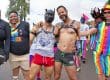
This year, my mom joined me at eThekwini Pride. She didn’t just watch from the sidelines, she marched proudly with the community. Over the years, we’ve attended lesbian weddings together, where she saw the beauty of true love between two women. I once told her, “I may bring home a man or a woman. I don’t know who I’ll fall in love with, or what the future holds for me.”
Since my appointment as Managing Editor of MambaOnline, she’s taken the initiative to learn more about the LGBTQIA+ community. She’s gone further still, teaching relatives, challenging ignorance, and putting homophobic people in their place when someone makes a harmful remark.
That’s what visibility can do. When we are seen, we are harder to deny. When we share our lives openly, we make space for others to learn, to grow, and to change. I’ve lived the difference it makes. My mom’s journey has reminded me that silence costs us too much. We lose more when we hide who we are.

Yet bisexual visibility remains scarce. Too often, we’re dismissed as confused, greedy, or “on the way” to being straight or gay. Too often, we’re erased from queer activism, sidelined in conversations about identity, or made to feel like “outcasts among outcasts.” That erasure isn’t just personal, it has structural consequences.
Bisexual people are often overlooked in policymaking and healthcare. HIV programs, for example, still focus on heterosexual or gay/lesbian frameworks, leaving bisexual realities invisible. Mental health support is seldom tailored to our experiences, despite evidence that bisexuals face higher rates of anxiety and depression. Funding for LGBTQIA+ initiatives often flows to gay- and lesbian-focused organisations, while bisexual-specific needs remain an afterthought.
Even in Pride spaces, I’ve noticed the silences. Pride should be a home for all of us, yet I’ve often wondered where bisexual people fit. We are there, we are marching, but our identity rarely appears on the banners, in the speeches, or in the priorities of organising committees. It can feel like being visible but unseen, included but overlooked.
So, what would true inclusivity look like? For me, it means queer organising in South Africa that stops treating “LGBT” as a shorthand for gay and lesbian. It means Pride committees that make space for bisexual voices, activism that addresses bisexual-specific health concerns, and policies that recognise the unique forms of discrimination we face. It means breaking the binary lens, not just in sexuality, but across our society.
That’s why I see bisexuality as more than just an orientation. It’s also a metaphor for connection and fluidity. Bisexual identities challenge rigid binaries, not just sexual ones, but cultural, racial, and political too. In a country like South Africa, where divisions still run deep, bisexuality offers a lens for building bridges. It reminds us that identities can be complex, that belonging doesn’t have to mean either/or, and that our differences can be sources of strength rather than barriers.
So, this is my message to every bisexual person in South Africa who has felt invisible, erased, or misunderstood: You are not alone. You don’t have to apologise for being who you are. You don’t have to pick a side to belong. Your identity is not a half-measure. It is expansive, it is valid, and it is powerful.
Our visibility matters, because every time we show up, we make it harder for the world to deny us. Every time we speak, we create space for someone else to find their voice. Every time we live openly, we remind others that love cannot be boxed in.
I may sometimes feel caught between worlds, but I know this: bisexuality is not uncertainty. It is possibility. It is power. And it is time South Africa recognised that.