

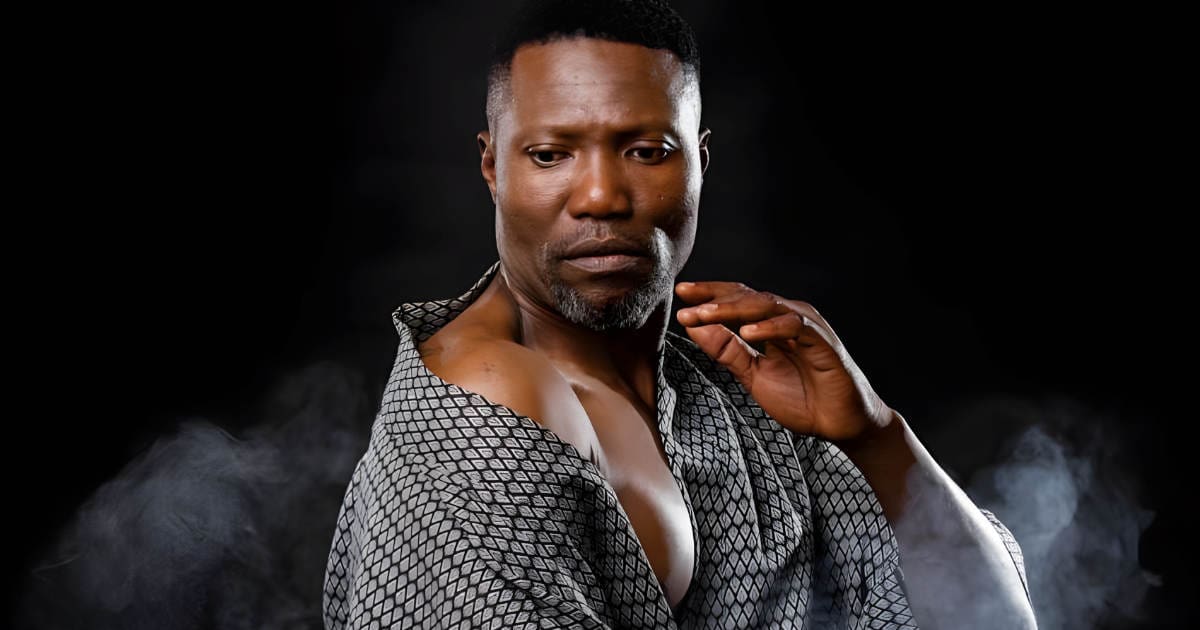
South African queer choreographer, dancer and cultural visionary Gregory Maqoma has long been regarded as one of the continent’s most influential voices in contemporary dance.
Over a career spanning more than two decades, the internationally acclaimed artist has fused movement, music, storytelling and political history to create deeply layered works that speak to identity, memory and resistance.
Born in Soweto, Maqoma first rose to prominence in the late 1990s and went on to found the acclaimed Vuyani Dance Theatre in 1999. Since then, his work has travelled to major stages around the world, earning global recognition for its bold exploration of African narratives and the body as a vessel of history. Beyond choreography, Maqoma has also been an outspoken advocate for artists on the continent and an important LGBTQIA+ voice in the arts.
Now, the celebrated choreographer returns to Johannesburg with his latest production, Genesis: The Beginning and End of Time, running at the Mandela Theatre at Joburg Theatre from 19 to 22 March. The powerful work reflects on cycles of creation, destruction and renewal, drawing inspiration from African cosmologies and the philosophies of anti-colonial thinkers such as Aimé Césaire, Frantz Fanon and Steve Biko.
Speaking to MambaOnline, Maqoma reflects on the ideas behind the production, the evolution of his creative voice and the role of identity in shaping his work.
“Genesis has been slowly forming over several years,” he explains. “I have long been preoccupied with the idea that time is not linear, especially in African cosmologies where the past, present and future often exist in conversation with one another.”
The work, he says, grew from contemplating both personal and collective histories. “It grew from that tension, the violence of time, the grace of survival, and the stubborn human desire to begin again.”
For Maqoma, the production also emerged from a deeply personal period of reflection.
“I have been reflecting on what it means to reach a certain point in one’s life and career and to ask what remains, what must fall away, and what must be reborn,” he says. “In that sense, Genesis is less about a biblical beginning and more about the perpetual act of becoming.”
The choreography is shaped by the philosophies of towering anti-colonial thinkers whose work interrogated identity, liberation and the psychological impact of oppression.
“Césaire, Fanon and Biko insisted on reclaiming the dignity of the Black body and imagination in a world structured to diminish them,” Maqoma says. “Their writings interrogate identity, liberation and the psychological scars of colonialism, and those ideas resonate deeply with the body in motion.”
Rather than directly illustrating their writings, Maqoma says the ideas live within the dancers’ physical expression.
“Fanon speaks about the fractured psyche under colonial rule; Biko speaks about reclaiming self-definition; Césaire insists on poetic resistance,” he explains. “All of this finds its way into the choreography – bodies that resist, collapse, rise again and imagine new forms of being.”
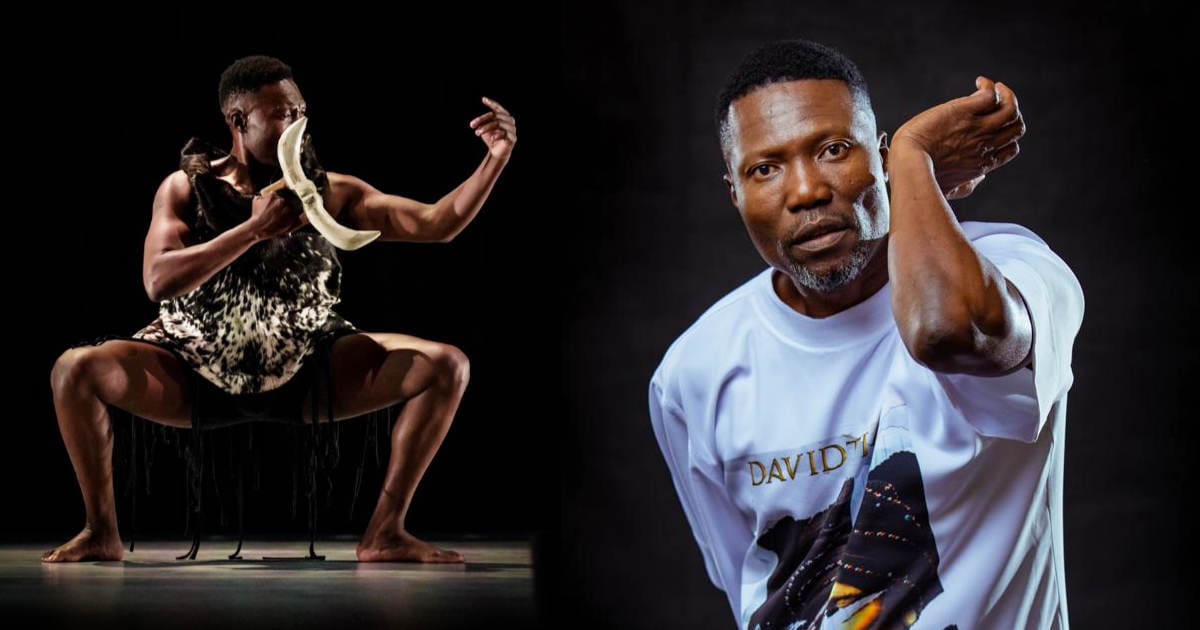
Bringing Genesis to Johannesburg holds particular meaning for the artist. The production will be staged at the Mandela Theatre, a venue whose name carries its own symbolic power.
“Johannesburg is a city of contradictions – it holds both immense possibility and deep historical trauma,” Maqoma reflects. “Presenting Genesis at the Mandela Theatre carries a symbolic weight because Nelson Mandela himself represents the idea of renewal after devastation.”
The performance also marks a kind of homecoming.
“Many of the questions that shape my work are rooted in the histories and energies of this city – migration, survival, ambition, and the constant negotiation of identity,” he says. “To stage Genesis here feels like returning the work to the ground from which many of its questions emerged.”
Since the early days of his career, Maqoma’s artistic voice has evolved from urgent expression into something more contemplative and layered.
“In the early days, my work was driven by urgency – a need to speak, to reclaim narratives, to assert that our stories mattered,” he says. “Over time, the work has become more layered and perhaps more patient.”
Today, he views dance as something far deeper than performance.
“Dance is not just aesthetic movement but a carrier of memory and knowledge,” Maqoma says. “The body becomes an archive of experience.”
Through his company, Vuyani Dance Theatre, and collaborations across the globe, Maqoma has played a crucial role in bringing contemporary African dance to international audiences. But he believes true recognition for African artists must begin closer to home.
“Recognition is not only about visibility on international stages,” he says. “African artists often carry extraordinary stories and artistic languages, but the ecosystems that sustain those practices are still fragile.”
He believes stronger support systems across the continent are key.
“What needs to happen is sustained investment in training, production and touring structures across the continent,” he explains. “We should not only be invited as cultural representatives but as equal collaborators shaping global artistic discourse.”
As an openly queer African artist, Maqoma says identity inevitably shapes how he navigates both life and art.
“Being a queer African artist has meant negotiating spaces that are sometimes welcoming and sometimes deeply resistant,” he says.
Yet that experience has also influenced the emotional terrain of his work.
“It has given me a sensitivity to the idea of otherness and belonging,” he reflects. “The body becomes a site of negotiation, vulnerability and power.”
For Maqoma, queerness extends beyond identity.
“I have come to see queerness not simply as identity but as a way of imagining new possibilities for how we live, love and create.”
For young LGBTQIA+ artists hoping to build careers in the arts, his message is simple but powerful.
“Authenticity is not something you arrive at once – it is something you continuously negotiate,” he says. “Protect the essence of who you are while remaining open to growth and learning.”
And perhaps most importantly, he adds, difference should never be seen as a limitation.
“Your difference is not a weakness,” Maqoma says. “It is often the source of your most powerful creative contribution.”
Gregory Maqoma’s Genesis: The Beginning and End of Time runs at the Mandela Theatre at Joburg Theatre from 19 to 22 March.