A powerful new pan-African exhibition is set to spotlight the diversity, resilience and creativity of queer African artists, as filmmaker and author Renaldo Schwarp steps into the role of curator. The landmark initiative will commemorate the 2026 International Day Against Homophobia, Biphobia, and Transphobia (IDAHOBIT) in Johannesburg.
Hosted in partnership with the Goethe-Institut, the exhibition opens on 21 May and brings together work from creatives from across Africa — including regions where LGBTQ+ identities remain criminalised.
According to Schwarp, known for his acclaimed film Young, Gifted & Queer and book SKEEF, over 250 creatives from 22 countries responded to his open call for submissions.
A Platform for Connection, Not Conformity
Schwarp says the project marks a deliberate shift in his work — from storytelling to creating platforms that centre queer voices across the continent.
“Goethe-Institut approached me to curate their 2026 IDAHOBIT programme, following our collaboration last year, where my film Young, Gifted & Queer screened. This time, I was clear that it couldn’t just be a one-way screening – I wanted to widen the net,” he explains.
“The thinking shifted from ‘what do we show?’ to ‘who gets to be included?’ – and how we create a space that holds multiple voices, across different contexts, in one curatorial frame.”
Rather than presenting a single narrative, the exhibition embraces the complexity of queer African experiences. Schwarp emphasises that the goal is not to define a unified identity, but to foster dialogue and connection.
“There isn’t one singular queer African experience; the realities shaping identity across the continent are fundamentally different – legally, socially, culturally. So for me, it’s less about creating a unified identity and more about enabling connection.”
Courage and Creativity Across Borders
The overwhelming response to the call for submissions highlights both the demand for such platforms and the risks many queer creatives face. Submissions poured in from across Sub-Saharan Africa, including countries like Sudan, Nigeria and Angola.
“What stayed with me was where the submissions came from… places where being openly queer carries very real consequences. There’s a quiet kind of courage in that… Not always loud or performative, but deeply present.”
The exhibition features a wide range of media, including visual art, performance, drag, music and interactive works that invite audience participation. Schwarp notes that many of the submissions challenge traditional expectations of queer art.
“There’s a new wave of queer African voices coming through – very clear, very intentional, strong POV and not afraid to take up space. And that’s the thing – queer art isn’t meant to sit quietly. It can be confrontational, playful, layered… sometimes all at once.”
Art as Resistance and Reframing
At its core, the exhibition explores how language, imagery and storytelling have historically shaped — and often limited — queer identities, while also highlighting how artists are reclaiming these tools.
“Art isn’t just expressive – it can be structural,” Schwarp says. “A lot of exclusion starts with how people are framed – through language, imagery, narrative. So when queer artists begin to rework that, they’re not just telling stories, they’re reshaping perception.”
“And perception, over time, shapes reality,” he adds.
This tension between visibility and vulnerability is central to the exhibition. While queer Africans are increasingly visible, that visibility often comes with heightened risk — something Schwarp is careful to navigate.
“You don’t remove the tension – you work within it… the curatorial approach here isn’t to flatten or sanitise the work – it’s to create a space where complexity can exist, intentionally.”
A Film That Anchors the Experience
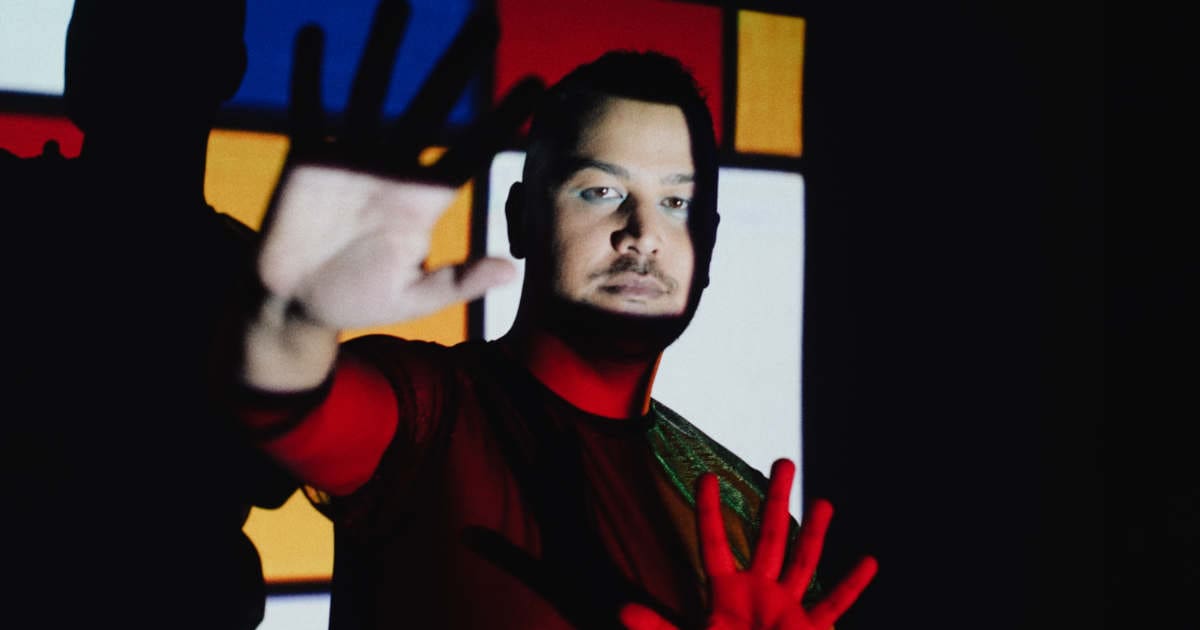
Opening the exhibition is Schwarp’s latest short film, which departs from his traditional narrative style. The film places four queer changemakers in direct confrontation with their own visual histories, interrogating how identity is constructed and represented.
It serves as an anchor for the broader exhibition, which features selected artists from Namibia, South Africa, Mauritius and Zimbabwe, creating a layered and immersive experience for audiences.
Responding to a Growing Need
Beyond showcasing art, Schwarp sees the exhibition as a response to a larger structural gap in the African creative landscape.
“If over 250+ queer creatives across 22 countries are ready to contribute, where are the platforms that actually hold and connect them?” he asks.
“That’s what this project starts to point toward – not just showcasing work, but responding to a need that already exists.”
Event Details
The exhibition opens at the Goethe-Institut Johannesburg (119 Jan Smuts Avenue, Parkwood) on 21 May 2026 at 18:00. Entry is free.
As IDAHOBIT approaches, Schwarp’s exhibition promises not only to celebrate queer African creativity, but to challenge, connect and reimagine how those stories are told — and who gets to tell them.