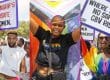


As Pride Month unfolds across the world, Pierre Brouard and Thembisile M Dlamini from the Psychological Society of South Africa’s Sexuality and Gender Division explore why Queer Pride in Africa remains deeply political — and why resisting silence, shame, and exclusion is more urgent than ever.
Apart from South Africa, Queer Pride events across our continent are often fraught exercises, risking serious harm to organisers and participants. This places an obligation on South Africa to fight for the rights of all who are marginalised, scapegoated or vilified, often for political gain.
The Sexuality and Gender Division of the Psychological Society of South Africa calls for the recognition of queer rights and the power of queer-affirmative therapy across the continent, as we reflect on the concept of “queer pride”.
Across many African countries, LGBTQIA+ people continue to face criminalisation, discrimination, violence, and barriers to accessing affirming healthcare and psychosocial support, making Pride as much an act of courage and survival as one of celebration.
While Pride Month is commemorated at different times across South Africa, the month of June carries particular significance as the original Pride Month in the northern hemisphere. It is rooted in the commemoration of the Stonewall protests of 1969 in New York, which served as a catalyst for the modern global LGBTQIA+ rights movement.
To “stonewall” also means to delay, obstruct, or refuse to cooperate, and we argue that this ethos should inform our activism: we should fight laws across Africa which criminalise sexual and gender minorities; we should obstruct efforts to dehumanise; and we should refuse to cooperate with those who seek to blame queer and marginalised people for social ills.
This, we argue, is a form of personal and professional “civil disobedience”.
What are some of the ways this “disobedience” could play out?
Firstly, civil disobedience requires us to challenge the notion that to be queer is shameful and rather see Queer Pride as a response to shaming. Much of the distress experienced by LGBTQIA+ people does not stem from sexual orientation, gender identity, gender expression, or sex characteristics themselves. Rather, it arises from exposure to stigma, discrimination, violence, rejection, and chronic social exclusion.
This creates conditions of minority stress and can negatively affect mental health and well-being. Queer Pride is not only a political act, but also a psychological act of self-affirmation and resistance to shame.
One form of professional civil disobedience is providing LGBTQIA+-affirming care that validates lived experience, challenges prejudice, and promotes dignity, resilience, and belonging.
Secondly, civil disobedience requires us to refuse the belief that queer rights in South Africa are a “done deal”. From an intersectional perspective, race, gender, class, disability, religion, migration status, and geography shape how safely and openly people can live and express their identities.
For many Black African LGBTQIA+ people living in townships and under-resourced communities, constitutional protections have not necessarily translated into everyday safety, dignity, acceptance, or belonging. This highlights an important distinction between legal equality and lived equality.
Pride, therefore, requires us to ask not only what rights exist on paper, but also who is genuinely able to enjoy them in practice.
Thirdly, civil disobedience requires us to obstruct attempts to reduce queer rights to a single struggle. South Africa’s recent experience of xenophobia reminds us that social acceptance is often conditional and that some people are repeatedly positioned as outsiders whose dignity, safety, and humanity are treated as negotiable.
Similar processes of “othering” have historically been directed at LGBTQIA+ people, reminding us that struggles for dignity, recognition, and belonging are often interconnected.
For Black African LGBTQIA+ migrants in particular, experiences of exclusion may occur at the intersection of sexuality, gender identity, nationality, language, race, and economic marginalisation. Questions of Pride, therefore, become connected to broader questions of citizenship, recognition, legitimacy, and belonging.
To refuse humiliation is not only to resist oppression but also to create opportunities for joy, connection, and flourishing. Pride should therefore be understood not only as resistance, but also as a celebration of resilience, community, creativity, and belonging. Across Africa, LGBTQIA+ people continue to build families, support networks, and spaces of care despite ongoing adversity.
So, the concept of Queer Pride is not about claiming superiority over others. At its best, it is about refusing humiliation and rejecting the shame historically imposed on people because of their sexual orientation, gender identity, gender expression, or sex characteristics.
Not only is it an opportunity for queer people, in all their diversities, to reclaim dignity, but it is a moment for all of us to reflect on ways in which we can push back against psychological, social and political strategies to isolate and blame those who are often the most vulnerable.
In embodying “civil disobedience”, we need to align ourselves, as mental health professionals, with the struggles of all marginalised people in South Africa and beyond.
This includes challenging the social conditions that undermine mental health, dignity, safety, and human rights. Pride, dignity and rights do not come easily; they must be honoured and fought for, and not just in the therapy room.
Pierre Brouard
Research Associate, Centre for Sexualities, AIDS and Gender
Extraordinary Lecturer, Centre for Human Rights
University of Pretoria
Executive Member, Sexuality and Gender Division (SGD), Psychological Society of South Africa (PsySSA)
Thembisile M. Dlamini
Community Service Clinical Psychologist
Executive Member and Secretary, Sexuality and Gender Division (SGD), Psychological Society of South Africa (PsySSA)
Member, PsySSA African LGBTQIA+ Human Rights Project