
This year, there appeared to be a decline in companies and brands publicly supporting Pride Month, celebrated internationally in June. Are we following the trend in America, where corporations are stepping away from LGBTIQ+ inclusion and diversity?
An LGBTIQ+ activist recently commented on LinkedIn about feeling conflicted over buying a Pride T-shirt from Woolworths. He said he regretted participating in how companies have turned Pride into a product, commodifying our identities and struggles for profit.
Performative or Genuine Allyship?
He likened corporate Pride to the festive season: just another crass opportunity to fleece the consumer. He argued that if these companies truly supported the LGBTIQ+ community, they would express this commitment all year round—not only when it’s convenient or marketable.
Others questioned whether companies like Woolworths back up their performative allyship with progressive workplace policies or actual support for LGBTIQ+ organisations and causes through their social responsibility programmes.
These are valid observations and questions. Companies that rainbow-wash their logos every June should be transparent about how this apparent commitment to inclusion and diversity translates into tangible action that benefits their LGBTIQ+ staff and customers.
Setting that aside, I believe that in the current social and political context, any company willing to slap a rainbow on its storefront during Pride Month is making a significant statement.
Is the Era of Corporate Rainbow-washing Over?
We’re not where we were just two years ago—when South African brands saw Pride as trendy and low-risk to support.
We’re now living in a world where Donald Trump has effectively banned diversity and inclusion programmes in the US, and the anti-gender movement is planning a hate conference in South Africa to portray LGBTIQ+ identities and lives as anti-family and a threat to society.
The anti-rights backlash is very real in corporate spaces. Even major players like Google, Microsoft, and Meta have folded—revealing (unsurprisingly) that their supposed values of inclusion are subject to commercial and political convenience.
Here in South Africa, I’ve also noticed a pullback in visible Pride support from companies. A WhatsApp group I’m in—which includes representatives of LGBTIQ+ workplace groups from some of South Africa’s biggest corporations—has been eerily quiet this past June.
We Should Acknowledge Who Still Shows Up
Right now, any company that continues to publicly stick to its professed values of LGBTIQ+ inclusion and diversity deserves some recognition.
I doubt Woolworths is desperate for the income from its Pride T-shirts. The reality is that it—and other companies—are under growing pressure to abandon these visible, albeit commercial, expressions of allyship.
Could Woolies do more by financially supporting queer groups and initiatives—or even (God forbid) buying ad space in queer publications? Sure. Should we demand that companies do what’s right (and in South Africa’s case, constitutionally mandated) by supporting social justice, inclusion, diversity and representation in all aspects of their operations? Absolutely!
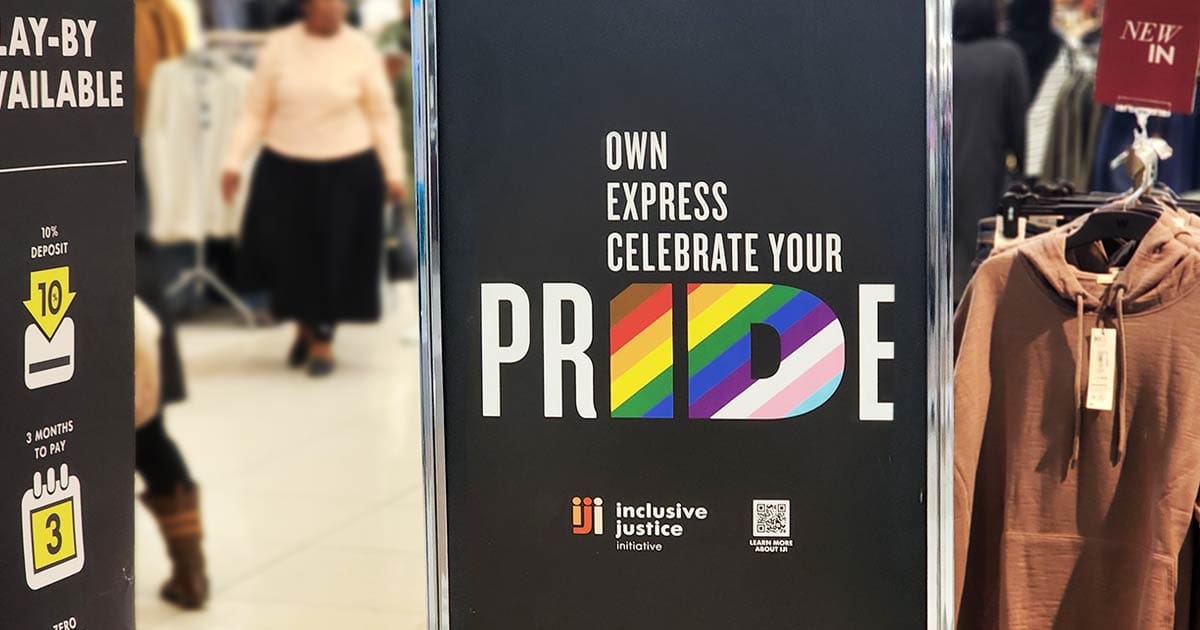
But let’s also acknowledge the small wins. While I’ve never personally bought their Pride merch, I appreciate seeing the Pride Month signage in my local Woolies each June, no doubt infuriating bigoted and “anti-woke” shoppers. I hope to see it there again next year, and the year after.